Over the first quarter of this year, Tajikistan has been lagging behind member nations of the Eurasian Economic Union (EAEU) in terms of an average monthly wage despite a 13.7-percent increase in its nominal monthly wage.
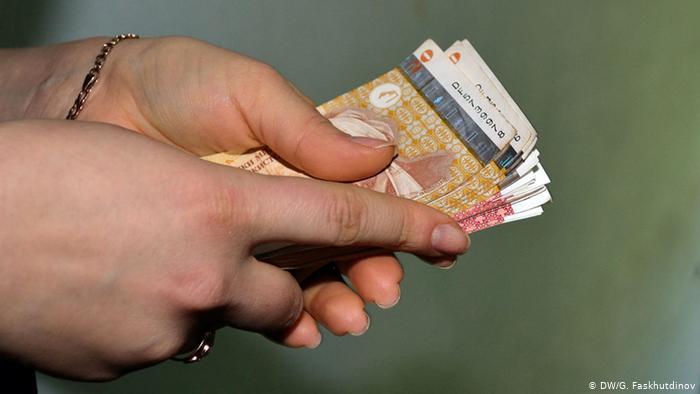
According to the Agency for Statistics under the President of Tajikistan, an average monthly wage in Tajikistan was about 1,747 somonis (equivalent to 155.00 U.S. dollars) as of April 1, 2022 (13.7 percent increase in a nominal monthly wage).
Meanwhile according to statistical data posted on the EAEU’s official website, average monthly wages were equal to 709.00 U.S dollars in Russia, 627.00 U.S. dollars in Kazakhstan, 551.00 U.S. dollars in Belarus, 437.00 U.S. dollars in Armenia, and 234.00 U.S. dollars in Kyrgyzstan.
Over the first three months of this year, nominal monthly wages have risen 23.7 percent in Kazakhstan, 17.1 percent in Belarus, 15 percent in Russia, 11.4 percent in Kyrgyzstan and 9.6 percent in Armenia.
The World Bank assigns the world’s economies to four income groups—low, lower-middle, upper-middle, and high-income countries for 2021-2022. The classifications are updated each year on July 1 and are based on Gross National income (GNI) per capita in current USD (using the Atlas method exchange rates) of the previous year (i.e. 2020 in this case).
The classifications change for two reasons: 1) In each country, factors such as economic growth, inflation, exchange rates, and population growth influence GNI per capita. Revisions to national accounts methods and data can also have an influence in specific cases. The updated data on GNI per capita data for 2020 can be accessed here; and 2) To keep the income classification thresholds fixed in real terms, they are adjusted annually for inflation.
The new thresholds (for GNI per capita in current USD, Atlas method) are as follows: low-income economies are defined as those with a GNI per capita of US$1,045 or less in 2020; lower middle-income economies are those with a GNI per capita between $1,046 and $4,095; upper middle-income economies are those with a GNI per capita between US$4,096-US$12,695, and high income economies are those with a GNI per capita more than US$12,695
Under this World Bank’s income classification, Tajikistan with a GNI per capital of US$1,060 is upgraded from the category of low income economies to the category of lower middle-income economies.