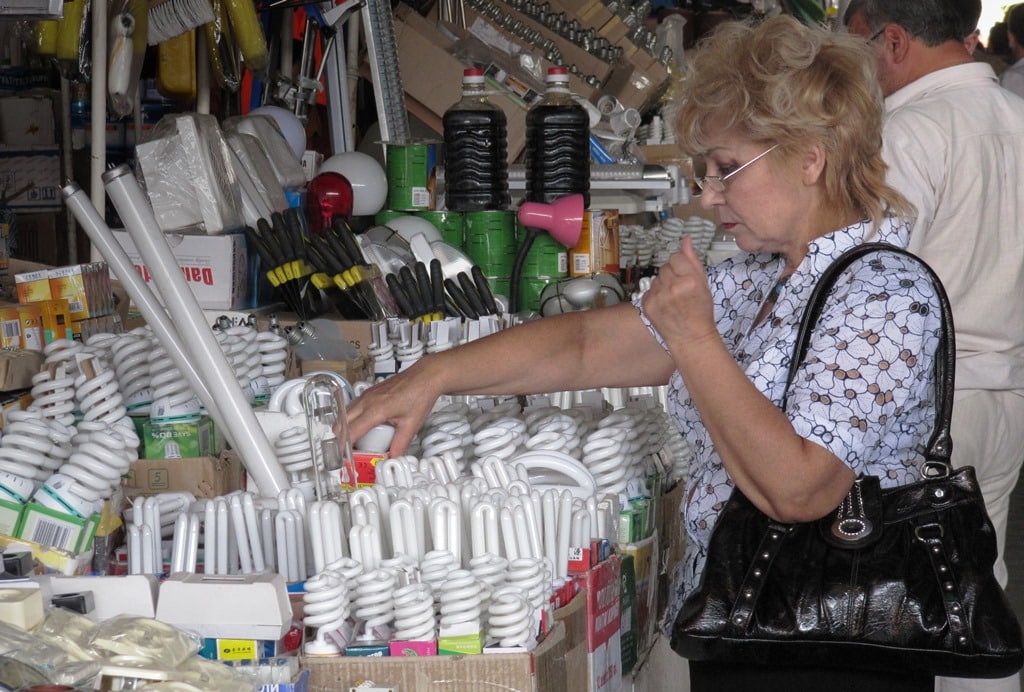
The Government of Tajikistan has issued a regulation imposing ban on the import, production and sale of bulbs containing mercury.
`In the commodity nomenclature of the country’s foreign economic activity the bulbs containing mercury appear under the code of 8539322001.
The Ministry of Industry and New Technologies, the Committee for Environmental Protection and Customs Service are obligated to ensure control over the execution of the regulation issued by the government on May 28, 2022.
The relevant government bodies are instructed to take measures to increase the production of environment-friendly energy saving light emitting diode bulbs in the country.
The ban on the import, production and sale of bulbs containing mercury seems to be related to problems with recycling and disposal of these bulbs.
Recall, President Emomali Rahmon on April 24, 2009signed a decree requiring nationwide shift to the energy-saving light bulbs beginning on May 1, 2009. The government, local authorities, organizations and enterprises irrespective of forms of property were to provide switch to the energy-saving light bulbs by the end of the year.
Relevant ministries and organizations were to provide construction and launch of two enterprises for production of the energy-saving light bulbs in the country with attraction of domestic and foreign investments as well as improve energy-saving standards during 2009-2011.
More than 1.2 million energy-saving light bulbs, also known as compact fluorescent lamps (CFLs), were delivered to country by October 1, 2009 alone.
A compact fluorescent lamp (CFL), also called compact fluorescent light, energy-saving light and compact fluorescent tube, is a fluorescent lamp designed to replace an incandescent light bulb; some types fit into light fixtures designed for incandescent bulbs. The lamps use a tube that is curved or folded to fit into the space of an incandescent bulb, and a compact electronic ballast in the base of the lamp.
It is to be noted that mercury is an essential part of CFLs, allowing a bulb to be an efficient light source. On average, CFLs contain about four milligrams of mercury sealed within the glass tubing.
Meanwhile, many of facilities set up in the country for collection and storage of used CFLs have reportedly not met safety requirements and they have not had specialists on recycling and disposing CFLs.