The ongoing so-called “special military operation” launched by Russia in Ukraine on February 24 has contributed to spiking food prices throughout the world.
Radio Liberty’s Kyrgyz Service, known as Radio Azattyk, has compared prices for basic food products in the countries of the region.
The economies of Kazakhstan, Kyrgyzstan, Tajikistan, Turkmenistan and Uzbekistan historically and geographically connected with Russia. The majority of commodities is imported from Russia and labor migrants primarily travel there seeking better employment opportunities. Because of these connections, the situation in Russia directly affects these countries.
Imposition of sanctions on the Russian Federation has affected the national currencies in the Central Asian nations.
The Russian-Ukrainian conflict has reportedly affected prices for nine basis food products in the region: bread; flour; milk; vegetable oil; eggs; sugar; potatoes; beef; and lamb.
Wheat export restrictions introduced by Russia and Kazakhstan have seriously affected Kyrgyzstan, the country with small economy and member country of the Eurasian Economic Union (EAEU). Average bread prices in this country have increased from 20 soms to 27-30 soms.
In Kazakhstan, bread price has reportedly been raised from 180 tenges to 200 tenges.
In Uzbekistan’s capital, Tashkent, bread prices have reportedly risen 80 percent – from 1,600 sums per loaf to 2,800 sums.
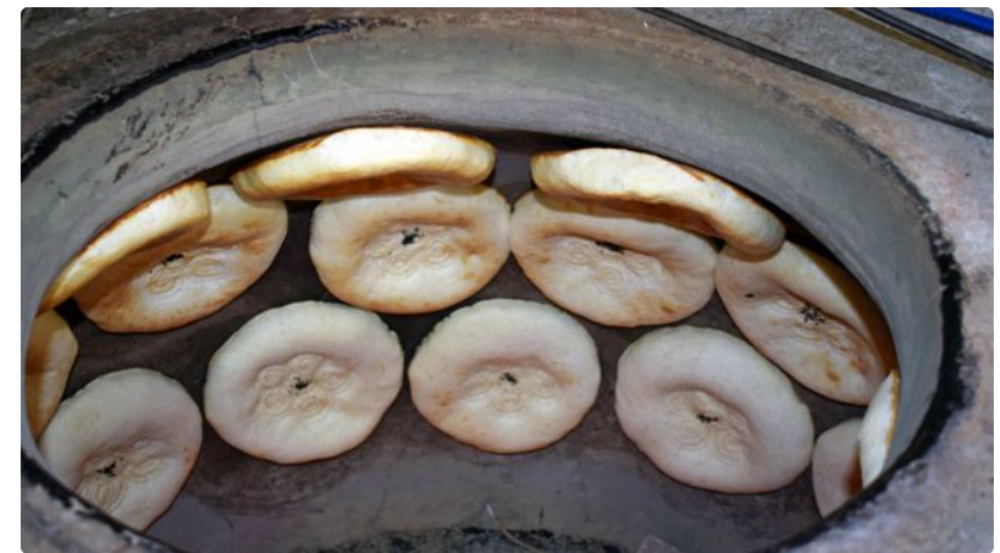
In Tajikistan, which is a low-income country, bread prices have risen from 2.00-3.00 somonis per loaf to 4.00 somonis (equivalent to 29-20 soms).
As far as Turkmenistan is concerned, since last year, people there have been able to purchase bread only with a certificate from the relevant bodies; otherwise, people who again took a place in the queue or bought bread in excess of this norm can be arrested for 15 days.
Bu with outbreak of the Russian-Ukrainian conflict, the situation in Turkmenistan has deteriorated. The government has set the price for bread at 1.00 — 2.00 manats and no more than 2-3 loafs are sold per family, but this norm of bread is not enough for people, and they are forced to buy bread from private traders at 20 manats.
With the onset of summer, prices have dropped slightly, but the shortage problem is not solved, Radio Azattyk says. If calculated at the unofficial exchange rate, the bread price in Turkmenistan is equal to 45-50 Kyrgyz soms, while at the official exchange rate its price exceeds 200 Kyrgyz soms.