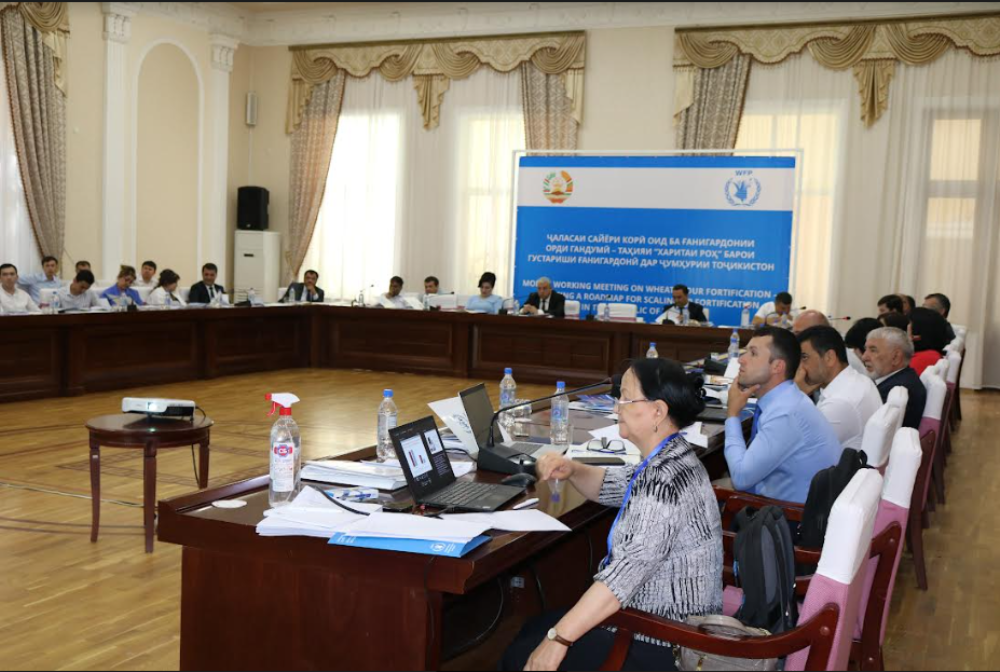
On Friday June 17, representatives from the Government of Tajikistan, wheat flour mills and the United Nations World Food Programme (WFP) held a roundtable meeting in Guliston City, Sughd Province to discuss the implementation of the national fortification law and hear from various stakeholders in wheat flour fortification in the country.
WFP Tajikistan Country Office in Dushanbe says the roundtable, which was conducted with the support of WFP, was the beginning of a series of discussions around food fortification issues, particularly wheat fortification.
In May 2022, Tajik Wheat Flour Mill “Ordi Dushanbe” launched the country’s first wheat flour fortification using imported premix.
Fortification is one of the most cost-effective means of combating micronutrient deficiencies, which remains a public health problem, particularly for women and children in Tajikistan. Malnutrition can lead to the development of diseases and chronic health conditions.
“Food fortification is a sound investment that governments can make to address malnutrition and improve food security and nutrition, which is one of the four strategic goals in the Tajik Government’s National Development Strategy 2030,” said WFP Representative and Country Director in Tajikistan Adham Musallam.
“WFP is committed to supporting food fortification through technical support to the Government to strengthen the health system and work with wheat flour mills and relevant ministries and departments to promote healthy diets,” he added.
WFP is the only agency that brings fortified food, including fortified wheat flour and vegetable oil, to the country. Through National School Feeding Program, 440,000 primary grade schoolchildren in 2,000 schools reportedly eat daily hot meals prepared with these nutritious ingredients.
Prior to Fridays’s roundtable, WFP organized a field visit for the participants to wheat flour mills in Sughd Province to observe wheat flour fortification in action.
The United Nations World Food Programme is the world’s largest humanitarian organization, saving lives in emergencies and using food assistance to build a pathway to peace, stability and prosperity for people recovering from conflict, disasters and the impact of climate change.