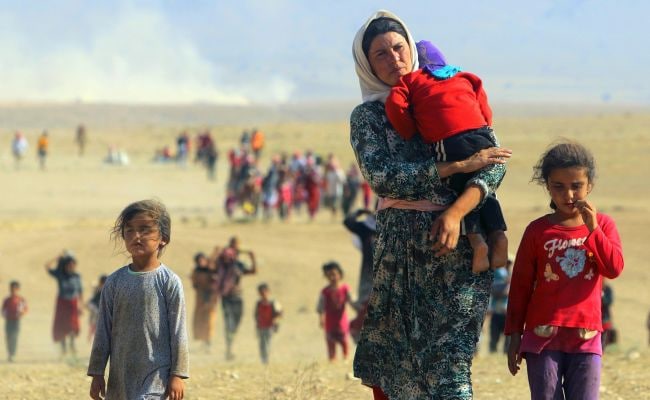
For many Afghan refugees, Tajikistan is a transit country on the way to third countries. The number of refugees in the country is reportedly decreasing.
According to data from UNHCR, refuges living in Tajikistan are mostly nationals of neighboring Afghanistan.
Although there are many refugees who hope to be resettled in more developed countries, there are currently no resettlement programs in Tajikistan. For many Afghan refugees, Tajikistan is a transit country on the way to third countries.
According to UNHCR data for late April 2022, the total number of refugees in Tajikistan amounted to 7,794 people, including 2,100 asylum seekers.
Meanwhile, last year, the total number of refugees in Tajikistan reached 15,000. The main flow of refugees from Afghanistan to Tajikistan was reported in 2021, when the United States announced the drawdown of its troops from Afghanistan.
But after the Taliban's return to power in Afghanistan in August 2021, Tajikistan closed its border with Afghanistan, for which Afghans were prevented from fleeing here.
Tajikistan said at the time that it was unable to host many Afghan refugees.
Tajik Interior Minister Ramazon Rahimzoda noted in September last year that Tajikistan is unable to host many refugees from neighboring Afghanistan, as thousands look to flee after Taliban militants took control of the country.
Rahimzoda cited a lack of infrastructure to host Afghan refugees as the reason and called on international organizations, including the United Nations, to assist Tajikistan to build such infrastructure. He spoke during a meeting with Mulugeta Zewdie, the country director for the UN High Commissioner for Refugees, on September 1, 2021.
Tajik interior minister noted during the meeting that 80 Afghan families are currently in a neutral segment of the Tajik-Afghan border area and seek to enter Tajikistan fearing for their lives. Some 5,000 Afghan government troops have already entered Tajikistan as they fled from Taliban advances in recent weeks. The troops were later sent back to Afghanistan.
According to the minister, Tajikistan has accepted more than Afghan 3,000 families over the past 15 years and allocated 70 hectares of land in the country's south for setting up a proper camp for refugees two decades ago. The Tajik side sought support of international organizations in crating infrastructure there, but no international organizations has helped Tajikistan in that over the past two decades, Rahimzoda noted.
“Because of that, Tajikistan does not have capacities to accept a big number of refugees or asylum-seekers," Rahimzoda said.
Meanwhile, the number of refugees is decreasing in Tajikistan as many of them have gone to Canada under its refugee resettlement program, according to UNHCR Office in Tajikistan.
Afghan refugees have faced a number in challenges in Tajikistan, first of all the problem of employment here.
Therefore, for many refugees Tajikistan is a transit country on the way to developed countries. But the problem is that they need sponsors, who would take care of all the costs. Moreover, Canada’s refugee resettlement program that existed at UNHCR closed two year ago.
Many Afghan refugees living in Tajikistan hope for resumption of this program, because for them Tajikistan is just a transit country on the way to third countries.