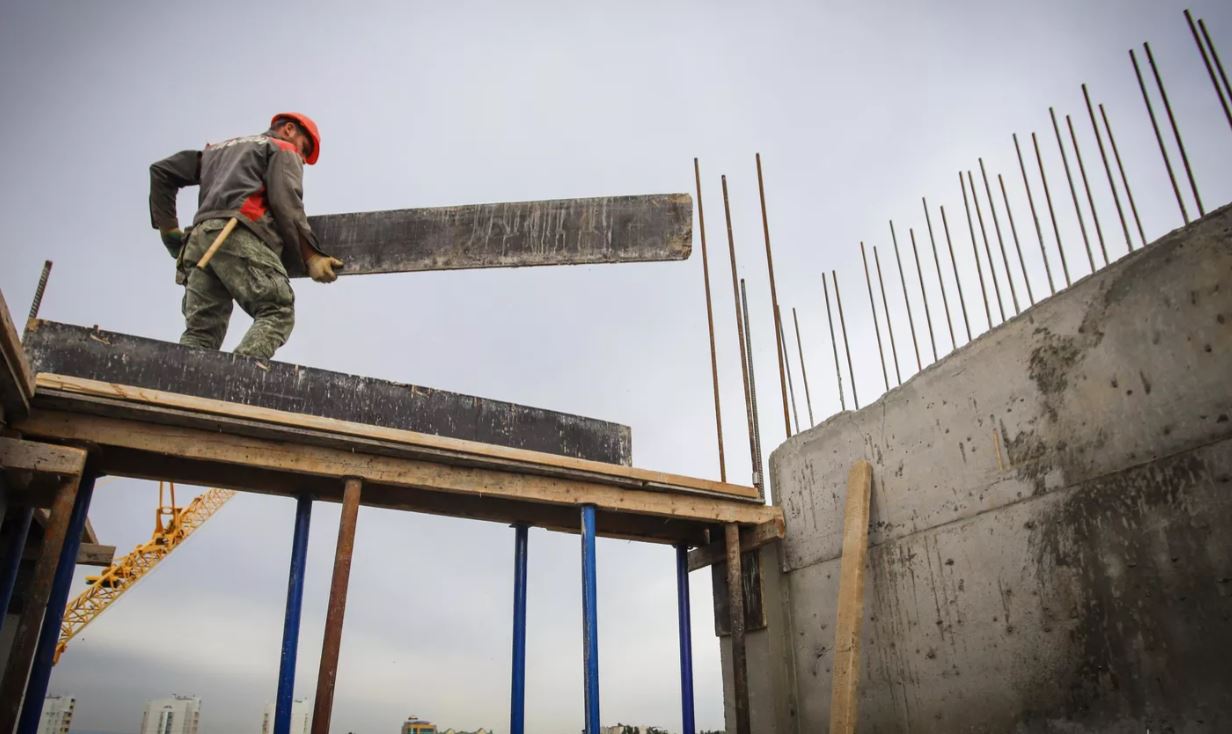
The number of labor migrants working in Russia’s construction sector has decreased to 500,000 people, which is only a quarter of figures of late 2020, RIA Novosti reported on June 17, citing Anton Glushkov, the president of the National Builders' Association of Russia (NOSTROY).
“As of the end of 2020, according to official data, 800,000 migrants worked at the construction sites of Russia, while according to experts’ estimates – about 2 million,” Glushkov said.
“Today there is no official statistics, because they come to us as tourists. About 500,000 migrants now work at the construction sites, that is the quarter of the volume that was before,” Glushkov noted.
According to him, the regions today experience the most significant labor shortages, because Moscow, St Petersburg and a couple of other large cities siphon off existing flows of labor migrants due to high salaries.
“Traditionally, labor migrants have been engaged in carrying out fit-out works. Today, practically there are no Russian specialists to fill this niche, and as a result, the supply of finished apartments has decreased in the country,” NOSTROY top manager noted.
“Developers are thinking of a product that would minimize the need for such specialists. Therefore, the volume of white house finish housing has increased significantly,” Glushkov added.
The term “white box” in construction and real estate signifies how completed and ready a building space is before tenant improvements (TIs). A white box finish signifies a tenant space before (and excluding): flooring (except concrete floors), plumbing and fixtures, interior walls, paint and wall coverings, electrical fixtures, furniture and any other tenant-specific equipment or office upgrades.
Meanwhile, the Minister of Construction of Russia Irek Fayzulin told RIA Novosti that they have not received any more applications from construction companies related to shortage of labor migrants.
According to him, “the interagency working group has clearly worked on workers from Tajikistan and Uzbekistan.”
Besides, within the framework of the fight against sanctions imposed by unfriendly countries, the Ministry of Construction will seek new ways of importation of labor force, the minister noted.
“May be Indian builders will appear,” he added.
Meanwhile, Financial Times reported in May last year that according to the Russian Presidential Academy of National Economy and Public Administration (Ranepa), by early April there were 5.5 million foreigners in Russia — 42 per cent fewer than a year ago. Construction and agriculture were particularly badly affected.
Russia’s deputy prime minister Marat Khusnullin reportedly estimated the shortage of migrant workers in construction alone to be 1.5 million to 2 million people.
According to him, construction workers’ salaries were raised by 50 per cent due to labor shortages, and doubled in some places. But even while paying double it is extremely hard to find people, Khusnullin noted.
Financial Times says the flow of migrants from European post-Soviet republics such as the Baltic states, Moldova and Ukraine has dropped dramatically in recent years, leaving Russia heavily reliant on Central Asia.