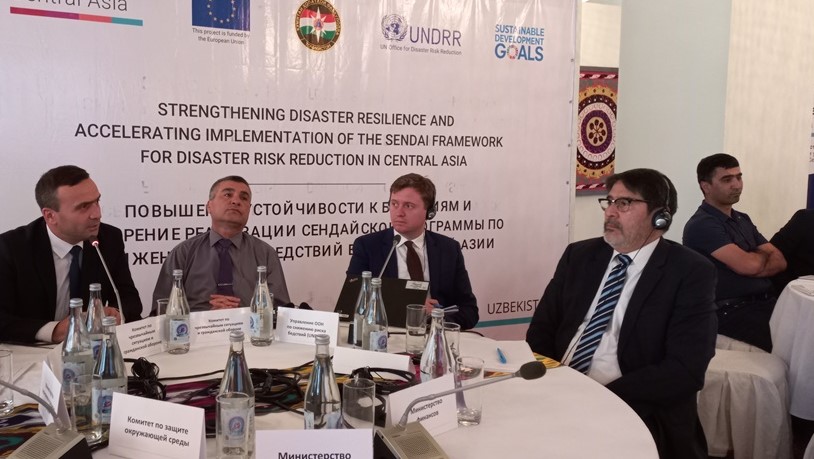
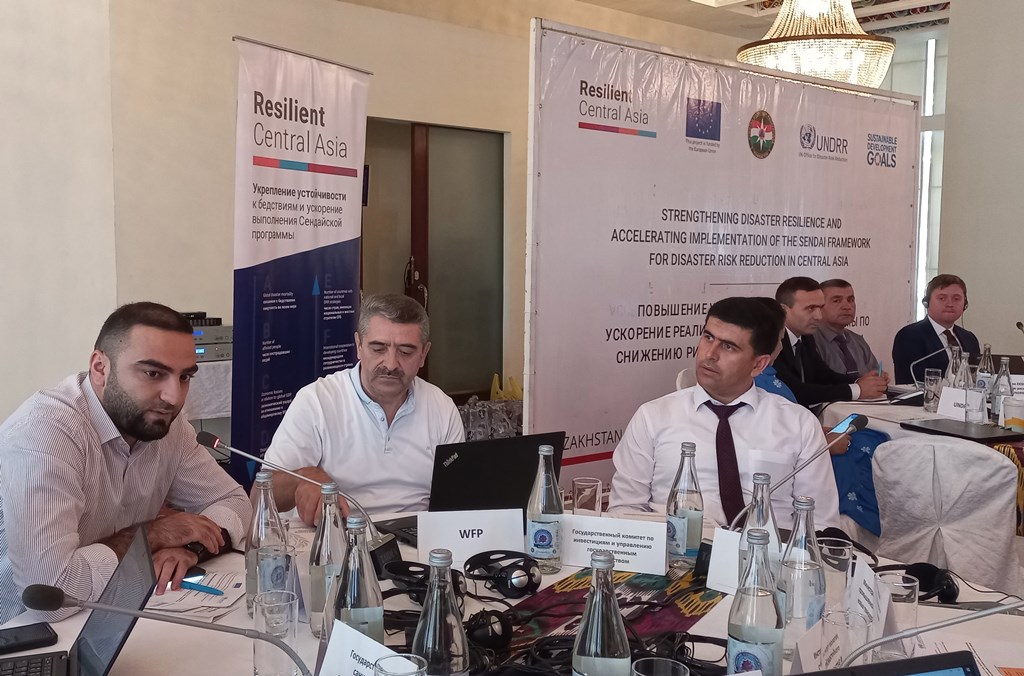
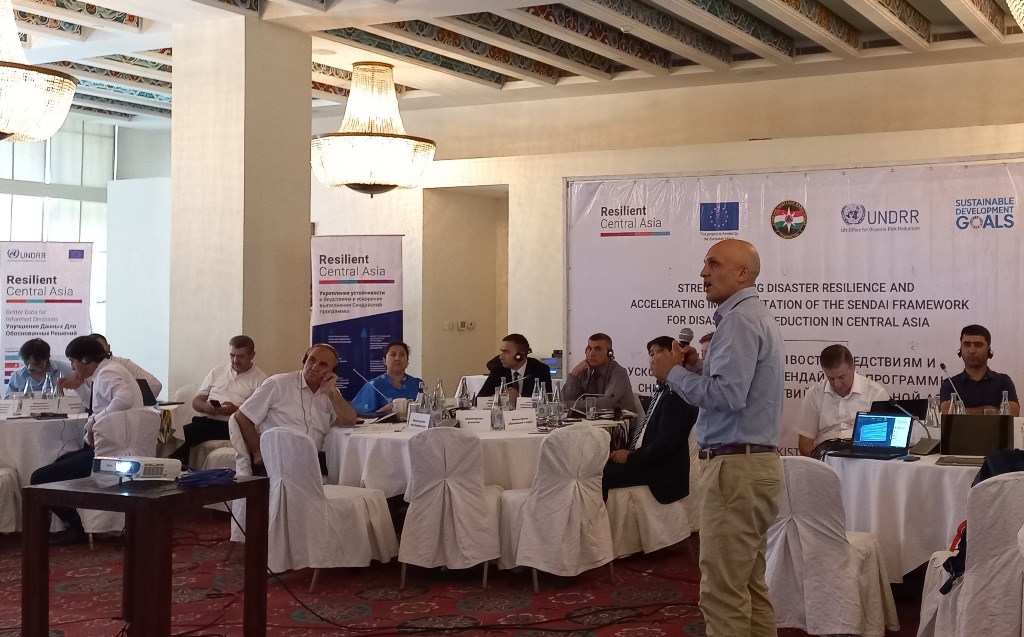
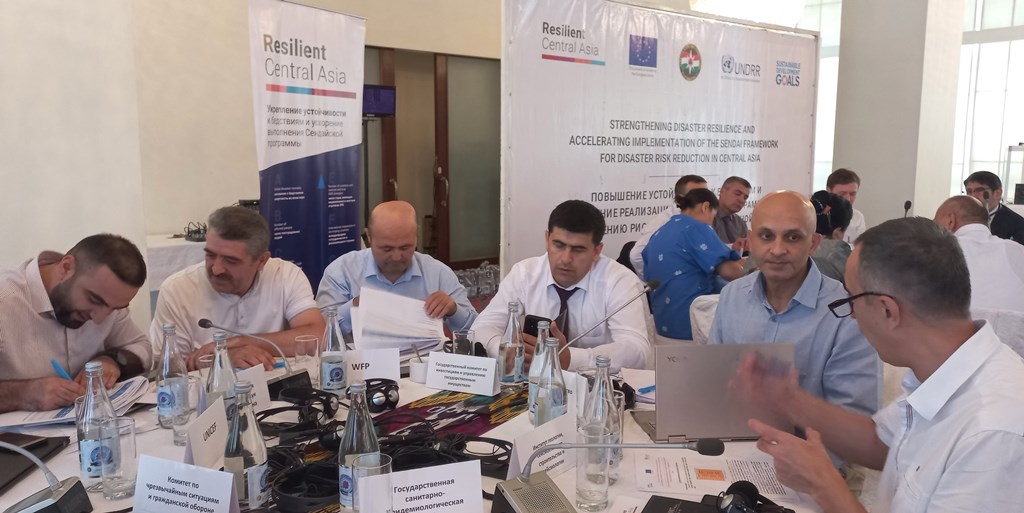
Experts from the National Platform for Disaster Risk Reduction of Tajikistan, international and local organizations, and representatives of business and academia participated in a stress testing workshop of Tajikistan’s disaster risk management (DRM) system against the most impactful disaster scenarios in the country. The workshop was funded by the European Union (EU) and organized by the United Nations Office for Disaster Risk Reduction (UNDRR) within the joint project on disaster risk reduction in Central Asia.
In May 2022, Tajikistan’s Committee of Emergency Situations & Civil Defense and UNDRR concluded a comprehensive DRM system capacity assessment and planning exercise, which revealed major needs and challenges in the system and suggested a targeted plan of action to strengthen the disaster risk reduction (DRR) policy implementation in the country.
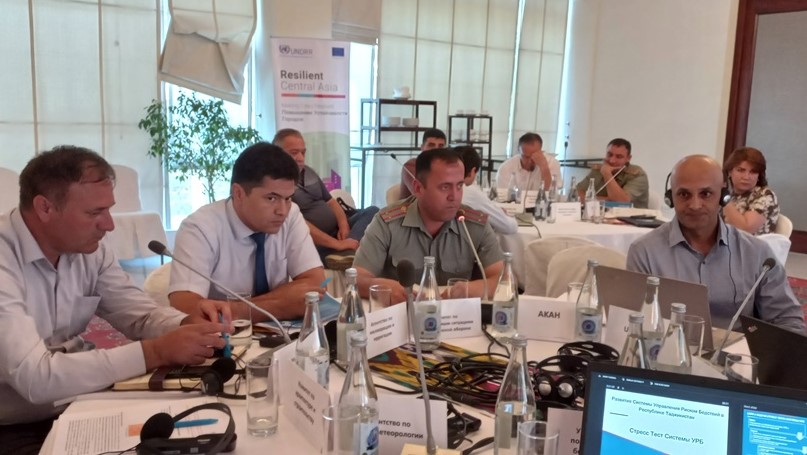
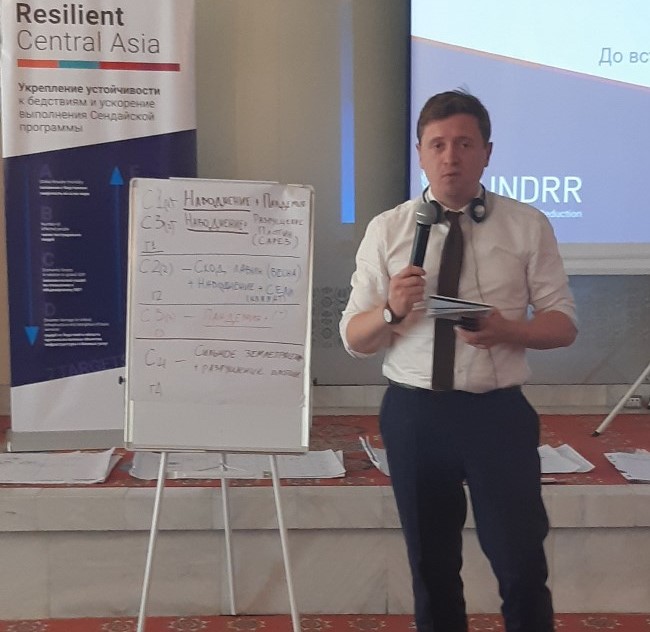
As the next step of the process, EU-UNDRR project supported the National Platform to conduct a stress test analysis – a scenario-based multi-stakeholder assessment process to evaluate the state of national capabilities to reduce, absorb and transfer disaster risk and develop a targeted action plan to further support the strengthening of the DRM system. During the meeting, participants developed disaster scenarios for Tajikistan based on relevant sources, and prioritized required DRM system capacities against the disaster scenarios.
Over the past years, Tajikistan has made significant progress in increasing its capacity in DRM and in the implementation of the Sendai Framework for Disaster Risk Reduction 2015-2030. As part of the work towards reducing disaster risks, Tajikistan has developed and adopted the National Strategy for Disaster Risk Reduction in 2019, its implementation is guided by the National Platform for DRR. However, the increasing challenges posed by climate change and the rapid change of the global hazard trends may create strong stress for the DRM system of the country.
Background information
The EU-funded project “Strengthening disaster resilience and accelerating the implementation of Sendai Framework for Disaster Risk Reduction in Central Asia”, implemented by the United Nations Office for Disaster Risk Reduction (UNDRR), supports countries of the region in implementing the Sendai Framework priorities. The project supports strengthening regional coordination, development of regional DRR strategy, national disaster loss accounting systems, and community-level disaster risk reduction. On the local level, the project supports the development of disaster resilience strategies of capital cities. For this project, the EU committed EUR 3,750,000 for the three-year implementation.
For additional information please contact:
Mr. Abdurahim Muhidov, UNDRR Regional Programme Coordinator, at: [email protected]
Delegation of the European Union to Kazakhstan, at: [email protected]