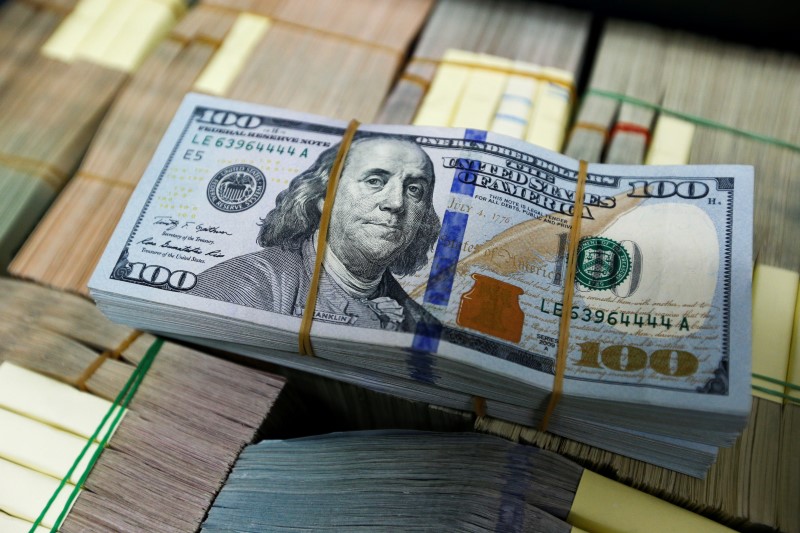
The exchange rates of the U.S. dollar against the Tajik national currency, the somoni, is continuing to decline.
On July 25, the National Bank of Tajikistan (NBT) set an official exchange rate of the U.S. dollar (USD) against the somoni (TJS) at 1:10.269 (such an exchange rate of USD against TJS was more than two years ago, on June 1, 2020).
Thus, USD has lost 21.1 percent of its value against TJS since March 9, when the NBT made the latest correction of the USD exchange rate.
Meanwhile, the commercial buying exchange rate of USD against TJS set on July 25 is 1:10.1 for Amonatbonk (Tajikistan’s savings bank), 1:9.90 for Orienbonk and 1:10.00 for Bank Eskhata.
The commercial selling exchange rate of USD against TJS set by Amonatbonk, Orienbonk and Bank Eskhata on July 25 is 1:10.20, 1:10.28 and 1:1020, respectively.
The buying rate is the rate at which money dealers will buy foreign currency, and the selling rate is the rate at which they will sell that currency.
As far as the exchange rate of the Russian ruble (RR) against TJS is concerned, it remains consistently high.
An official exchange rate of RR against TJS set by the NBT on July 25 is 1:0.1705.
Since the beginning of this year, the exchange rate of the ruble against the somoni has strengthened by 13.1 percent.
The commercial buying exchange rate of RR against TJS set by Amonatbonk, Orienbonk and Bank Eskhata on July 25 is 1:0.1610, 1:0.1650 and 1:01705, respectively.
The commercial selling exchange rate of RR against TJS set by Amonatbonk, Orienbonk and Bank Eskhata on July 25 is 1:1:0.1620, 1:0.1750 and 1:0.1730, respectively.
A sharp volatility in the foreign exchange market of Tajikistan has been observed after imposition by the Western countries of sanctions on the Russian Federation due the so-called “special military operation” launched by Russia in Ukraine on February 24.
Experts note that because of a strong socio-economic dependence of Tajikistan on Russia, the somoni is actually pegged to the Russian ruble, and what will happen to the Russian currency after a certain time will affect the Tajik currency.
The Russian ruble has rebounded from crippling economic sanctions imposed on Moscow following the invasion of Ukraine and is now at its strongest in more than seven years — earning it the distinction of being the best-performing currency in the world so far this year.
The ruble was trading at 57.875 to the US dollar on July 25 — a far cry from the 139 to the dollar that the currency fell to in March, when the US and the European Union sanctioned the Kremlin. for its invasion of Ukraine.
Since the start of the year, the ruble has soared 40% against the dollar — outperforming every other currency in the world.
Analysts attribute the strong performance of the ruble to the Kremlin’s aggressive measures to keep cash from leaving the country as well as to the surging prices in oil and natural gas.
Russia is the second largest exporter of oil in the world. It is also the world’s largest exporter of natural gas.
Oil prices began rising steadily in late 2021.