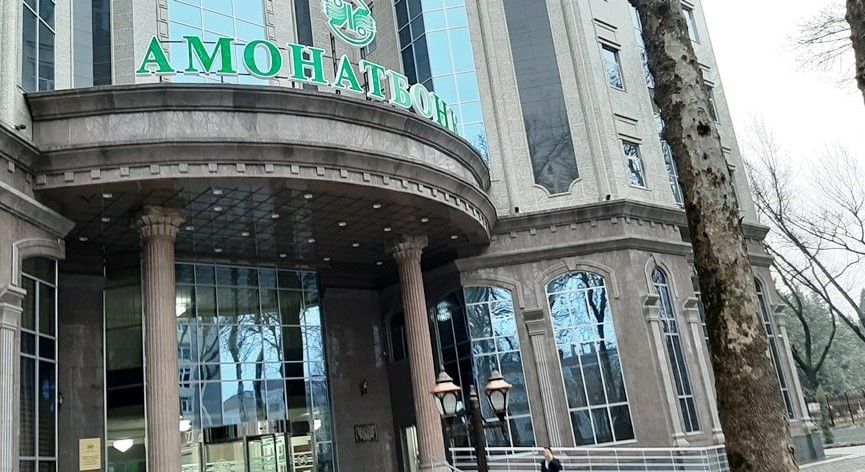
The Accounts Chamber of Tajikistan has announced the identification of major financial damage in Amonatbonk (Tajikistan’s savings bank). Meanwhile, Amonatbonk top managers strongly disagree with the wording “financial loss”, noting that it is a question of non-performing loans.
The Accounts Chamber Qarakhon Chillazoda told reports that audits conducted at Amonatbonk in 2018-2019 revealed financial damage in the amount of more than 200 million somonis (equivalent to about 20 million US dollars).
Commenting on this issue at a news conference in Dushanbe, Amonatbonk top manager Sirojiddin Ikromi confirmed on July 22 that indeed such shortcomings were identified during inspections conducted in 2019.
Ikromi, however, strongly disagrees with the wording “financial loss” in this case, noting that the it is the question of non-performing loans.
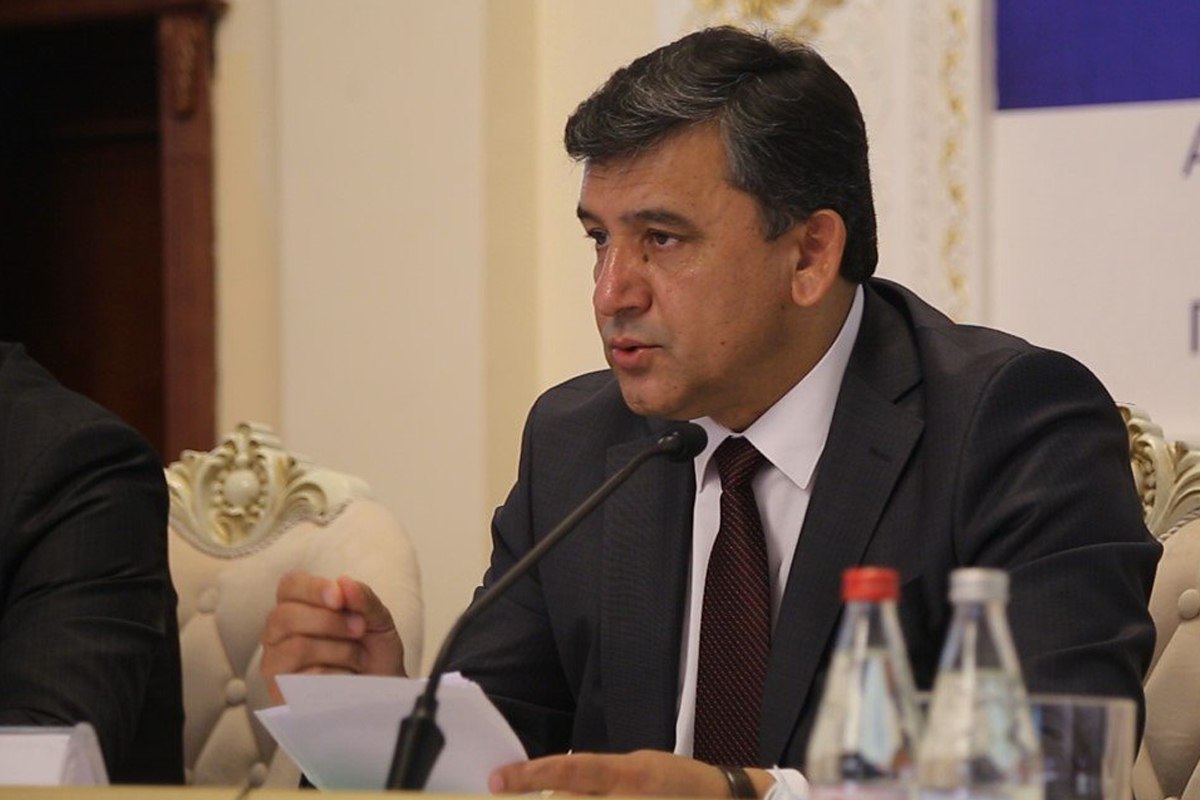
According to him, these loans were issued within the established norms and the loans were provided loans and are secured by collateral.
“Part of the money has been reimbursed, and we are working to recover the remainder of the money,” Amonatbonk top manager said.
A non-performing loan (NPL) is a loan in which the borrower has not made repayments of principal and/or interest for at least 90 days. When a bank is unable to recover non-performing loans, it can repossess assets pledged as collateral or sell off the loans to collection agencies.
After Tojiksodirotbonk and Agroinvestbonk had problems, Amonatbonk has occupied a leading position in the country’s financial intermediation market.
According to data from the National Bank of Tajikistan (NBT), Amonatbonk has accounted for almost 25 percent of financial intermediation services in Tajikistan at the beginning of 2022.
At the end of the last year, representatives of international organizations active in Tajikistan told Asia-Plus that they proposed the Government of Tajikistan to transfer Amonatbonk into private hands.
Representatives of the NBT and Amonatbonk neither confirmed nor denied this information.
Amonatbonk is the only state-owned bank. Established in 1925, it is one of the oldest banks in Tajikistan and one of the largest based upon various criteria – including the number of branches and the number of served clients.
The institution is unique in its orientation towards implementing social, pension and other state programs. Amonatbonk has 5 regional centers, 69 branches and more than 500 agencies. This gives the institution a presence in the most remote mountainous parts of the country.