The World Bank’s Business Pulse Survey says businesses worldwide feel the repercussions of the Russian invasion of Ukraine. The survey’s findings reportedly reveal “critical insights on the extent of the war’s likely impacts on firms and its variation” across Kyrgyzstan, Tajikistan and Uzbekistan.
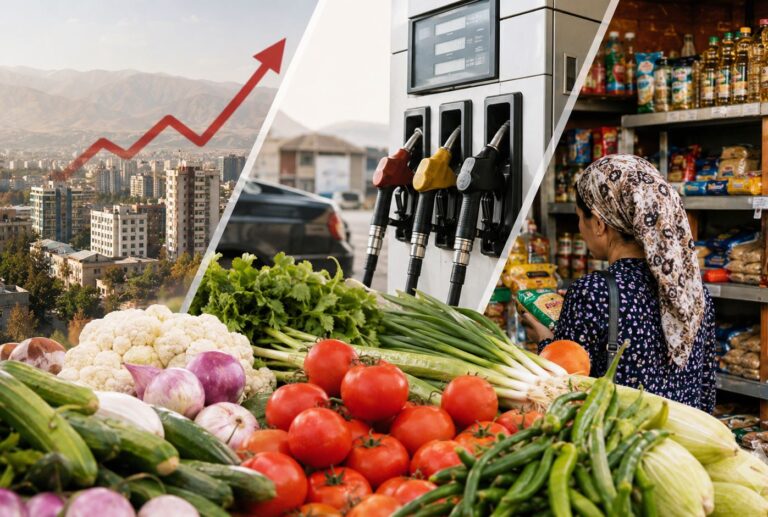
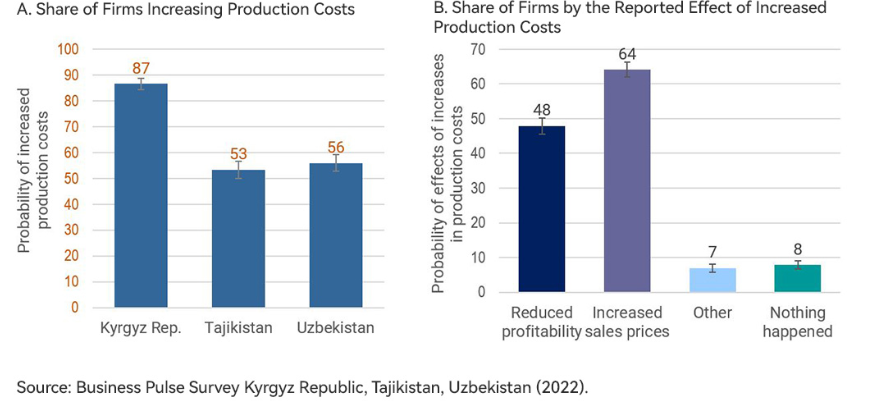
Since Russian launched its so-called “special military operation in Ukraine on February 24, 65 percent of firms in the tree surveyed countries of Central Asia have reportedly face increasing production costs, with such cost increases more widespread among Kyrgyz firms given they source more inputs from Russia. The survey, in particular, says 53 percent of firms surveyed in Tajikistan have faced increasing production costs.
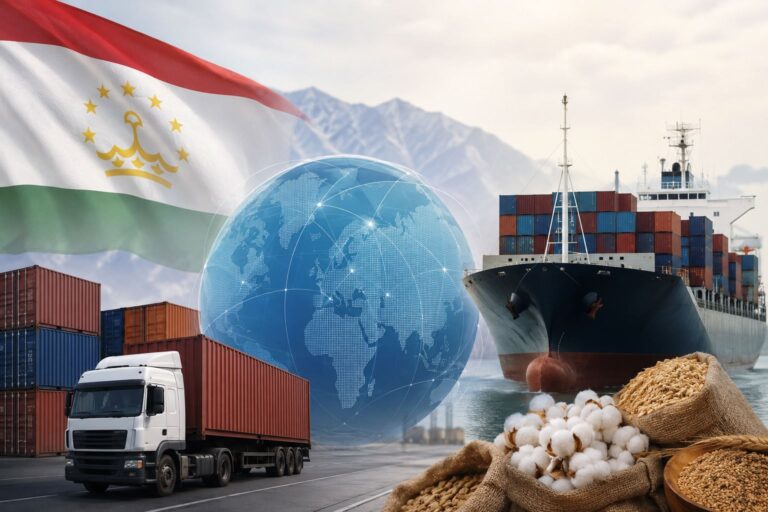
Overall, 43% of firms surveyed in the three Central Asian nations reportedly indicated that either imports from Russia or Ukraine have decreased or that they have stopped sourcing from these countries altogether. In addition, firms are responding to growing production costs by raising their sales prices or by coping with reduced profitability.
Moreover, firms that sell to exporters or multinationals from Russia or Ukraine experience, on average, a 5% decline in sales (with large variation around this average ranging from around a 3% growth in sales to roughly a 13% drop) while firms not selling to Russia or Ukraine have seen their sales increase by 5% on average.
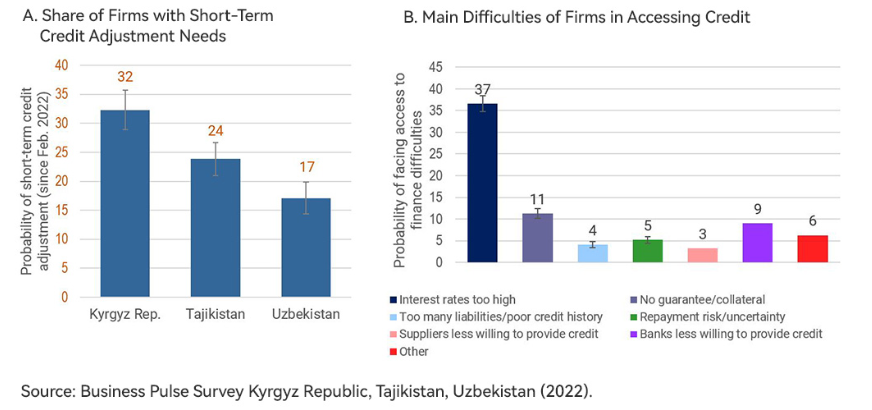
The survey notes that firms Kyrgyzstan, Tajikistan, and Uzbekistan have reportedly struggled with increasing financial difficulties since February, possibly because of reduced profitability and greater difficulty accessing new credit financing. About one-quarter of the surveyed firms were reportedly under strain, needing to adjust their credit and decrease their debt burden.
All firms have reportedly been facing mounting difficulties in accessing credit regardless of their financial condition. High interest rates top the list of major difficulties firms confront in accessing credit. The second most commonly cited difficulty on that list is the availability of collateral and guarantees that could help address firms’ increasing credit risk and potentially reduce lending rates. And third is banks’ unwillingness to provide credit—possibly stemming from tightened credit standards and increased risk aversion given higher global uncertainty.
As far as Tajikistan is concerned, the survey says 24 percent of firms in Tajikistan have struggled with increasing financial difficulties since the Russian-Ukrainian conflict began in February.
The survey says that in sum, businesses in the Kyrgyz Republic, Tajikistan, and Uzbekistan are being squeezed by their rising production costs and worsening access to credit. As a result, these firms’ productivity and competitiveness will likely suffer, leading to closures, job losses, and slower economic growth. In response to these challenges, policymakers in these three countries should think about transparent assistance to firms that:
– Helps redirect and diversify away from trade that has been impacted by sanctions on Russia, including by using embassies to identify alternative markets to source from and export to
– Tackles transport and logistical issues as well as overcomes trade payment challenges such as those related to disrupted correspondence banking given sanctions on Russia
– Improves the targeting of financial and non-financial support to businesses to ensure only firms that truly need support receive it and that fiscal resources are not drained unnecessarily
– Ensures that any forbearance and bankruptcy protection are time-bound and transparent, they do not provide “zombie firms” (economically unviable firms with low productivity) with a new lease on life, while easing the entry of new firms into the market
The World Bank has been supporting the Central Asian countries to better respond to this type of external shock. Some of that support comes through credit guarantee schemes to ease micro, small and medium enterprises (MSME) access to finance in Kyrgyzstan, Tajikistan, and Uzbekistan, including firms in the agricultural sector. In parallel, World Bank projects in Tajikistan and Kazakhstan, and technical assistance in Kyrgyzstan involve supplier development programs to help firms integrate into global value chains, advance their export opportunities, and build resilience.
Timely data is a critical policy tool for countries in the region to understand contemporary business dynamics and better design interventions to support firms and the overall economy. The World Bank is currently undertaking a survey in Kazakhstan, and will continue analyze just in time data to help produce actionable insights for policymakers in Central Asia as they work toward recovery and push ahead on reforms for a more resilient and sustainable future.