Testing starts for studying in schools build under financial support of the Russian Federation

Testing for pupils from the 2nd to the 8th grades wanting to study in new Russian-language schools built in the country under financial support of the Russian will be conducted from August 20-27.   “Testing will be conducted in accordance with the order of the minister of education and science of Tajikistan and a joint roadmap […]

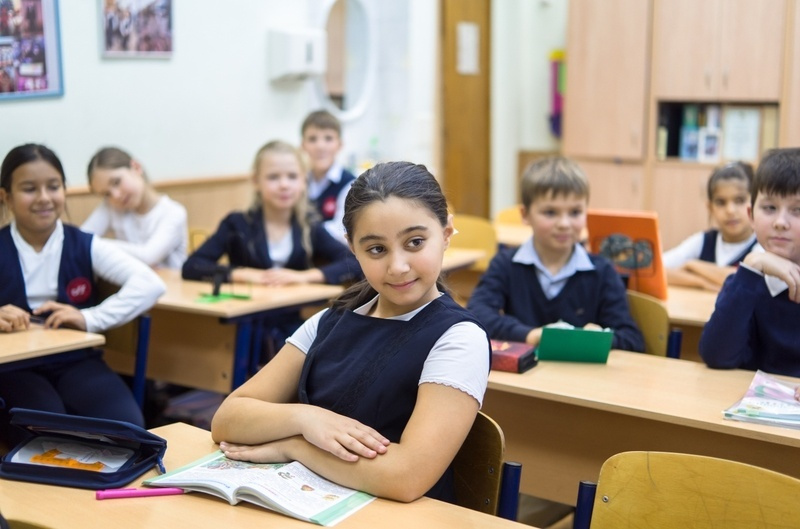
Testing for pupils from the 2nd to the 8th grades wanting to study in new Russian-language schools built in the country under financial support of the Russian will be conducted from August 20-27.  

“Testing will be conducted in accordance with the order of the minister of education and science of Tajikistan and a joint roadmap of the education ministries of Russia and Tajikistan," said Ilhom Kamolzoda, the head of the International Cooperation Department at the Ministry of Education and Science of Tajikistan. 

This information was posted on Russian Embassy’s page on Facebook.   

All the five schools are expected to open their doors to students on September 1 this year.  

Meanwhile, Kamolzoda mentioned in Radio Sadoi Dushanbe program “Russia-Tajikistan – Bridge of Friendship” that selection will be carried out only for pupils from the 2nd to the 8th grades, and it is decided not to admit older students to these schools, because they will not be well prepared for Russia’s Unified State Exam. 

The school built under Russia’s financial support in Dushanbe will accommodate 1,224 pupils, while 3,500 applications for studying in this school have been received to date, Kamolzoda said.    

In all, the five schools will accommodate more than 6,000 pupils. 

Recall, a government-to-government agreement between Tajikistan and Russia on construction of five Russian-language schools in Tajikistan was signed in Moscow on April 17, 2019.  Each of these schools will accommodate up to 1,224 pupils.

The schools have been built in Dushanbe, Kulob, Khujand, Bokhtar and Tursunzoda.

Russia has begun sending teachers to secondary schools in Tajikistan since the academic year 2019-2020.  They teach subjects such as mathematics, physics, biology, chemistry, computer science, Russian, and others at secondary schools where teaching is conducted in Russian.

The education sector in Tajikistan has been in decline after collapse of the Soviet Union in 1991 and many Tajik nationals described the effort to bring over Russian teachers as a much-needed remedy. 
Join us on social media!

Article translations:

Related Article

Оби зулол
Tenisi
Оби зулол

Most Read

Коммерсбонк Точикистон

Recent Articles

RZD announces the restoration of passenger services between Moscow and Dushanbe

Direct rail services between the capitals of Russia and Tajikistan were suspended in March 2020 due to the COVID-19 pandemic.

#AP30/Stories. “Selam! Heller nichek?” How Tatars live today in Sughd province

On the 30th anniversary of "Asia-Plus," we continue to publish reports that remain relevant even after years. This story was told in 2021, and since then, little has changed in the life of the Tatar community in Tajikistan.

15,000 cameras, drones, and robots: how technology monitors pilgrims in Mecca and Medina

During Hajj 2026, Mecca and Medina were under unprecedented digital control.

Another child in Dushanbe removed from family and sent to boarding school

The Ministry of Internal Affairs reports that the parents did not pay adequate attention to the child.

Emomali Rahmon instructs to address issues in seed production following criticism of the industry

Issues have been noted with certification, seed quality, and the material and technical base of the industry.

Water, climate, and a $130 billion deficit: seven key outcomes of the Water Conference in Dushanbe

At the forum, countries and international organizations discussed new mechanisms for cooperation, investments, and technologies that are essential for addressing the global water crisis.

Eskhata Bank introduces a new generation children’s wallet

"Eshkata Bank" has created a full-fledged digital platform that helps children aged 7 to 16 learn how to manage money.