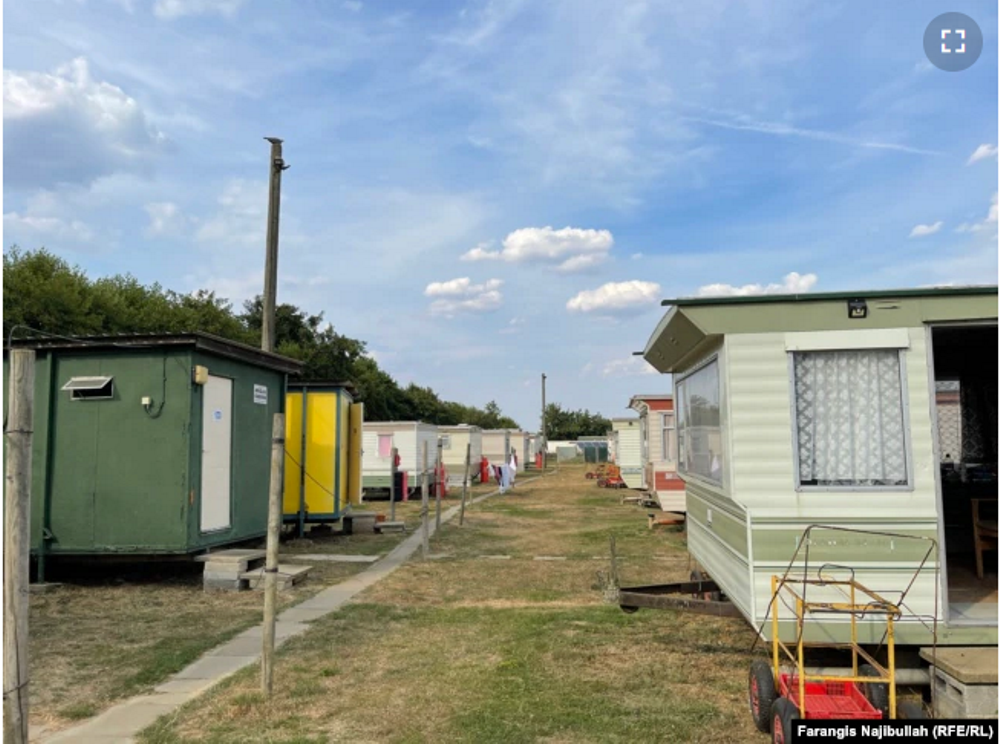
Radio Liberty says thousands of laborers from Tajikistan, Kazakhstan, Kyrgyzstan, and Uzbekistan came to Britain this year under the U.K. government’s Seasonal Workers Scheme designed to address a severe shortage of farm workers due to Brexit.
The British government has reportedly said it will make available up to 40,000 six-month visas for foreign workers this year following warnings by farmers that fruit and vegetables would rot in fields without an overseas labor force.
Meanwhile, a fruit-picker from Tajikistan told RFE/RL that their employers in a farm in Scotland gave them about 30 hours of work in a six-day week, instead of the 48 hours a week they were promised by recruiters before coming to the United Kingdom.
Similar complaints have reportedly been made by other laborers from Central Asia working in different parts of the United Kingdom.
The workers spoke to RFE/RL on condition of anonymity, saying they didn't want to "get in trouble" for speaking out.
The paycheck of a Central Asian worker in Milton (England) shown to RFE/RL says he earned about $380 one week in August after paying for national insurance, which is required. A further $72 will be deducted from his wages every week for accommodation — a small room inside a caravan — that the farm provides.
Several workers from Central Asia told RFE/RL that before arriving in Britain they were promised a minimum of 48 hours of work per week at 10.10 pounds (about $12.20) per hour.
But some farms gave them new contracts after they arrived with fewer hours and a lower wage.
Britain recently raised seasonal workers’ salaries from the minimum wage to a skilled workers' rate. According to the government's official guidelines, seasonal workers who received their visas on or after April 6 should be paid at least 10.10 pounds ($12.20) for each hour they work.
Fruitful Jobs, one of the major British companies that source overseas workers for U.K. businesses, denied that recruits in Central Asia were ever told they would be guaranteed 48 hours of work a week.
AGRI-HR, a company that recruits workers from Central Asia for Fruitful Jobs, also rejected the claim they had made such promises.
However, Central Asian laborers say they make more money and feel more comfortable in Britain than in Russia, despite the language barrier.
Britain's Seasonal Workers Scheme was first launched in 2019 and has been extended until 2024 as farms struggle to find manpower for harvesting and other jobs following the country's exit from the European Union, which made it difficult for citizens from EU countries to travel to Britain.
The farms that relied on workers from the poorer EU countries, such as Bulgaria and Romania before Brexit, are now hiring laborers from faraway countries like Indonesia, Mongolia, and Nepal.
According to a 2021 British parliament report, Ukrainians made up the majority of seasonal workers in Britain between 2019 and 2021.
But the number of workers from Ukraine and Russia dropped dramatically this year because of the war in Ukraine, while the number of Central Asian applicants saw a rapid rise.
Central Asian social media posts indicate that thousands of Central Asians are currently searching for information about seasonal work in Britain.