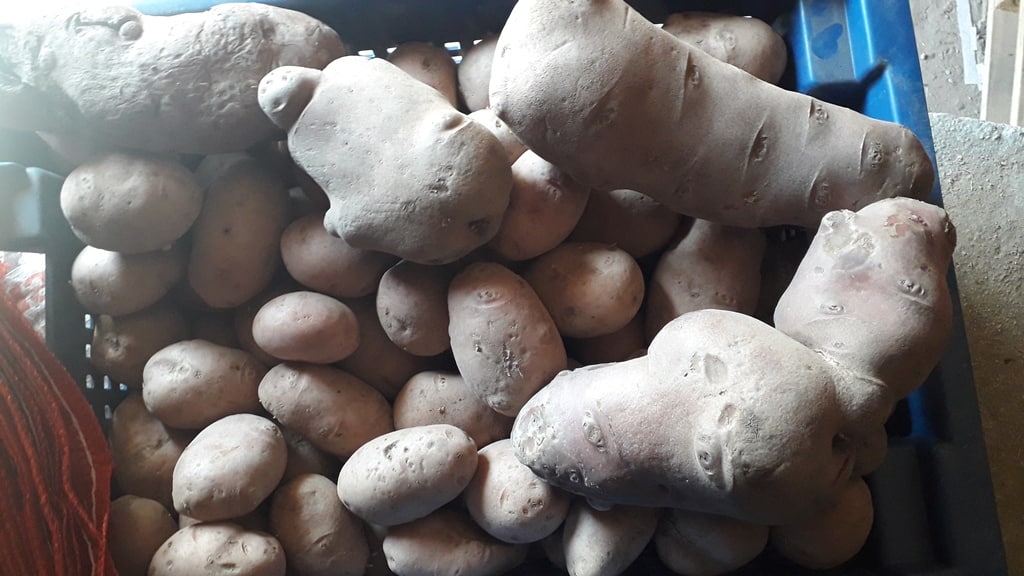
According to data provided by the Ministry of Agriculture (MoA), farming units in Tajikistan have produced 821,000 tons potatoes by November 18, which is reportedly 185,181 tons more than in the same period last year.
Back in late September, MoA officials stated that production of potatoes has decreased in Tajikistan, while now they say Tajikistan is able to meet the population’s needs in potatoes.
Meanwhile, according to data from the Agency for Statistics under the President of Tajikistan, all categories of farms in the country have produced 939,342 tons of potatoes over the first ten months of this year, which is 1,930 tons more than in the same period last year.
According to data from the MoA Crop Cultivation Directorate, a total area under potatoes in Tajikistan is 32,158 hectares, including more than 13,300 hectares allocated for potatoes in Sughd province, 9,700 hectares in districts subordinate to the center (RRP), more than 5,800 hectares in Khatlon province and about 1,300 hectares in the Gorno Badakhshan Autonomous region (GBAO).
The MoA press center notes that at the territorial cross section an average potato yield is 2.75 tons per hectare in Sughd province, 2.22 tons per hectare in districts subordinate to the center, 1.78 tons per hectare in Khatlon province, and 1.36 per hectare in GBAO.
Thus, an average potato yield in the country is 2.33 tons per hectare.
Loiq Tuichizoda, a spokesman for the MoA, says Tajik farming units last year produced a total of 1.060 million tons of potatoes.
“This year’s potato production is expected to reach 1.108 million tons,” Tuichizoda added.
According to official statistics, potato per capita consumption in Tajikistan this year is 92 kilograms.
Meanwhile, some experts say the real potato per capital consumption in the country this is about 120 kilogram.
Thus, Tajikistan’s annual requirements in this product are about 1.3 million tons. .
Current average prices for one kilogram of potatoes are 5.00-6.00 somonis in Dushanbe, 4.00 somonis in Khujand, the capital of Sughd province, 3.50 somonis in Rasht (Rasht Valley in eastern Tajikistan), 5.00 somonis in Bokhtar, the capital of Khatlon province, and 6.00 somonis in Khorog, the capital of the Gorno Badakhshan Autonomous Region.
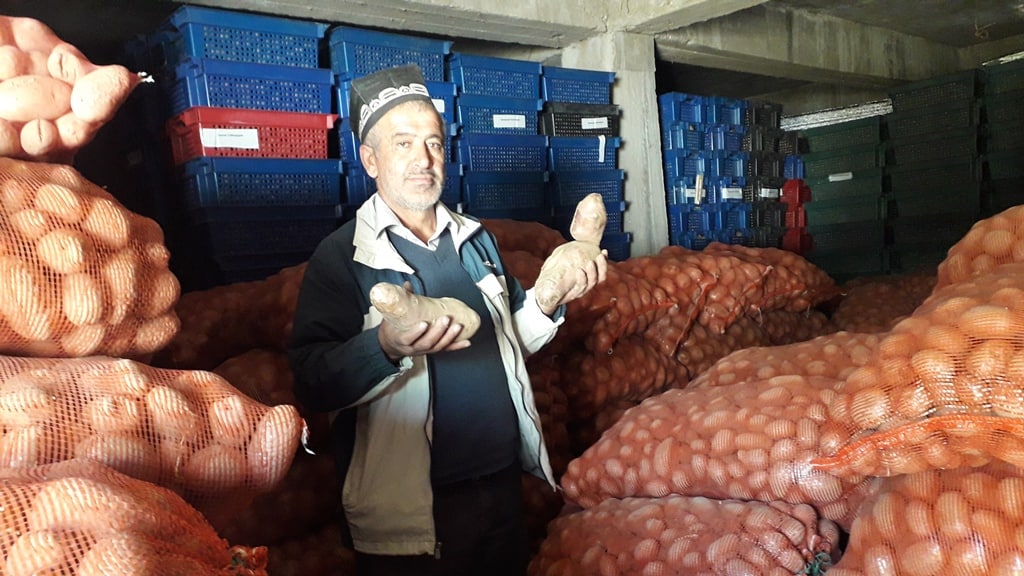
A fair of potatoes and potato dishes will take place at Dushanbe’s Merhrgon bazaar on November 26.
Potatoes are a staple of the diet in Tajikistan. The main bulk of potato harvest in Tajikistan is provided by the mountainous regions of the Zaravshon Valley, Istaravshan, Shahriston and Ghonchi in Sughd province and Lakhsh district in Rasht Valley. This is the north of the country and potatoes are harvested only once per year in these areas – they are harvested in September and usually planted in April.
Therefore, the maximum supply of potatoes on the market is noted in September-October, and it is for stored to ensure supplies in the winter-spring period. Since there is a shortage of modern potato storage facilities in the country, the shortage of potatoes usually begins to be felt in February-March.