Tajik migrant workers say working conditions in Korea are good but the country remains difficult to enter

Radio Liberty’s Tajik Service, known locally as Radio Ozodi, reported on January 7 that Tajik labor migrants working in logging in the Republic of Korea say they earn up to US$100 a day.   According to them, working conditions in Kore are better than in the Russian Federation.  They say their working day lasts from 8:00 […]

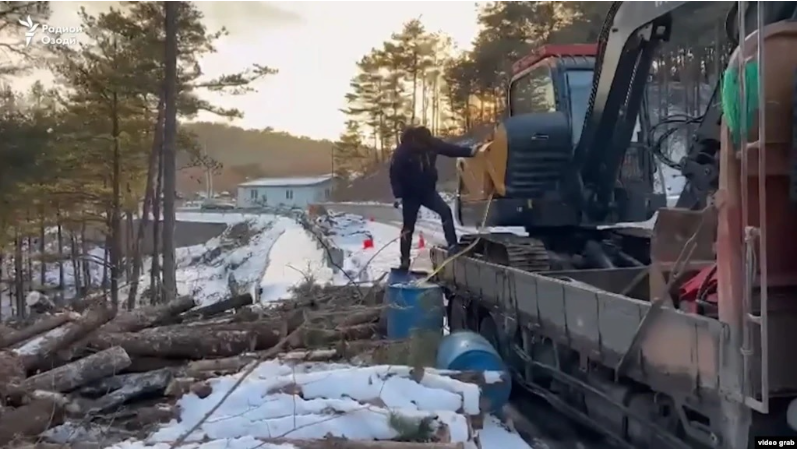
Radio Liberty’s Tajik Service, known locally as Radio Ozodi, reported on January 7 that Tajik labor migrants working in logging in the Republic of Korea say they earn up to US$100 a day.  

According to them, working conditions in Kore are better than in the Russian Federation.  They say their working day lasts from 8:00 am to 5:00 pm.  At this site, their job is to cut dead trees and collect them.  At the same time, they say that it is quite possible that the next day they can be involved in some construction work or in work in another sector.

They reportedly get paid on time and they don't get chased by police on the street.   If they work beyond the statutory time, they get overtime.  

Special companies find jobs for them and every morning migrants are attracted to different jobs, at the discretion of the employer.

The migrants say they came to Korea for work a long time ago:  some of them came two years ago and some others five or six years ago. 

The Republic of Korea has reportedly become a new destination country for Tajik labor migrants over the past three years.  After Russia’s invasion of Ukraine, South Korea became the object of close attention of thousands of Tajik labor migrants.  

Some Tajik experts consider that Russia’s labor market will gradually lose its influence within the next five-seven years.  

Meanwhile, experts note that Korea still remains difficult to enter.   It is reportedly difficult for Tajik migrants to obtain a visa to enter the Republic of Korea.  Mostly, they are given a work visa for the period of six months, and therefore, many Tajik labor migrants are living and working in this country illegally. 

It is noted that so far Tajikistan and South Korea have not signed any government-to-government agreement on labor migration cooperation.  

Radio Ozodi says that according to various estimates, more than 5,000 Tajik nationals are currently working in South Korea officially.  

Join us on social media!

Article translations:

Related Article

Оби зулол
Tenisi
Оби зулол

Most Read

Коммерсбонк Точикистон

Recent Articles

RZD announces the restoration of passenger services between Moscow and Dushanbe

Direct rail services between the capitals of Russia and Tajikistan were suspended in March 2020 due to the COVID-19 pandemic.

#AP30/Stories. “Selam! Heller nichek?” How Tatars live today in Sughd province

On the 30th anniversary of "Asia-Plus," we continue to publish reports that remain relevant even after years. This story was told in 2021, and since then, little has changed in the life of the Tatar community in Tajikistan.

15,000 cameras, drones, and robots: how technology monitors pilgrims in Mecca and Medina

During Hajj 2026, Mecca and Medina were under unprecedented digital control.

Another child in Dushanbe removed from family and sent to boarding school

The Ministry of Internal Affairs reports that the parents did not pay adequate attention to the child.

Emomali Rahmon instructs to address issues in seed production following criticism of the industry

Issues have been noted with certification, seed quality, and the material and technical base of the industry.

Water, climate, and a $130 billion deficit: seven key outcomes of the Water Conference in Dushanbe

At the forum, countries and international organizations discussed new mechanisms for cooperation, investments, and technologies that are essential for addressing the global water crisis.

Eskhata Bank introduces a new generation children’s wallet

"Eshkata Bank" has created a full-fledged digital platform that helps children aged 7 to 16 learn how to manage money.