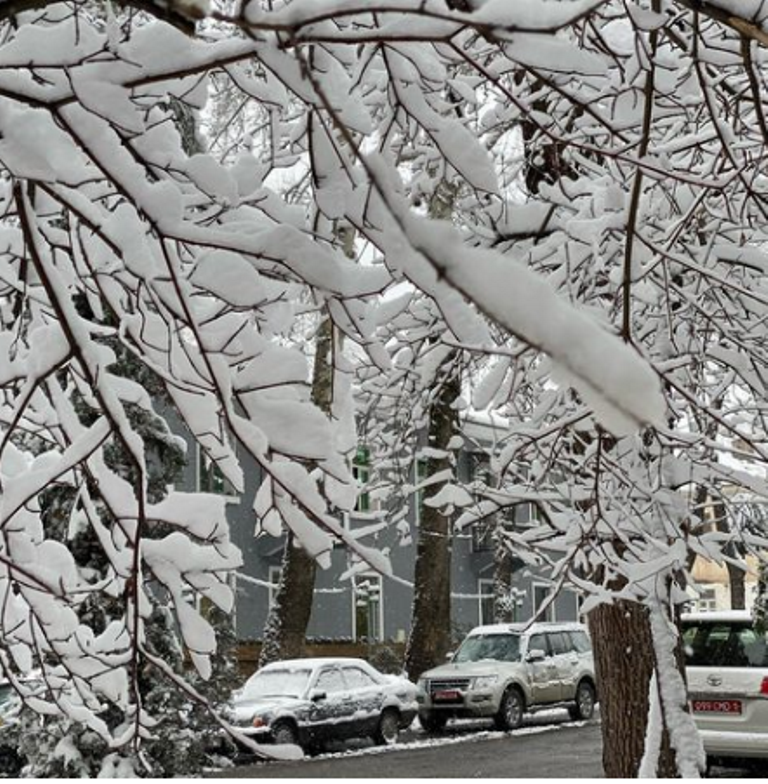
The harshest phase of winter has descended with a snowy thud across all of Central Asia.
Eurasianet says highways are blocked in Kazakhstan, schools have been shuttered in Tajikistan, trees and electricity pylons are crashing in Uzbekistan, and officials in Kyrgyzstan are pleading with apartment-dwellers to close windows to basements to avoid water pipes freezing.
The movement on highways in Kazakhstan is reportedly so bad that Uzbek officials have even warned their own motorists against going there until the weather eases.
As of the start of the week, the national road management service in Kazakhstan, Kazavtozhol, said it had closed 60 roads because of the cold snap that has seen temperatures in the capital, Astana, drop to less than -30ºC. People driving diesel vehicles have been instructed not to drive at all as a drop in air temperatures could lead to the risk of vehicle fuel systems freezing.
The danger on this front has been compounded by the rising cost of winter diesel. Motorists seeking to economize have often fallen back on cheaper summer diesel, which can freeze at temperatures as high as -5ºC.
Adverse winter conditions have led to aviation authorities in Uzbekistan grounding numerous domestic and international flights.
In Tashkent, municipal workers have been battling to clear the streets. Multiple accounts trickled in across the day of trees cracking under the weight of snow and crashing onto cars parked underneath, overhead heating pipes buckling, and store awnings collapsing.
In Tajikistan, children may be celebrating a little though. The Education Ministry there has said that the winter holidays will be extended through to January 16 due to the cold snap. Officials say the closure is to avoid an overly sharp increase in children coming down with colds, which sounds like an implicit admission that they were going to struggle to warm classrooms.
Many households across the country will endure the same problem, according to Eurasianet. The capital, Dushanbe, is unused to seeing temperatures slip below freezing for sustained periods, which is what forecasters are anticipating is poised to happen.
In Kyrgyzstan, a not insignificant number of owners of houses – as opposed to apartment-dwellers – will resort to keeping warm by fueling their stoves with household waste. It is this practice that is to a large extent responsible for causing severe air pollution in the capital, Bishkek.
Kyrgyz health officials have warned the public, and particularly people with respiratory conditions, against going outside. They have also pleaded with stove-owners to refrain from indiscriminately burning anything at hand.
City hall authorities in Bishkek have reportedly asked apartment block administrators to make sure that their buildings do not get too cold so as to avoid water pipes and the sewers freezing.
Turkmenistan has not been spared either, although sanctioned media there is putting a glossy spin on the uncharacteristic snowfall. One outlet, Arzuw, talked of the falling snowflakes “turning the streets of Ashgabat into a real winter fairy tale.” Temperatures in the Turkmen capital were forecast to possibly drop to -6ºC at night on January 10.