A report released by the Asian Development Bank (ADB) says CAREC countries can be split into several groups depending on their prevailing type of fuel and energy system background.
Thus, countries with a high share of hydropower include Georgia, Kyrgyzstan and Tajikistan.
Countries with a high share of hydrocarbons include Azerbaijan, Kazakhstan, Turkmenistan, and Uzbekistan, and countries with a high share of coal include Kazakhstan, Mongolia, and China.
CAREC Energy Outlook 2030 notes that hydropower is the foundation of Tajikistan’s energy system, accounting for nearly 93% of its power generation and around 90% of its installed capacity. Tajikistan’s energy sector is one of the cleanest in the world in terms of greenhouse gas (GHG) emissions.
The report says Tajikistan relies on domestically available hydropower resources to cover a major share of final energy demand. The country does not only have abundant water and hydropower resources, but also legacy hydropower infrastructure from the former Soviet Union. In addition, Tajikistan has expanded coal production in recent years to diversify electricity production. Other energy fuels consumed in Tajikistan—mainly oil products and, to a much lesser extent, natural gas—are imported, due to the lack of domestically available resources.
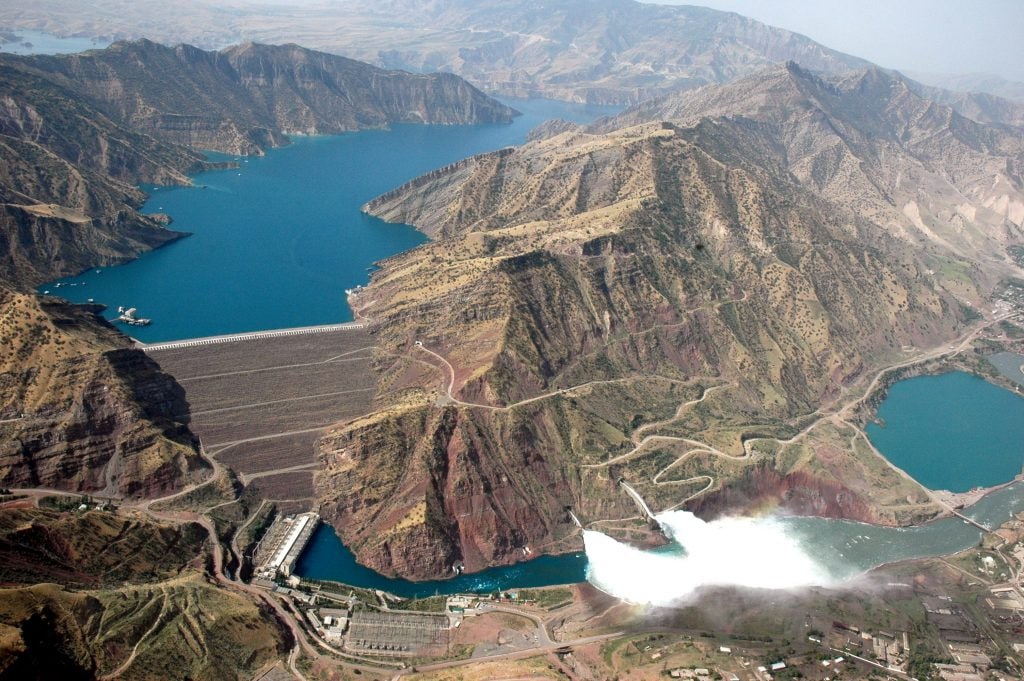
Overall, the power system in Tajikistan is reportedly centralized, as electricity is mostly generated by large power plants that supply to the majority of the population. Historically, hydropower has been the main contributor to Tajikistan’s electricity generation. The country’s total power generation capacity is 6.1 GW, with hydropower covering around 90% of the total installed capacity. Most of the hydropower plants (HPPs) in Tajikistan are over 30 years old and need rehabilitation. Several units have been rehabilitated already, and several are currently undergoing rehabilitation. The first phase of the rehabilitation of the Nurek HPP, which is Tajikistan’s largest HPP, with an installed capacity of 3 GW, which was launched in March 2019 and is expected to continue through 2023—is co-financed by the World Bank, Asian Infrastructure Investment Bank, and Eurasian Fund for Stabilization and Development. In 2020, the World Bank approved additional financing for the second phase of the Nurek Hydropower Rehabilitation Project. Despite being Central Asia’s leader in hydropower availability, Tajikistan is estimated to use only nearly 6% of its total hydropower potential.
The remaining share of the country’s installed capacity is made up of thermal power plants, operating in winter to supply electricity and heat. This is due to higher demands during winter and to the seasonal patterns of hydropower generation. The country relies on three combined heat and power (CHP) plants, with a total capacity of 718 megawatts (MW), or 0.7 GW. In response to increasing demand and reduced gas imports, the country has prioritized the construction of new coal-fired plants, with the most recent one having been commissioned in 2014.
The report notes that although Tajikistan is currently one of the least carbon-intensive countries in the world, its energy sector’s growing emphasis on coal-fired energy is making the country less environmentally sustainable.
According to the report, Tajikistan plays an important role in the Central Asian energy trade, as it is interconnected with all neighboring countries.
By targeting an increase in hydropower generation, the country is planning to expand its export capabilities via the Central Asian Power System (CAPS), as well as to Afghanistan and Pakistan via the Central Asia–South Asia Electricity Transmission and Trade Project (CASA-1000). Nevertheless, it is important to note that the uncertain political situation in Afghanistan, through which Tajikistan will transfer
its electricity, has rendered difficult any predictions as to when and if the CASA-1000 project can be successfully commissioned.
Tajikistan started to export power to Uzbekistan through a 500 kV line on an islanded mode in 2018.
Tajikistan has received financial support from the ADB for the reconnection to CAPS to synchronize the systems and expand regional trade in the energy sector.