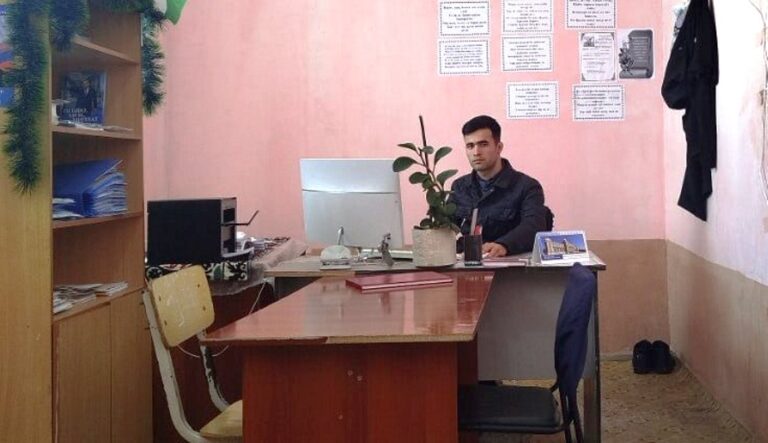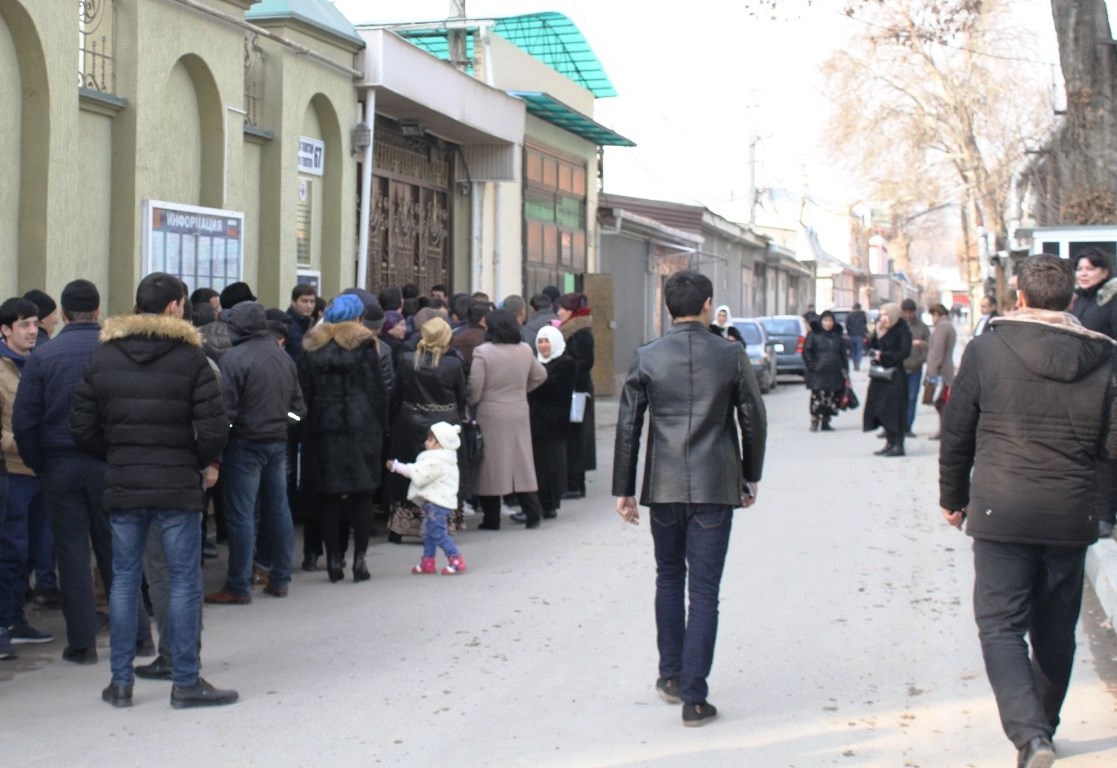
The representative office of Russia’s Interior Ministry in Dushanbe has resumed reception of citizens for participation in the program of voluntary resettlement of compatriot living abroad to the Russian Federation.
A representative of the Russian Interior Ministry’s office in Dushanbe says appointments can be booked only with the personal presence of a person who wishes to move.
Recall, 119,609 Tajik nationals have received Russian citizenship over the first nine months of last year, while for the whole of 2021, 103,600 Tajik nationals received Russian citizenship.
The State Program for Assisting Compatriots Residing Abroad in Their Voluntary Resettlement to the Russian Federation (2007 – October 2011) was approved in 2006 and launched in January 2007. Russian government officials estimated that more than 25 million people were eligible for the repatriation program, “many of them ethnic Russians who found themselves living in former Soviet republics after the Soviet collapse in 1991.”
The program has been promoted in several countries, including the Commonwealth of Independent States (CIS). According to the Russian government, most requests for participation in the program come from compatriots living in Kazakhstan, Uzbekistan, Armenia, Ukraine, Moldova, Kyrgyzstan, and Tajikistan.
The program designates the areas in which new arrivals will live in Russia, providing them with some benefits on the condition that they stay in these regions for at least two years.
Basic requirements for participation in the resettlement program are the following: knowledge of the traditions of Russian culture; knowledge of the Russian language; and be 18 years of age and over.
The presence of higher education and all kinds of certificates as well as knowledge of foreign languages are welcome.
Russian president’s decree dated August 12, 2022 N 547 "On Amendments to the State Program for Assistance in the Voluntary Resettlement of Compatriots Residing Abroad to the Russian Federation, approved by Decree of the President of Russia No 637 dated June 22, 2006” was published, simplifying the procedure for applying to compatriots living abroad in the territory of unfriendly countries and wishing to move to Russia.
The draft of this decree was reportedly developed by the Ministry of Internal Affairs and is aimed at simplifying the submission of documents by persons living in the territory of unfriendly countries and wishing to move to Russia under the State Program and facing difficulties in filing documents in their countries of citizenship.
According to the new edition of the Program outside of Russia, an application for participation in the State Program can be submitted to the authorized bodies in the states: their citizenship; their permanent residence; and their stay – for compatriots permanently residing in the territories of unfriendly foreign states, the list of which is determined by the Government of Russia.
The decree also expands the circle of persons who can apply for participation in the program on the territory of Russia – now it can be submitted by persons permanently residing in the territories of unfriendly states, as well as those who have received refugee status or received temporary asylum in Russia.
The Decree entered into force on August 12, 2022.