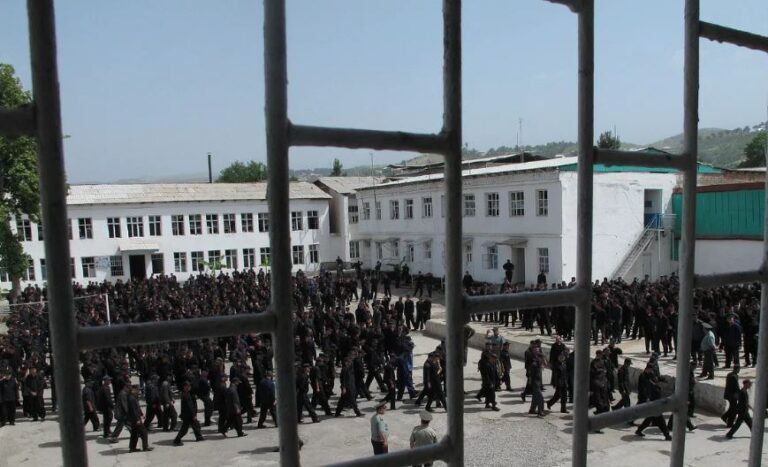
To enter a polygamous marriage is not uncommon in Tajikistan. The practice is officially banned by law and is punishable by up to two years in a penal colony, authorities, however, rarely pursue such prosecutions. Although the practice is not recognized in law, it is informally sanctioned by Muslim clerics. There are no official data attesting how many people are involved in such relationships; the number of man taking multiple wives, however, is very large in Tajikistan.
Some of women being a second, and sometimes third, wife have worked out well for them.
The 43-year-old Lola, already had a child, told Eurasianet on condition of anonymity she met the man that she would go on to marry eight years ago. “At that time, I knew I wanted another child. I knew that I wanted financial stability, and this was the man that I needed,” said Lola. “When two adults get together, they should be fully aware of their own decisions. And when they take a decision, everybody should be responsible for themselves and their own choices.”
Before she married, Lola reportedly took care of her daughter alone. The father of her child had no interest in helping, she said. Lola’s new husband arranged an apartment, gave money and provided support for the children, both his own and that of the other man, she told Eurasianet.
So long as things go smoothly, most people involved are reasonably content. But if there is a hitch, Lola and other women like her have no protection under the law. Second marriages, sealed in the presence of an imam, are recognized only informally.
Ms. Qanoat Homidova, the head of the Tajikistan League of Female Lawyers, told Eurasianet that
women consenting to become a second, and sometimes third, wife are typically acting out of expedience.
Marriage, even in a polygamous setup, accords some degree of financial stability. Homidova said some women maintain they prefer to share the burden of family labor with others, as pressure from overbearing in-laws can often be difficult to endure.
“A third thing that is very common in the villages is that a divorced woman is a lively topic for discussion. God forbid she talks to a man – in that case, she and her children will become pariahs. By becoming a second wife, a woman can get protection from all evil tongues,” Homidova said.
Being a second wife, though, comes with its own set of social stigmas.
Polygamy in Tajikistan had resurgence in popularity in the 1990s, in the wake of a grinding civil war that claimed the lives of countless thousands of male combatants. There is no reliable estimate for just how many men died in the fighting.
The practice is officially banned by law and is punishable by up to two years in a penal colony, authorities, however, rarely pursue such prosecutions.
Islamic conventions as observed in Tajikistan dictate that men should in times of need take on spouses who are widows, sick or older. In practice, though, the peer pressure is on men to take young brides. And having multiple young wives is deemed something of a status symbol.
The elevation of status for men comes with low stakes. The prospect of prosecution is remote and a second wife is easily disposable.
Ms. Homidova, the lawyer, said one adequate response to this predicament would be for second marriages to somehow be enshrined in law.