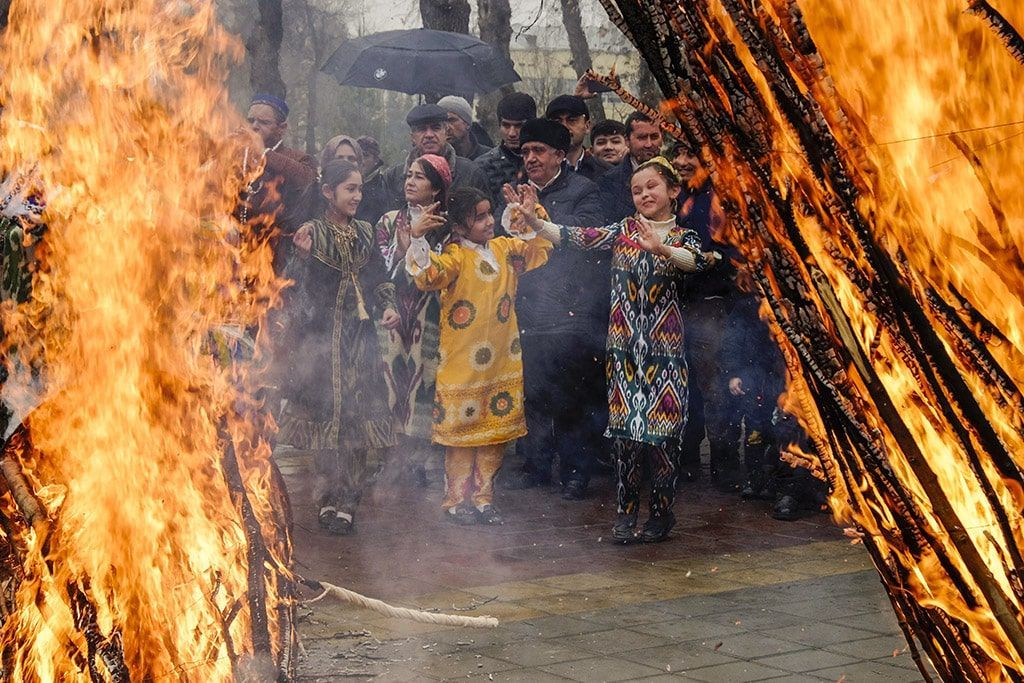
This year, Sada festival will be celebrated in Dushanbe on January 29. As usual, the main events dedicated to this festival will take place in the Firdavsi Park (formerly Peoples’ Friendship Park), according to the Ministry of Agriculture (MoA).
Fairs of agricultural goods, handicrafts and agricultural machines will be organized in Dushanbe on the occasion of the Sada festival.
The celebrations are organized by the Dushanbe mayor’s office and the ministries of culture and agriculture.
The Sada (Sadeh in Persian) festival is the largest fire celebration and one of the oldest known traditions in ancient Persia, which is celebrated forty days after the Yalda Night (Shabi Chilla) and 50 days before Navrouz as thanksgiving from God's blessings by Zoroastrians.
Sada is an ancient Iranian festival that dates back to the first Persian Empire, Achaemenid Empire.
Sada in Tajik means “hundred” and refers to one hundred days and nights past the end of summer (or the beginning of long-winter known to start at the end of summer in ancient Iran). Sada is a mid-winter festival to honor fire and to defeat the forces of darkness, frost, and cold.
Sada is the third important festival of Iranians, which has been celebrated from ancient times until today. In the past, ancient Iranians had a special festival for each month of the year, and the Sada Festival, held on 10th of Bahman (January 30th), is one of the most significant festivals. Iranians believed that on this very day humans discovered fire which is a sign from God, the symbol of light energy and warmth, and also a weapon for battle against darkness and Ahriman (devil). Some historians believe that Sada was a religious ceremony, however historical evidence show that it was a national festival held by normal people.