The Economic Cooperation Organization (ECO), which unites 10 countries of South, Central and West Asia, intends to turn its region into a block of interconnected and sustainable economies, ECO Secretary General Khusrav Noziri stated on January 24, according to Bolshaya Aziya (Big Asia).
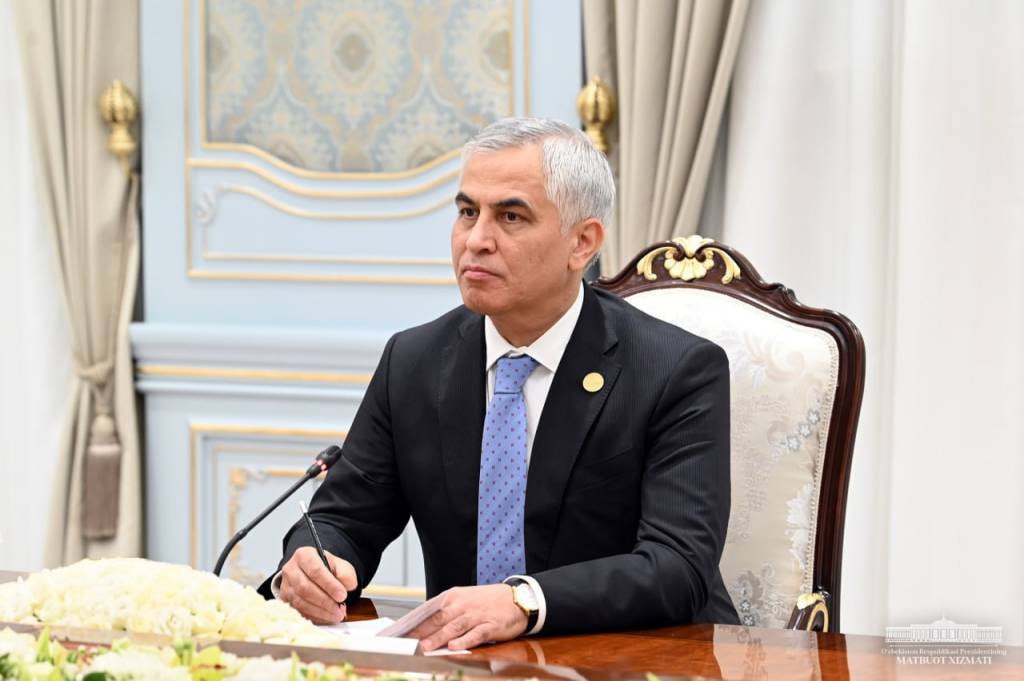
"ECO is an intergovernmental economic forum of 10 countries of South, Central and West Asia, the organization is determined to turn the region into a block of interconnected, sustainable economies through good governance, as well as accelerating trade activities," Noziri said, speaking at a briefing following the results of the 26th meeting of the ECO Council of Ministers in Tashkent Uzbekistan.
According to him, one of the priority areas of activity is trade liberalization and investment protection, as well as the full development of transport, logistics and trade corridors.
The ECO secretary-general also said that the ECO member nations are actively engaged in ensuring energy security, for which regional energy corridors are being created, clean energy sources are being introduced.
He further noted that the organization's member countries are actively developing industrial cooperation, tourism, and environmental protection.
Ambassador Khusrav Noziri arrived in Tehran on August 16, 2021 to assume his responsibilities as new Secretary General of the Economic Cooperation Organization. He is 13th Secretary General of the ECO.
Mr. Khusrav Noziri is a Tajikistan national. According to South-South Galaxy, he was born in Dushanbe, Tajikistan and graduated from the Faculty of Oriental Studies at the Tajik State University in 1991. Before becoming the Secretary General of ECO, he had served as the First Deputy Minister of Foreign Affairs of Tajikistan.
The Economic Cooperation Organization or ECO is an Asian political and economic intergovernmental organization that was founded in 1985 in Tehran by the leaders of Iran, Pakistan, and Turkiye. It provides a platform to discuss ways to improve development and promote trade and investment opportunities. The ECO is an ad hoc organization under the United Nations Charter. The objective is to establish a single market for goods and services, much like the European Union. After the dissolution of the Soviet Union, the ECO expanded to include Afghanistan, Azerbaijan, Kazakhstan, Kyrgyzstan, Tajikistan, Turkmenistan, and Uzbekistan in 1992.
The current framework of the ECO expresses itself mostly in the form of bilateral agreements and arbitration mechanisms between individual and fully sovereign member states. That makes the ECO similar to ASEAN in that it is an organization that has its own offices and bureaucracy for implementation of trade amongst sovereign member states.
The coordination and monitoring of ECO activities is carried out by the secretariat, which is elected and appointed by the Council of Ministers of Foreign Affairs of ECO member States for a period of three years.