In a report released at a news conference in Dushanbe, Ilhomjon Oimuhammadzoda, the head of the Main Geology Directorate under the Government of Tajikistan, revealed on February 1 that ten new gold deposits have been explored in the country.
According to him, they are located in the central part of Tajikistan and the Gorno Badakhshan Autonomous Region (GBAO).
“Their reserves will be accurately determined only after appropriate researches,” Tajik chief geologist said.
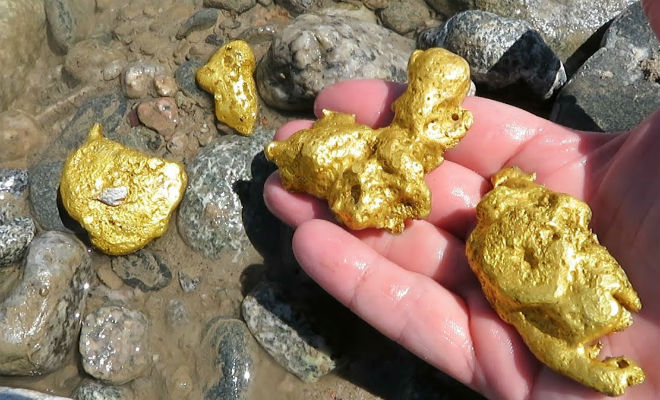
“Besides, 13 alluvial gold placer deposits with a total length of 52.5 kilometers have been explored in Muminobod and Shamsiddin-Shohin districts of Khatlon province,” Oimuhammadzoda said.
He further added that those sites had been proposed to the Ministry of Finance for issuance of licenses for artisanal and small-scale gold mining.
Recall, Tajikistan has legalized artisanal and small-scale precious metal and stone mining. For individual production of precious metals and stones, Tajik nationals have to get license from the Ministry of Finance and they should sell the produced precious metals and stones to the state treasury. The government endorsed the rules of giving licenses to individual persons to produce precious stones and metals in artisanal and small-scale ways on November 27, 2019.
The list of precious and semi-precious stones permitted to be produced in artisanal and small-scale ways includes: ruby; sapphire; chrysolite; topaz; beryl; spinel; clinogumite; garnet; nephritis; agate; rhinestone; placers of antimony, fluorite and other minerals in eluvial, deluvial, proluvial and colluvial deposits.
While producing precious metals and stones, prospectors have the right to use hand tools, equipment with an engine power of not more than 50 horsepower and mini-washing devices with a production capacity of not more than 5m³ / hour.
They should sell the produced precious metals and stones to the state treasury or to the points set up by the state treasury.
Physical entities should rehabilitate land plots and other natural objects affected during the extraction works and bring them in a condition suitable for further use.
The Main Geology Directorate had earlier noted that a total volume of Tajikistan’s gold reserves is about 500 tons.
According to data from the Ministry of Industry and New Technologies, Tajikistan has 137 deposits with estimated reserves of industrial gold and 127 deposits of non-industrial gold.
Four large gold mining companies now operate in Tajikistan: Tilloi Tojik; Tajik-Chinese JV Zarafshon; Tajik-Canadian JV Aprelevka; and China Nonferrous Gold Limited, which is the first foreign company to obtain 100% ownership of a mining and exploration project in Tajikistan. Besides, enterprises such as Odina, Nazira, Ganj, Barakat and Istiqlol are engaged in gold production in the country; they produce alluvia gold.
Most of gold comes from the Jilau deposit operated by Tajik-Chinese joint venture, Zarafshon, which reportedly accounts for more than 70 percent of the total amount of gold produced in Tajikistan.