The estimated budget for construction of the Tajik section of the Turkmenistan-Afghanistan-Tajikistan (TAT) railway project will be determined after completion of the feasibility study TAT railway project will be determined after completion of the feasibility study, the Minister of Transport Azim Ibrohim told reporters in Dushanbe on February 1.
He further noted that specialists from the Republic of Korea are engaged in carrying out preliminary work necessary for preparation of the feasibility study for construction of the Jaloliddin-Balkhi – Jaihoun — Panji Poyon railway.
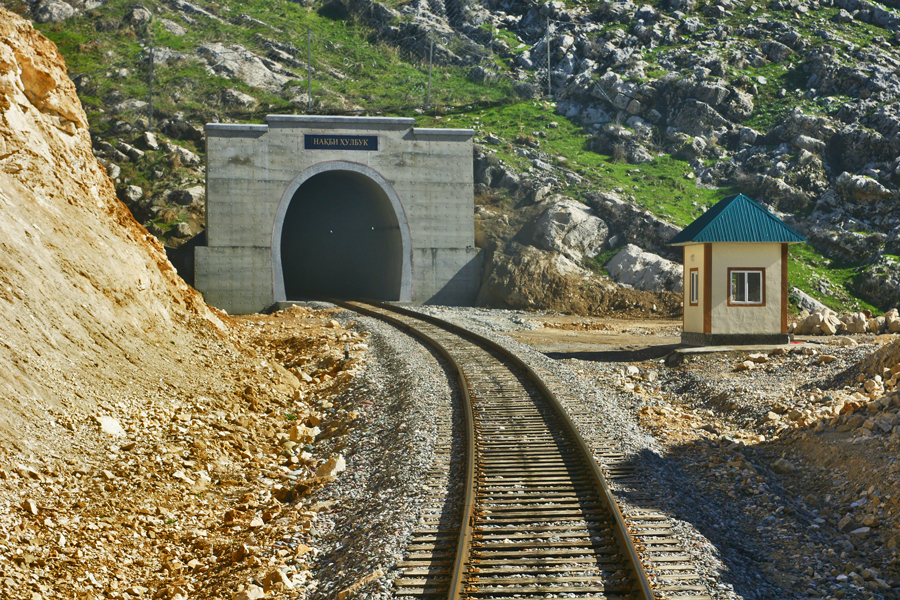
According to him, the length of Tajik section of the TAT railway project is 50 kilometers. The project also includes construction of a one-kilometer railway bridge across the Panj River.
The minister added that all expenses for the development of the feasibility study will be covered by the South Korean government.
Recall, a special working group of the Korea International Cooperation Agency (KOICA) was in Tajikistan last month to study the issue of attracting foreign investment to fund the feasibility study for construction of the Jaloliddin-Balkhi – Jaihoun — Panji Poyon railway.
Tajikistan reportedly applied to the KOICA on the issue of attracting South Korean investment for implementation of the feasibility study for this project back in September last year.
This railway is a part the Turkmenistan-Afghanistan-Tajikistan (TAT) railway project. A memorandum of understanding (MoU) for construction of the rail link connecting the three countries was signed during a trilateral meeting of the presidents of Tajikistan, Turkmenistan and Afghanistan that took place in the Turkmen capital Ashgabat on March 20, 2013. The 400-kilometer railroad is expected to connect the Afghan town of Akina-Andkhoy to Atamurat-Ymamnazar in Turkmenistan and Panj in Tajikistan.
The presidents of Afghanistan, Tajikistan, and Turkmenistan officially inaugurated the construction of the railway connecting the three nations on June 5, 2013. The ceremony took place in Turkmenistan’s northeastern province of Lebap. The presidents buried a time capsule with a message to future generations under the first section of the railway line near the town of Atamyrat.
TAT railway will be a part of a broader regional transportation initiative that will open a new transit corridor between Central Asia and world markets through Indian Ocean ports, a route less than half as long as Central Asian existing railway export options through Russia to the Baltic Sea coast. It is expected to diversify the transport routes of Tajikistan and Afghanistan.