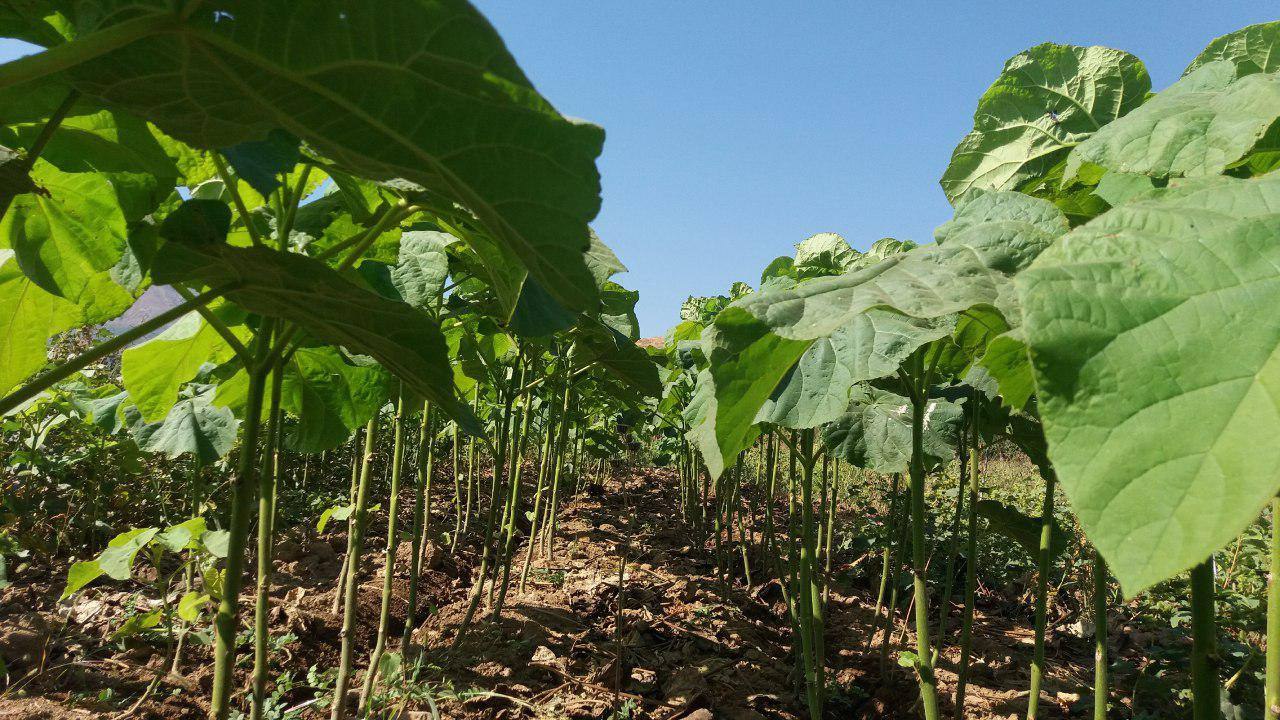
Tajik foresters are expected to plant Paulownia trees in a 1000-ha area within the next five years in the hope to have big profits. The tree is also recommended to be grown by the rural population and farmers
For one cycle of four or five years, one hectare of Paulownia trees can bring in millions of somonis.
The Forestry Agency under the Government of Tajikistan has developed the project to create ecological plantations to grow fast-growing paulownia trees for 2023-2027.
“For this purpose we brought about 20,000 Paulownia seedlings from Spain two years ago and grew from them seedlings ready for planting,” Abdujabbor Yusufzoda, Director of the Forestry Agency, told reporters in Dushanbe on January 31.
The tests have been successfully completed and 99% of the plants have adapted to the conditions Tajikistan, Yusufzoda added.
Paulownia is a genus of seven to 17 species of hardwood tree (depending on taxonomic authority). They are present in much of China, south to northern Laos and Vietnam and are long cultivated elsewhere in eastern Asia, notably in Japan and Korea.
In China, it is popular for roadside planting and as an ornamental tree. Paulownia needs much light and does not like high water tables.
Paulownia is extremely fast growing; up to 6 meters in one year when young. Some species of plantation Paulownia can be harvested for saw timber in as little as five years.
Paulownia is also used in Chinese agroforestry systems because it grows fast, its wood is light but strong, its flowers are rich in nectar, its leaves make good fodder for farm animals, it is deep-rooting, and it is late-leafing and its canopy is quite sparse so that crops below it get both light enough to grow and shelter.
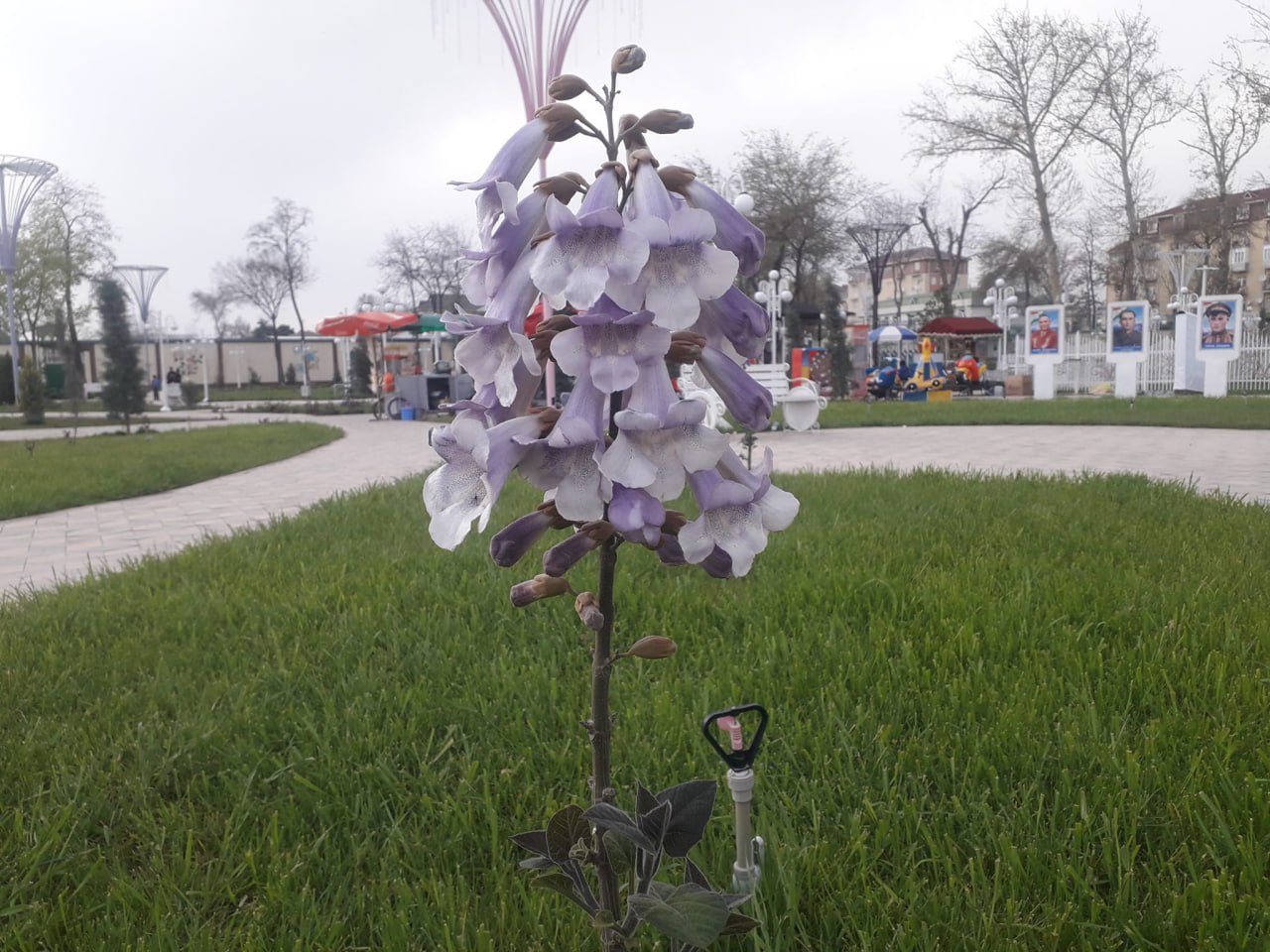
Paulownia trees produce as many as 20 million tiny seeds per year. However, the seeds are very susceptible to soil biota and only colonize well on sterile soils (such as after a high temperature wildfire). Well-drained soil is also essential. Successful plantations usually purchase plants that have been professionally propagated from root cuttings or seedlings. Although seeds, seedlings, and roots of even mature trees are susceptible to rot, the wood is not and is used for boat building and surfboards.
Trees can grow to maturity in under 10 years and produce strong, lightweight timber, good as firewood, with an even higher strength to weight ratio than balsa wood.
In Japan, paulownia is the mon of the office of prime minister, and also serves as the Government Seal of Japan used by the Cabinet and the Government of Japan (whereas the chrysanthemum is the Imperial Seal of Japan). It is one of the suits in the card game hanafuda, associated with the month of November or December (some regions reverse the order of these two months).
Paulownia wood is very light, fine-grained, and warp-resistant. It is the fastest-growing hardwood. It is used for chests, boxes, and clogs (geta). The wood is burned to make charcoal for sketching and powder for fireworks, the bark is made into a dye. The silvery-grey wood is sliced into veneers for special visiting cards.