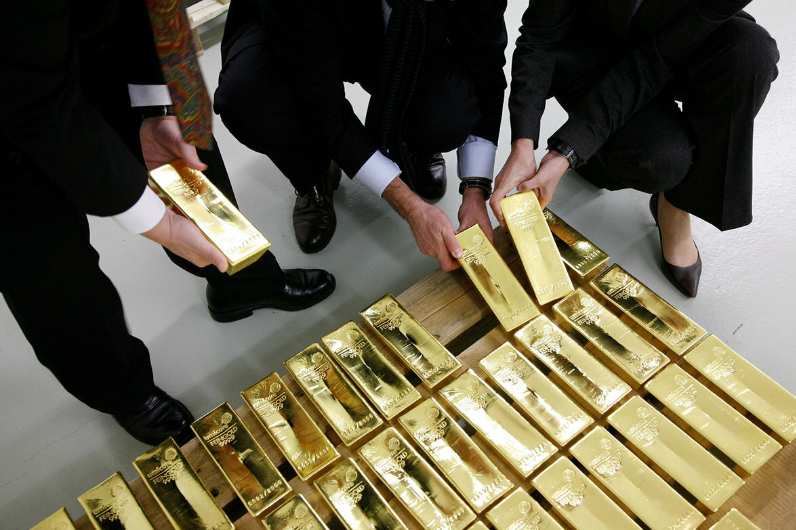
A report, released by the World Gold Council (WGC) on January 31, 2022, notes that central bank demand in 2022 totaled 1,136 tons, the highest level of buying since 1967.
The WGC notes that gold plays an important part in central banks’ reserves management, and they are significant holders of gold. This gold reserve data – compiled using IMF IFS statistics – tracks central banks’ reported purchases and sales along with gold as a percentage of their international reserves.
The report entitled “Gold Demand Trends Full Year 2022”, in particular, notes that two years on from dropping to its lowest level in a decade, central bank demand has rebounded strongly. Last year reportedly saw the second consecutive y-o-y increase in demand from this sector, with net purchases totaling 1,136 tons.
The report notes that this marked a banner year for central bank buying: 2022 was not only the thirteenth consecutive year of net purchases, but also the second highest level of annual demand on record back to 1950, boosted by +400t demand in both Q3 and Q4.
The report says that regionally, the Middle East was an active buyer of gold during the year. Egypt (47t), Qatar (35t), Iraq (34t), the United Arab Emirates (25t) and Oman (2t) significantly boosted their gold reserves.
Central Asia reportedly also saw a healthy level of buying.
The WGC report says the National Bank of Tajikistan (NBT) last year increased its gold reserves by 4 tons.
Uzbekistan and Kyrgyzstan gold reserves in 2022 rose by 34 tons and 6 tons, respectively.
WGC experts highlighted geopolitical uncertainty and high inflation as key reasons for record demand for gold in 2022.
The WGC had previously noted that Tajikistan’s gold reserves remained unchanged at 17.19 tons in the first quarter of 2022 from 17.19 tons in the fourth quarter of 2021. A total cost of those 17.19 tons of gold was reportedly 1.1 billion U.S. dollars.
By July 1, 2022, Tajikistan’s gold reserves have reportedly reached the 8-month import coverage. An average monthly volume of Tajikistan’s imports over the first six months of this year had reportedly amounted to 358 million US dollars.
The World Gold Council is the market development organization for the gold industry. It works across all parts of the industry, from gold mining to investment, with the aim of stimulating and sustaining demand for gold. The World Gold Council is an association whose members comprise the world’s leading gold mining companies. It helps to support its members to mine in a responsible way and developed the Conflict Free Gold Standard.