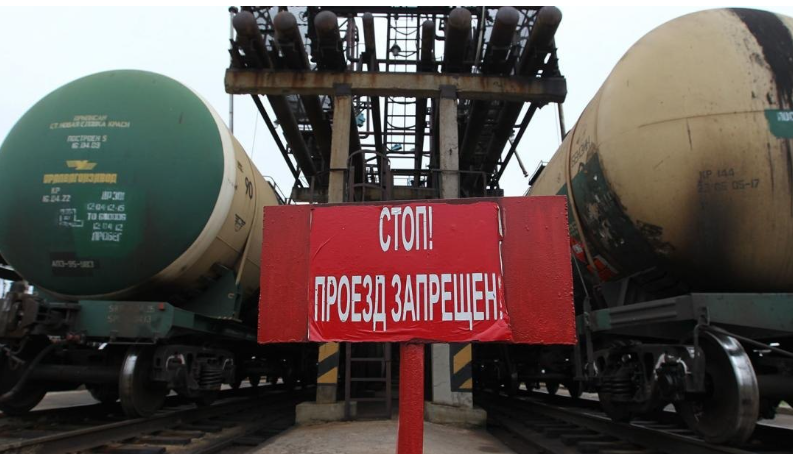
Kazakh authorities halted the export of gasoline, diesel fuel and certain types of petroleum products from the country by all types of transport for four months, the press service of the State Revenue Committee of the Ministry of Finance of the republic reported on Wednesday, zakon.kz reported on February 8..
It is noted that the ban does not apply to the delivery of lubricating oils, liquid fuel, and aviation fuel for research work as well as petroleum products in the gas tanks provided by the manufacturer of motor vehicles.
The order will be put into effect 10 calendar days after the day of its first official publication.
Earlier, on January 20, the Kazakh authorities extended the ban on the export of petroleum products by road that was introduced in July last year for six months.
Recall, Astana introduced the ban on the export of oil products by road in July 2022, as the country's Ministry of Energy cited the insupportable demand created by the price of diesel fuel being lower than in neighboring Russia, Uzbekistan, and Kyrgyzstan.
This measure of the Kazakh authorities is unlikely to have any noticeable effect on the delivery of these types of petroleum products to Tajikistan and accordingly on their prices in the country, because they are delivered from Kazakhstan in small volumes.
According to data from the Agency for Statistics under the President of Tajikistan, Kazakhstan accounted for only about 7.0 percent in an overall volume of these types of petroleum products imported into Tajikistan last year.
Tajikistan delivers gasoline and diesel fuel mostly from the Russian Federation, which accounts for almost 86percent of Tajikistan gasoline and diesel fuel imports.
Meanwhile, Kazakhstan provides the bulk of Tajikistan’s liquefied natural gas (LNG) imports. Last year, Kazakhstan reportedly accounted for more than 84 percent of the country’s overall LNG imports.
The head of Kazakhstan’s national gas company in June last year sounded the alarm bells over a looming energy crisis, suggesting that the country may be forced to halt gas exports in 2023.
Citing expectations of a gas shortage in 2023-2024, QazaqGaz CEO Sanzhar Zharkeshov told the Kazakh parliament on June 6, 2022 that the country would not be able to meet soaring demand.
“We expect a shortage of gas starting from 2024. The domestic demand is anticipated to be 1.7 billion cubic meters higher than the existing gas resources. If no urgent measures are taken, the exports of gas will need to be stopped in 2023,” Russian Interfax cited Zharkeshov as saying.
At the same time, Kazakh Energy Minister Bolat Akchulakov told parliament that domestic gas consumption growth is rising 7% annually. The Energy Minister predicted that the country would suffer from domestic gas shortages and be forced into dependency on imports by 2025, Kazinform reported.
Gas consumption in Kazakhstan grew by 4.8 billion cubic meters between 2017 and 2021, the minister said.
According to statistical data from Tajikistan’s Ministry of Energy and Water Resources, Tajikistan last year imported about 853,000 tons of petroleum products and 397,000 tons of liquefied natural gas.