



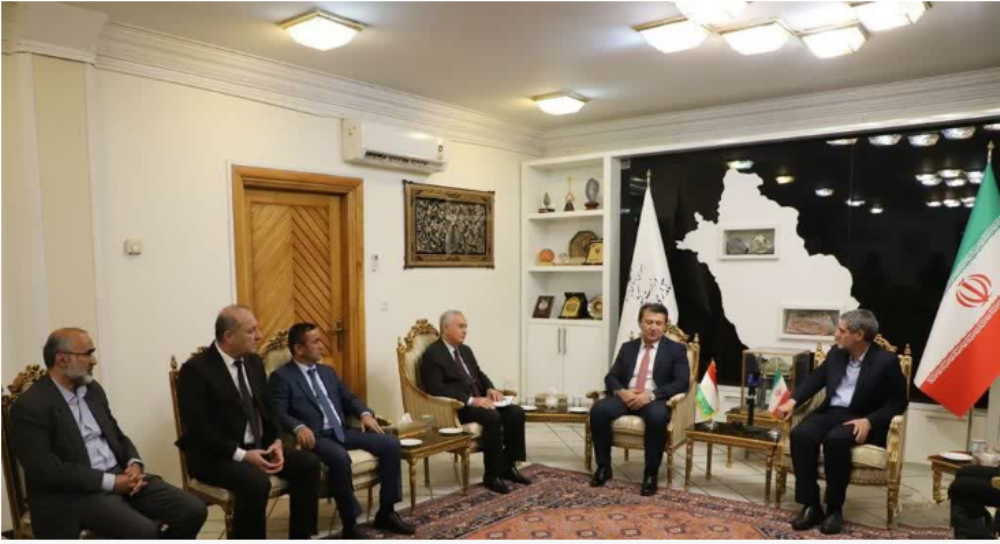
Radio Liberty’s Tajik Service says a group of Tajik migrants working for a Russian company in the Russian-occupied Ukrainian city of Mariupol claim their employers failed to pay them the full amount of wages they were promised in their contracts.
Hundreds of migrants from Tajikistan and other Central Asian countries have been hired by Russian construction companies to work in Mariupol after the southern city fell to the invaders in May 2022 following a three-month siege.
Safarali, a migrant who gave only his first name, told RFE/RL’s Tajik Service on March 9 that some 300 workers hadn't received their full wages.
"The employers had promised us to pay about 1,600 US dollars a month. But they are paying less than half of that amount," Safarali said.
Similar complaints have reportedly been made by dozens of other Tajik nationals working in eastern Ukraine.
The Tajik government has repeatedly warned its citizens against going to foreign conflict zones. But there have been reports that large groups of migrants working in Russia have been “lured” to Ukraine with the promise of high wages and “free meals and accommodation.”
According to Qurbon Sharifov, who was among the first groups of Tajiks who arrived in Mariupol in the summer, migrants were mostly engaged in "repairing damaged buildings, replacing window, and laying new roofs."
Sharifov said he and others in his group were hired by a private Russian construction firm, Restavratsiya. Sharifov said that only after arriving in Mariupol did they realize that there were no guarantees that the employers would deliver on their promises.
Russia is a host country for millions of migrant workers from Tajikistan, Kyrgyzstan, and Uzbekistan.
Radio Liberty’ Kyrgyz Service says Central Asian migrants have been hired by Russian firms to collect dead Russian soldiers on the front line in Ukraine.
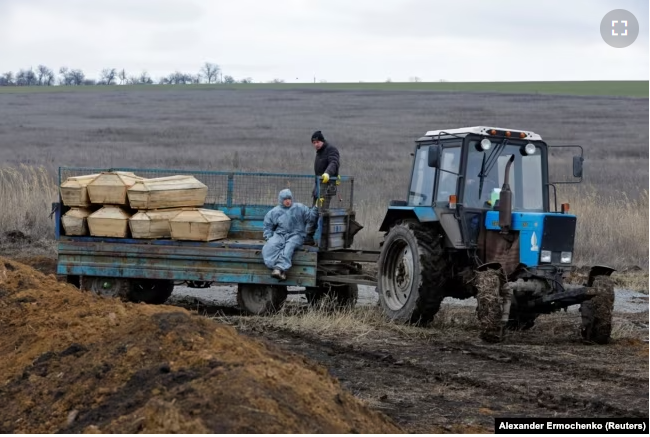
Migrant worker from Kyrgyzstan, who gave only his first name Urmat, told Radio Liberty that he has signed a contract to work for a Russian company that will pay him about $120 a day to collect dead Russian soldiers on the front line in Ukraine. He says he is aware of the risks involved and has discussed the topic with Kyrgyz migrants working in Ukraine’s war zones.
“They told me sometimes they came under shelling and that people get killed,” Urmat told RFE/RL’s Kyrgyz Service. “[People] do this kind of work because they’re in a desperate situation. Some have debts.”







