Tajik opposition activist detained in Belarus, faces extradition

Tajik opposition activist Nizomiddin Nasriddinov was detained in Belarus — at Dushanbe's request — while entering the country in early January and will be extradited to Tajikistan, where he may face arbitrary arrest and torture, Enira Bronitskaya of Human Constanta rights group told Radio Liberty on March 14. She noted that Nizomiddin Nasriddinov was detained […]

Tajik opposition activist Nizomiddin Nasriddinov was detained in Belarus — at Dushanbe's request — while entering the country in early January and will be extradited to Tajikistan, where he may face arbitrary arrest and torture, Enira Bronitskaya of Human Constanta rights group told Radio Liberty on March 14.

She noted that Nizomiddin Nasriddinov was detained on January 8 this year while crossing the Lithuania-Belarus border. 

“Since then he has been held in a detention center in Grodno,” the Human Constanta activist said. 

Bronitskaya added that Nasriddinov is wanted in Tajikistan on "trumped up" charges of calling for extremist actions and justification of extremism.

According to her, the Prosecutor-General’s Office of Tajikistan requested to extradite Nizomiddin Nasriddinov and the Prosecutor general’s Office of Belarus on February 21 gave consent for extradition of Nasriddinov to Tajikistan.   

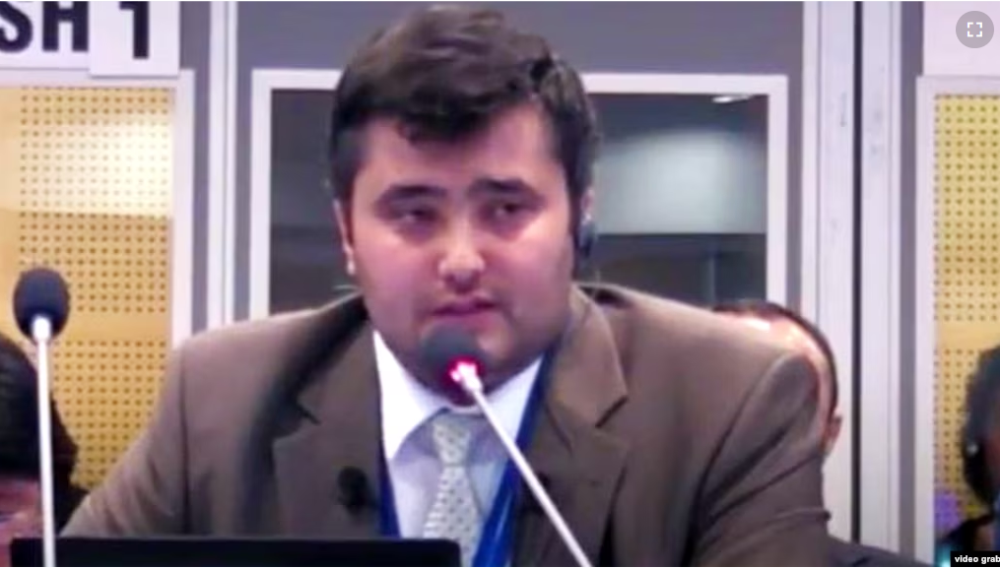
While delivering a statement at a meeting of the Organization for Security and Cooperation in Europe (OSCE) in 2017, Nasriddinov introduced himself as a member of Group 24.   

Nasriddinov has resided in Germany since October 2015.  The German authorities have reportedly granted asylum to him and his family.

Recall, Tajikistan’s Supreme Court banned Tajikistan’s opposition organization Group 24 on October 9, 2014 following growing government pressure on the opposition group after it used the Internet to call for street protests in the capital, Dushanbe, on October 10, 2014.

Supreme Court ruled that Group 24 is an extremist organization, and therefore, it is banned in Tajikistan.  Its website and printed materials were also banned.

In February 2019, former members of the opposition movement Group 24, who returned to Tajikistan, asked the Tajik authorities to remove the organization from the extremist organizations list.  They said the organization does not pose threat to Tajikistan’s security anymore. 

Dozens of opposition figures, independent journalists, and rights activists have been handed lengthy prison terms on extremism and other charges in Tajikistan in recent years.  

Join us on social media!

Article translations:

Related Article

Tenisi
Оби зулол
Оби зулол

Most Read

Коммерсбонк Точикистон

Recent Articles

RZD announces the restoration of passenger services between Moscow and Dushanbe

Direct rail services between the capitals of Russia and Tajikistan were suspended in March 2020 due to the COVID-19 pandemic.

#AP30/Stories. “Selam! Heller nichek?” How Tatars live today in Sughd province

On the 30th anniversary of "Asia-Plus," we continue to publish reports that remain relevant even after years. This story was told in 2021, and since then, little has changed in the life of the Tatar community in Tajikistan.

15,000 cameras, drones, and robots: how technology monitors pilgrims in Mecca and Medina

During Hajj 2026, Mecca and Medina were under unprecedented digital control.

Another child in Dushanbe removed from family and sent to boarding school

The Ministry of Internal Affairs reports that the parents did not pay adequate attention to the child.

Emomali Rahmon instructs to address issues in seed production following criticism of the industry

Issues have been noted with certification, seed quality, and the material and technical base of the industry.

Water, climate, and a $130 billion deficit: seven key outcomes of the Water Conference in Dushanbe

At the forum, countries and international organizations discussed new mechanisms for cooperation, investments, and technologies that are essential for addressing the global water crisis.

Eskhata Bank introduces a new generation children’s wallet

"Eshkata Bank" has created a full-fledged digital platform that helps children aged 7 to 16 learn how to manage money.