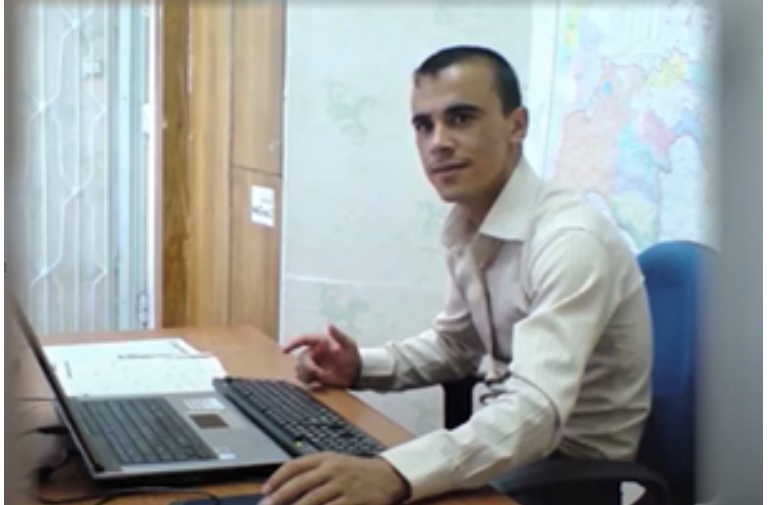
In a statement released on March 17, the Committee to Protect Journalists (CPJ) says Tajik authorities should release journalist Khurshed Fozilov and stop prosecuting journalists in retaliation for their work.
Authorities charged Fozilov with participating in banned extremist groups, but have not disclosed any specific allegations against him, a person familiar with his case told CPJ on the condition of anonymity, citing fear of reprisal. If convicted, he could face five to eight years in prison under the Tajik criminal code.
“Coming just months after Tajik authorities sentenced several journalists to lengthy prison terms without making public any compelling evidence against them, journalist Khurshed Fozilov seems trapped in the same cycle,” said Ms. Gulnoza Said, CPJ’s Europe and Central Asia program coordinator, in New York. “Tajik authorities must disclose the exact reason for Fozilov’s arrest or immediately release him, alongside all other imprisoned journalists.”
According to the statement, two people familiar with Fozilov’s case told CPJ on the condition of anonymity that they believed the charges were retaliation for his journalistic work.
“Fozilov writes mostly on social issues and allegations of mismanagement by local authorities, according to news reports and those people familiar with his case. They pointed to a documentary broadcast on state television in 2020 alleging that Fozilov had collaborated with exiled media outlets that are now banned in Tajikistan, saying they believed the charges could be related to those allegations,” the statement says.
One of the people who spoke with CPJ said Fozilov was also involved in a Facebook group in Panjakent where people discuss similar issues, which also could have prompted his arrest.
CPJ reportedly emailed the Tajik Ministry of Internal Affairs but did not receive any reply. CPJ also was unable to find contact information for the State Committee for National Security (SCNS).
According to CPJ research, Tajik authorities frequently use dubious charges of participation in banned organizations to jail critical journalists
Recall, a 37-year-old Khurshed Fozilov, a freelance journalist, who has cooperated with several independent media outlets, including the independent website Akhbor, which is based abroad, was detained by the SCNS officers in the Tajik northern city of Panjakent on March 6.
Fozilov is charged with calls for forcible changes to the constitutional order in Tajikistan. His brother Khoushbakht Fozilov told Asia-Plus that criminal proceedings had bene instituted against Khurshed under the provisions of Article 307 (2) of Tajikistan’s Penal Code – public calls for forcible changes to the constitutional order in the country through the media and or the Internet.
On what basis the case was initiated against him under this article is still unknown. This article provides for imprisonment for the term of between three and eight years.
It is to be noted that last year, seven Tajik journalists and bloggers Mamadsulton Mavlonazarov, Abdulloh Ghurbati, Daler Imomali, Zavqibek Saidamini, Khoushrouz Jumayev, Ulfatkhonim Mamadshoyeva and Abdusattor Pirmuhammadzoda were sentenced to prison terms of between seven and twenty-one years.
They were charged with spreading false information, participation in extremism community and collaboration with banned organization. The journalists themselves and their relatives reject these charges as absolutely unfounded.
International groups, including Human Rights Watch and the Committee to Protect Journalists (CPJ), have called on the Tajik government to release the reporters and end its campaign against the free press.
A report released by the CPJ on December 14 last year says arrest and conviction of independent journalists and bloggers makes Tajikistan the leading jailer in Central Asia. The report, in particular, notes that the prisoners were tried secretly behind closed doors in detention centers, not courts, and sentenced to lengthy prison terms amid allegations of torture.
Tajikistan was ranked 152nd out of 180 countries in Reporters Without Borders' 2022 World Press Freedom Index, and Not Free in Freedom House's 2022 Global Freedom Status, with a score of 8/100.