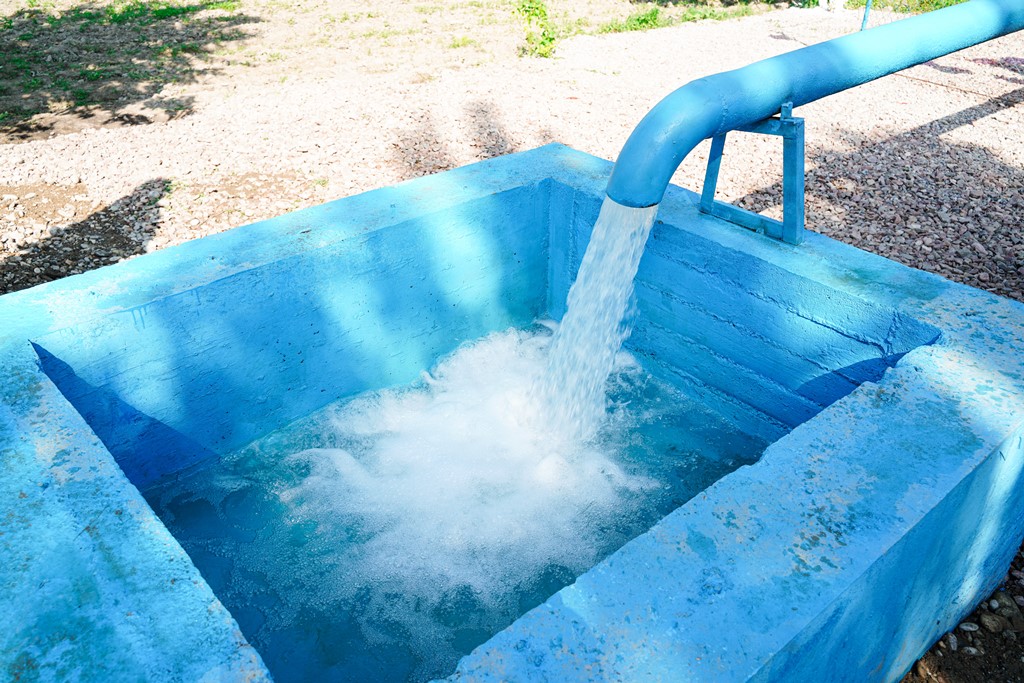
The EU Integrated Rural Development Project/ TRIGGER supported drilling a well in Unji jamoat, Bobojon Gafurov district, Sughd region.
Currently, there is no centralized water supply system in Unji jamoat of the Bobojon Gafurov district. Many years, farmers used the only vertical well drilled in 1975 to irrigate their land and apricot orchards. During the irrigation season, farmers had to spend days and nights waiting in queue to be able to water their gardens. Due to the lack of water, farmers faced problems with the drying up of fruit trees and the impossibility of carrying out agrotechnical work, due to which part of the fruit tree crop remained unripe.
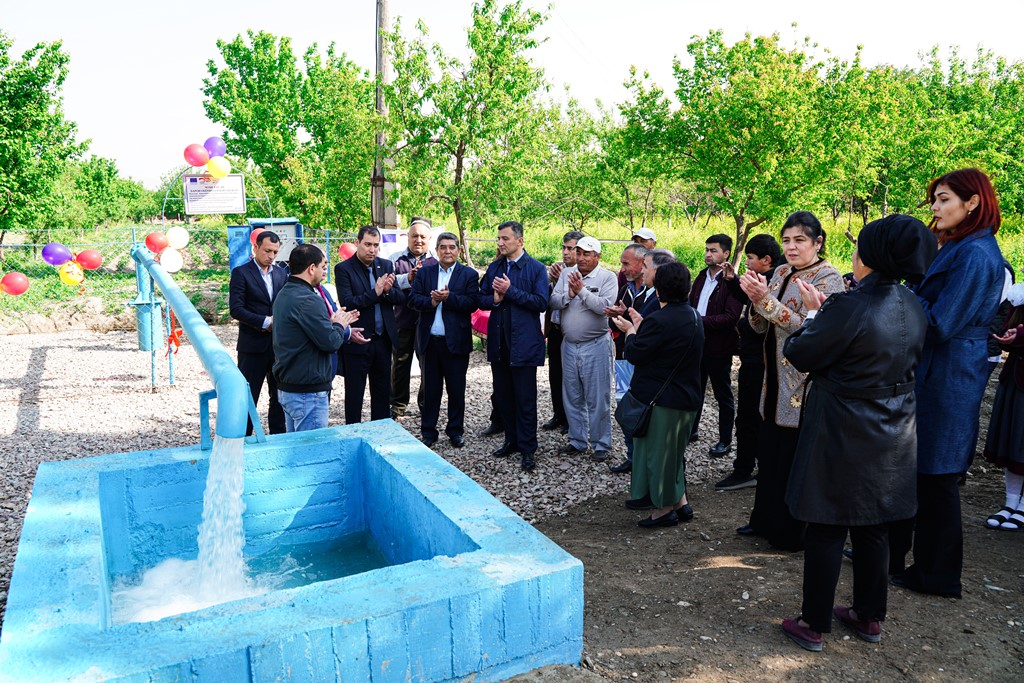
The Project in cooperation with the Public Organisation CBER opened a new water-well for irrigating apricot orchards. The Project assisted the three Production Groups (PGs): Dashtak, Mekhrgon and Arbob in drilling a vertical water well 100 meters deep. The opening ceremony was held with the participation of representatives of state bodies of the Sughd region, beneficiaries and representatives of the Project. The Director of the Integrated Rural Development Project/ TRIGGER, Mr. Wulf-Hendrik Goretzky, handed over a package of documents of the well to the head of the PG Dashtak, Mr. Aminov Mubinjon. Mr. Aminov himself acknowledges, members of the production groups also contributed to the construction of a well and the creation of 25 ha of apricot orchards (in particular, 70 dehkan farms) and, as a result, will be provided with irrigation water.
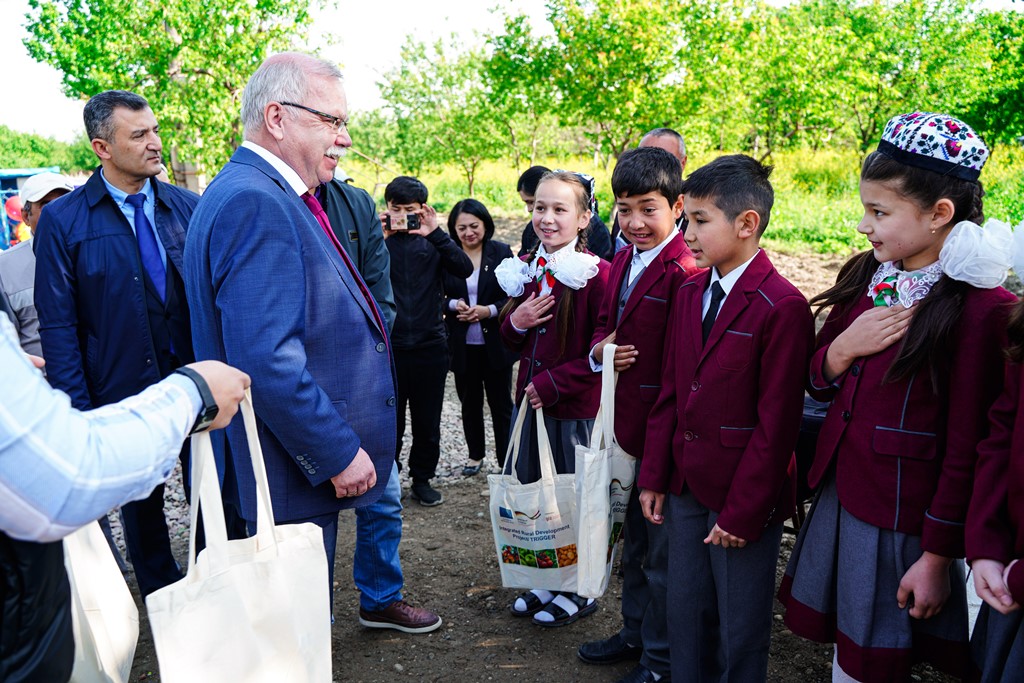
The construction of the pumping station will improve the condition of agricultural land by increasing the productivity of each apricot tree by up to 50%. The initiative will not only help improve irrigation infrastructure and efficiently manage water resources, but also, as a result, improve the living standards of the village population by increasing agricultural production and generating additional income.
The present farmers expressed their deep gratitude to all those who contributed to the application of an integrated approach to the development of water resources, and water use, since agricultural production, crop yields and their social and economic well-being directly depend on this basic resource.
The Integrated Rural Development Project (IRDP)/ Towards Rural Inclusive Growth and Economic Resilience (TRIGGER) is a joint project of the European Union and the German Federal Ministry for Economic Cooperation and Development (BMZ) to boost the added value of agricultural production in Tajikistan by improving water security and sustainability, enhancing the productivity of selected value chains, supporting market development, export readiness, enterprise promotion and economic policy advice. For further details, please contact: Sharofat Ashurova at [email protected], telephone number +992 987270046.