The head of Tajikistan's Committee for Youth and Sports, Abdullo Rahmonzoda, has urged bloggers not to wear beards and stay away from promoting beards online, Radio Liberty’s Tajik Service reported on April 28.
According to him, they might be interpreted as "an expression of solidarity with terrorist groups" such as the Taliban.
The authorities in Tajikistan have been known for forcing practicing Muslims to shave off their beards, a move that has been criticized by domestic and international rights organizations for years.
Rahmonzoda reportedly told bloggers on April 28 that beards can also impose "a threat to national security and statehood."
Recall, the Tajikistan authorities launched an anti-beard campaign in October 2010. In November 2012, the Shuroi Ulamo (Council of Ulamo — an Islamic council that issues fatwas (religious rulings) and religious guidance to Islamic religious organizations) at the Islamic Center of Tajikistan established the length of beard for men and the dress standards for women. An official source at the Islamic Center said at the time that under the Hanafi Fiqh (the majority of residents of Tajikistan adhere to the Hanafi school of Sunni Islam), there ought to keep a beard of one fist (to cut the hair of the beard that exceeds the amount that may be grasped in the fist).
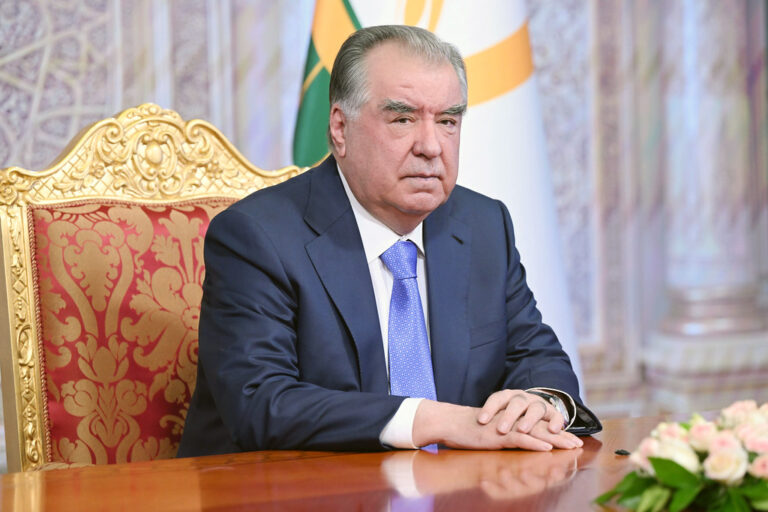
Some media outlets reported in early May 2015 that Tajik police have been issuing warnings to women wearing Islamic hijab and shaving off men’s beards. The campaign was reportedly sparked by a speech that President Emomali Rahmon made in the previous month of April. Since then, police had reportedly been stopping people deemed to have the “wrong appearance” in streets and marketplaces across Tajikistan.
However, a high-ranking official of the Interior Ministry told Asia-Plus in an interview on April 26, 2015 that they received three complaints from Sughd province and districts subordinate to the center (RRP), in which citizens say that police officers make them shave their beards. He called such actions illegal and noted that administrative action would be imposed upon on those police officers.
It is to be noted that in 2009, the Tajik authorities banned teachers from wearing beards. Under a dress code introduced by the Ministry of Education in September 2009, young male teachers were banned from growing beards. Male teachers above the age of 50 were allowed to have beards, but not more than 1 centimeter in length.