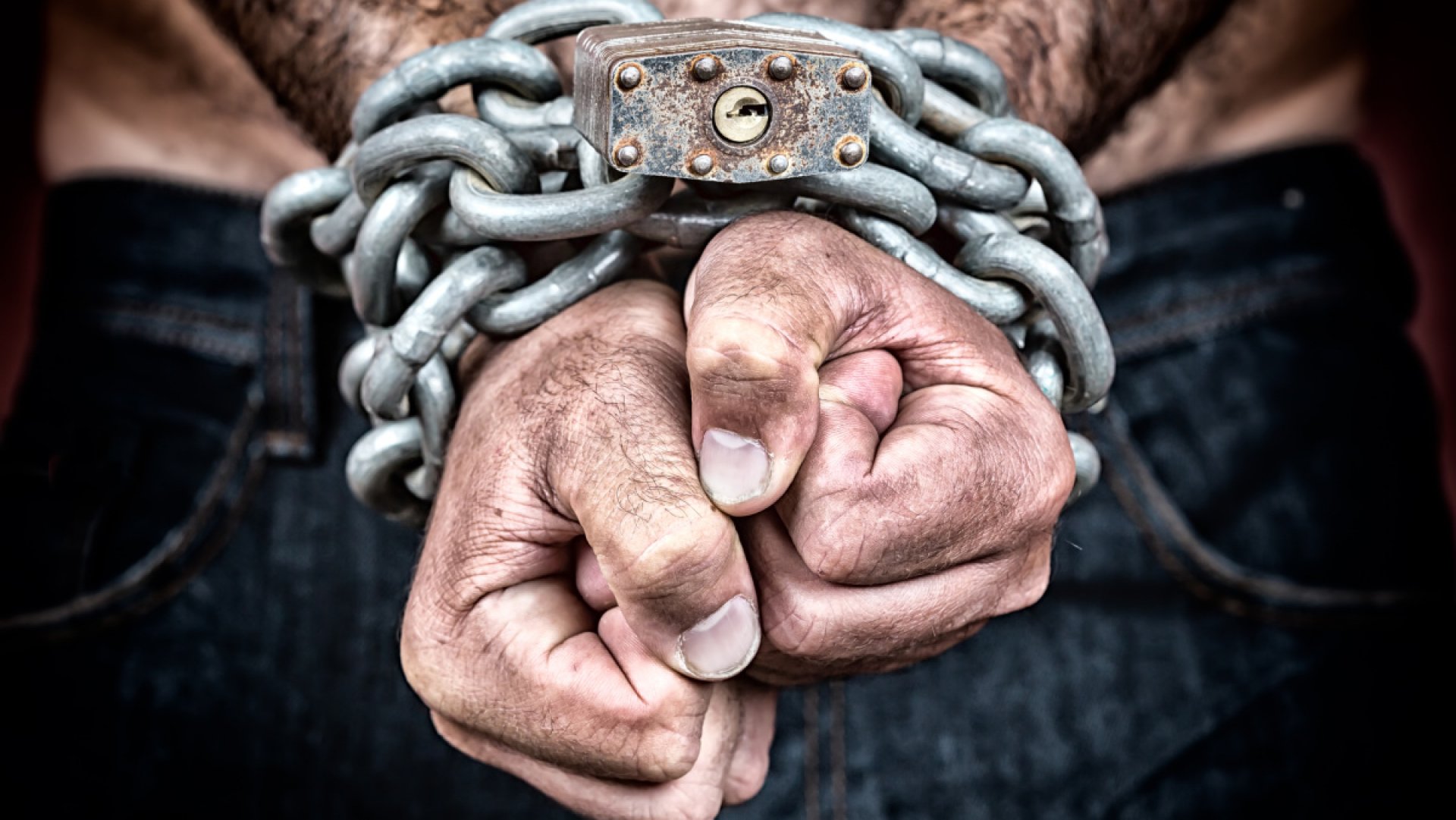
Tajikistan tops Central Asia’s nations in terms of modern slavery trend with about 133,000 working as forced laborers.
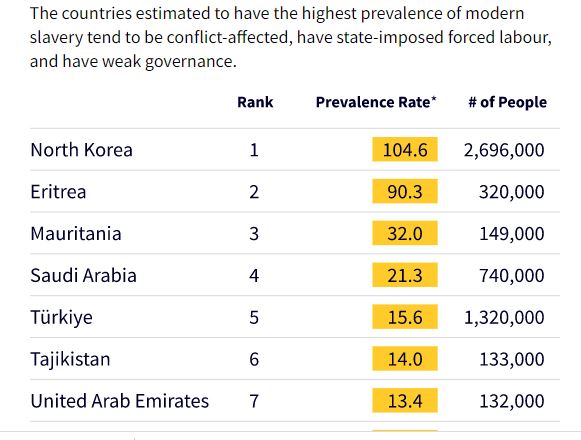
The Global Slavery Index 2023, compiled by Walk Free Foundation, a non-profit foundation that seeks to end modern slavery, listed Tajikistan among the countries estimated to have the highest prevalence of modern slavery tend to be conflict-affected, have state-imposed forced labor, and have weak governance.
The list includes 160 countries, which ranked based on estimated number of people in modern slavery.
With prevalence rate of 14 (estimated number of people in modern slavery per 1,000 population), Tajikistan has ranked sixth among 160 countries in terms of the number of people in modern slavery.
High priority recommendations to be actioned by the government are the following: 1) criminalize forced labor in line with international conventions; criminalize commercial sexual exploitation of children in line with international conventions; and 3) increase the legal age of marriage for males and females to 18 years.
Tajikistan is listed among the countries, where modern slavery is most prevalent.
Belgium, Denmark, Sweden, the Netherlands, Germany, Norway and Switzerland are the countries with the lowest prevalence of modern slavery.
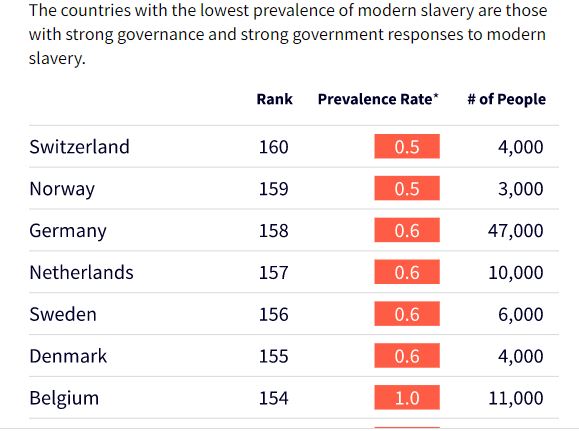
The Global Slavery Index (GSI) provides national estimates of modern slavery for 160 countries. Its estimates reportedly draw on thousands of interviews with survivors collected through nationally representative household surveys across 75 countries and its assessment of national-level vulnerability.
The report says the majority of modern slavery occurs in lower-middle and upper-middle-income nations, but it's "deeply connected to demand from higher-income countries.
Since its last edition in 2018, the report estimates another 10 million people have become caught in modern slavery, taking the total to 50 million – including 28 million subject to forced labor and 22 million to forced marriages.
Walk Free says it’s a crisis driven by the Covid-19 pandemic, climate change, conflict and rampant consumerism, and perpetuated by the failure by governments and business leaders to act.
The number of people living in modern slavery has gone up, but government action has stagnated, Walk Free says. The organization recommends governments and the international community approach modern slavery as an intersectional issue. That includes building modern slavery responses into humanitarian and crisis response plans. It also calls on governments to focus on protections for those who are already vulnerable, implement stronger measures to combat forced labor supply chains, prioritize human rights when dealing with repressive regimes, and raise the legal age of marriage to 18 with no exceptions.
Since the last report in 2018, four more countries – Australia, France, Germany, and Norway – introduced modern slavery laws that force larger companies to examine their supply chains and act on slavery when they find it. Another 15 countries criminalized human trafficking, taking the total to 137, and nearly 150 countries now have modern slavery action plans, according to the report.