Issues of providing education and healthcare sectors with skilled personnel were discussed at the Center for Strategic Studies under the President of Tajikistan on May 31.
The brain drain problem was in the focus of discussions.
Anvar Boboyev, the then head of the Migration Service of Tajikistan and the expert on migration, participated in those discussions.
Over the past decades, thousands of skilled specialists have left the country seeking better employment opportunities, Mr. Boboyev told Asia-Plus in an interview.
According to him, low wage rates, high unemployment rate, inability to find a decent job and rude behavior from top managers of organizations and enterprises have been reasons for leaving the country.
As a result, many economic sectors of the country now experience an acute shortage of skilled personnel.
The most serious situation has been reported in educational and healthcare sectors.
According to official data, 266,000 specialists from various sectors left the country seeking better employment opportunity during the period from 1991 to 2010.
Over the reporting period (1991-2010), 17,000 employees of the educational sector, 25,000 health workers, 162,000 employees of the industrial sector, 40,000 employees of the transport and communications sectors, and 22,000 from scientific and cultural sectors have left the country and this process is continuing.
The loss of these 266,000 has reportedly cost Tajikistan at 79.8 billion US dollars.
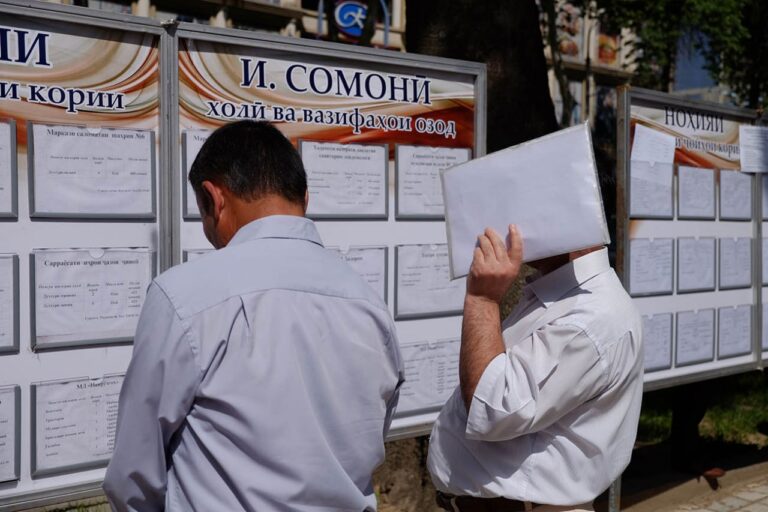
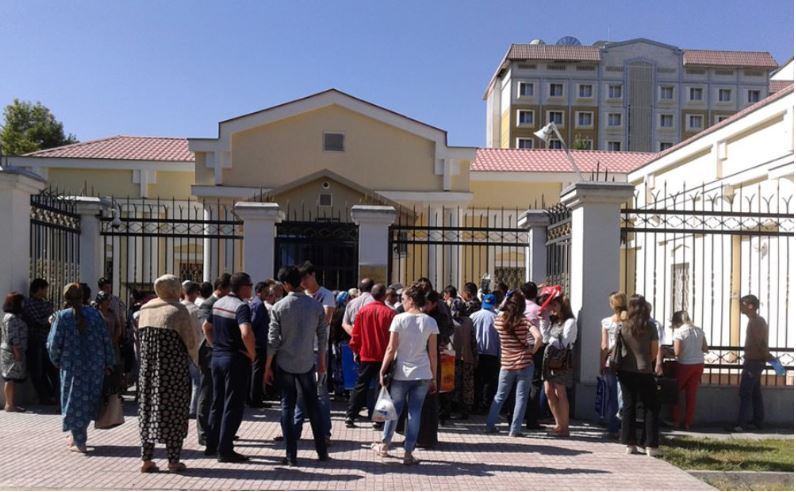
It is to be noted that many Tajik specialists, including doctors and teachers, left Tajikistan for Russia in 2021 and early 2022, taking advantage of a new Russian government program that makes it easier for white-collar workers to live in the country and gain citizenship.
According to Russian Interior Ministry figures, 2,439,198 Tajik nationals stated in early 2022 that “work” was the reason for entering Russia. That’s about one-quarter of Tajikistan’s entire population.
It’s a significant rise from previous years when the number of Tajiks working in Russia was reported at about 1.2 million. While seasonal workers make up the majority of the migrants, a growing number of Tajiks are looking for permanent resettlement in Russia.
That trend is widely expected to continue upward, as unemployment and poverty in Tajikistan are forcing millions of people to look for jobs elsewhere.
On February 10, 2022, the Health Ministry said there was a shortage of 674 medical doctors in “remote regions.” The Education Ministry said in February last that there was a shortage of 1,124 qualified teachers, despite some 16,000 people graduating from teachers’ training universities annually.
With Russia offering higher wages and better living standards, more Tajik doctors, teachers, and ordinary workers are likely to emigrate. Many are expected to resettle in Russia permanently.
According to data from the Russian Interior Ministry, around 104,000 Tajiks received Russian passports, and around 174,000 Tajiks received Russian passports in 2022.