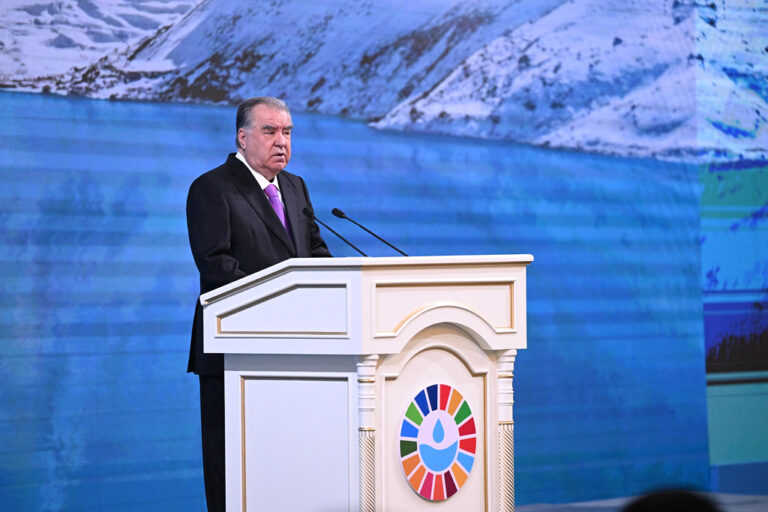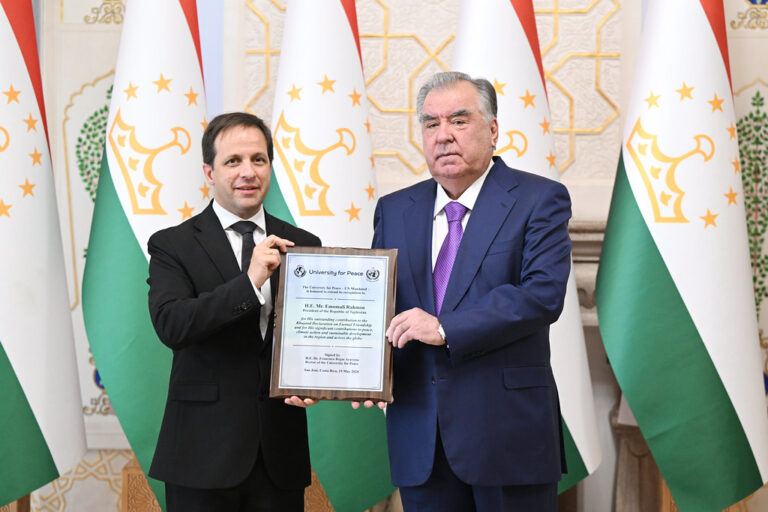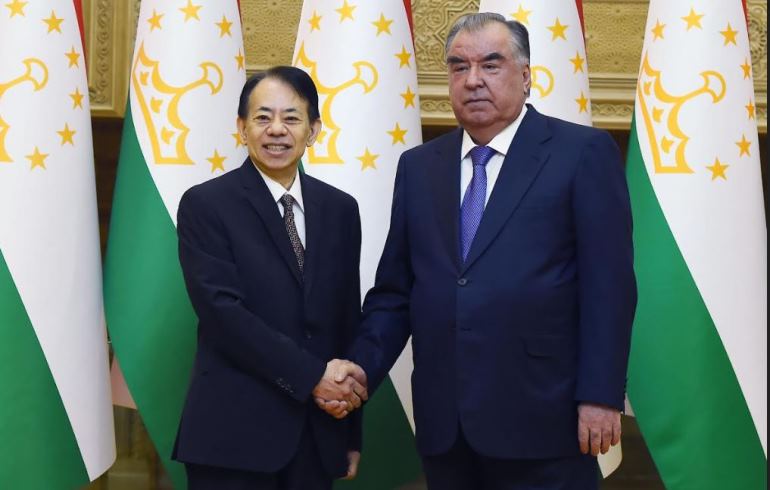
The Asian Development Bank (ADB) President Masatsugu Asakawa reaffirmed ADB’s support for Tajikistan’s development priorities and discussed ways to further strengthen the bank’s 25-year partnership with the country in meetings yesterday with Tajikistan President Emomali Rahmon and senior government officials, according to the ADB Tajikistan resident Mission (TJRM).
“Tajikistan and ADB have developed a deep and trusted partnership, and we look forward to strengthening this for the benefit of the country’s people,” said Mr. Asakawa. “Tajikistan has a young population and by further developing its human capital and skills, the private sector will flourish and create productive jobs.”
ADB has been working with the government to develop its human capital, including by improving health and labor skills. The bank is currently preparing a project, funded by technical assistance, to improve science, technology, engineering, and math teaching in secondary schools. This will equip young people, in particular young women, with the skills they need for modern and decent jobs.
Mr. Asakawa reportedly also highlighted the importance of tackling climate change, and private sector development for Tajikistan’s inclusive and sustainable growth.
“As Asia and the Pacific’s climate bank, we place climate action at the top of our work,” he said. “In Tajikistan, we are prioritizing resilient infrastructure and disaster risk reduction. We are pleased to be supporting the nation with its Strategy for a Green Economy, which seeks to prioritize climate action in each sector of the Tajik economy. And we also help the government to improve food security, including through countercyclical budget support, irrigation, and agriculture development.”
During his three-day visit, President Asakawa will visit ADB-funded transport and energy projects. He will launch a solar-powered pumped water supply system in Roudaki District built with ADB grant funding to improve villagers’ access to clean drinking water, saving time and labor of women.
Tajikistan joined ADB in 1998. For 25 years, ADB has supported a range of sectors, from strategic road and energy infrastructure to health, skills development, food security, and finance for a total of US$2.5 billion of assistance. ADB’s 2021–2025 country partnership strategy for Tajikistan has three strategic priorities: structural reforms to enhance resource allocation and mobilization, improving labor productivity through human capital development, and fostering better livelihoods by investing in the land-linked economy.
Established in 1966, the Asian Development Bank is owned by 68 members—49 from the region.