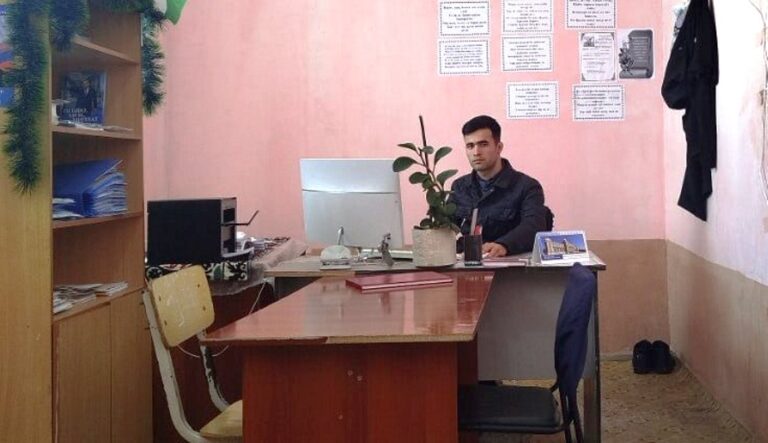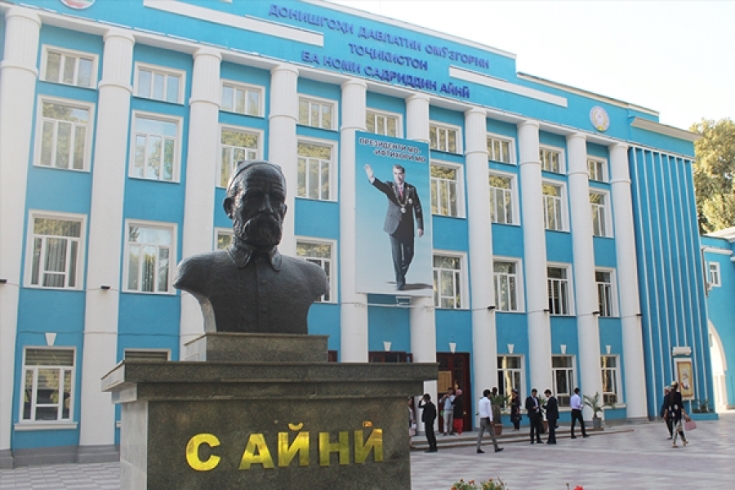
A biometric fingerprint scanner now controls the entrance of teachers to the Teachers’ Training University named after Sadirddin Ayni in Dushanbe. The fingerprint access control system has been installed at the University’s main building. The main objective of installing this system is reportedly in preventing the disruption of classes by teachers.
Several teachers from this University told Asia-Plus that they now use the fingerprint access control system for entering the University.
An official Facebook page of the Teachers’ Training University has confirmed the installation of the fingerprint access control system has been installed at the entrance to the University’s main building. This has reportedly been done only for the purpose of properly educating students and preventing disruption in classes.
A source within the University says many teachers are not there at the right time or are running late.
It is to be noted schools in Tajikistan are experiencing acute shortages of teachers. In a report released at a news conference in Dushanbe, the Minister of Education and Science Rahim Saidzoda revealed on July 19 last year that Tajikistan now has more than 3,400 teaching vacancies.
According to him, more than 2000 teachers in the country teach in schools not in their specialties due to acute shortage of teachers (for example, history teacher teaches Russian language and vice versa).
Experts say low salaries and lack of social benefits cause an outflow of school teachers from Tajikistan, and it is a matter of deep concern in society. The discussions in the Tajik segment of social media show that people believe the teachers’ low salary is one of the main reasons for their resignations.
Many teachers have left the country seeking better employment opportunities and many specialists do not want to work with schools because of low monthly wages in the education sector.
Tajik teachers who have left for Russia seeking better employment opportunities mainly work as street cleaners or delivery workers.
It is to be noted that education in Tajikistan is not so good. While the official literacy rate in Tajikistan is 98%, the poor quality of education since 1991 has reduced the skill level of younger people. Although education is compulsory, many children fail to attend schools because of economic needs.
The situation of higher education in Tajikistan has changed radically since independence. The total number of institutions of higher education throughout the country has grown from 13 in 1991 to 30 in 2012.
Higher education in Tajikistan faces numerous problems. One of the main problems is related to the training of teaching/academic staff. Currently, there is a lack of qualified professionals and a very low turnover of staff. Graduates/alumni of the international scholarships programs or universities and the most talented students, prefer to work for international organizations or in the private sector; therefore academic work is neither attractive nor prestigious.