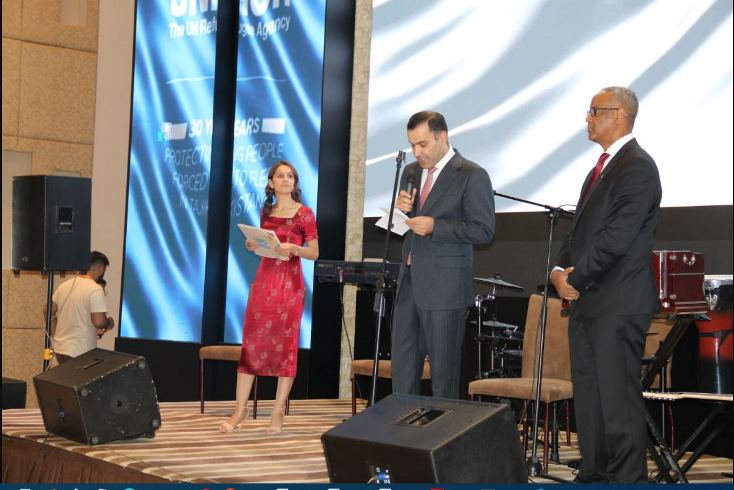
On June 20th, United Nations High Commissioner for Refugees (UNHCR) held an event commemorating the 30th anniversary of its work in Tajikistan; which also marked the World Refugee Day with the theme “Hope away from Home. A world where refugees are always included.”
This momentous occasion not only celebrated three decades of dedicated service to those forced to flee their homes but also highlights the enduring spirit of compassion, resilience, and solidarity that has defined the collective of all stakeholders in the country.
It was exactly 30 years ago in January 1993 that UNHCR opened its office in Tajikistan following the invitation of the Government to assist the country with emergency relief-related activities aimed at helping Internally Displaced Persons (IDPs) and refugee returnees because of the civil war.
During the civil war in Tajikistan, UNHCR played a vital role in providing critical support to the affected population and worked tirelessly to ensure the protection and assistance of refugees, internally displaced persons (IDPs), and other vulnerable groups. It also coordinated the delivery of emergency aid, including shelter, food, water, healthcare, and education, aiming to alleviate the immediate suffering of those affected by the conflict.
Throughout the thirty years, UNHCR, together with humanitarian, development, and private sectors, has been working diligently advocating for the persons of concern and supporting the Government to: a) ensure favorable protection environment for refugees, asylum seekers and stateless persons; b) enhance Socio-economic inclusion and realization of basic rights; c) seek solutions through facilitating voluntary repatriation, among others. Currently, Tajikistan hosts more than 9,600 refugees and asylum seekers.
UNHCR also supported the identification, reduction, prevention and protection of stateless persons and people at risk of stateless. Since 2014, UNHCR – in partnership with the Government of Tajikistan and its implementing partners, a total of more than 54,000 persons have had their nationality confirmed.
The collaboration between UNHCR, the Government of Tajikistan and humanitarian & development actors has been crucial in addressing the challenges and creating a more inclusive and compassionate world for those in need. UNHCR is confident that under the continued leadership of the Tajik government, in collaboration with all stakeholders, the progress made over the past three decades will be sustained and further built upon.
UNHCR looks forward future cooperation with the Government of Tajikistan and humanitarian & development actors, to create a world where no one is forced to flee their home, where the rights and dignity of all are upheld, and where compassion and solidarity prevail.