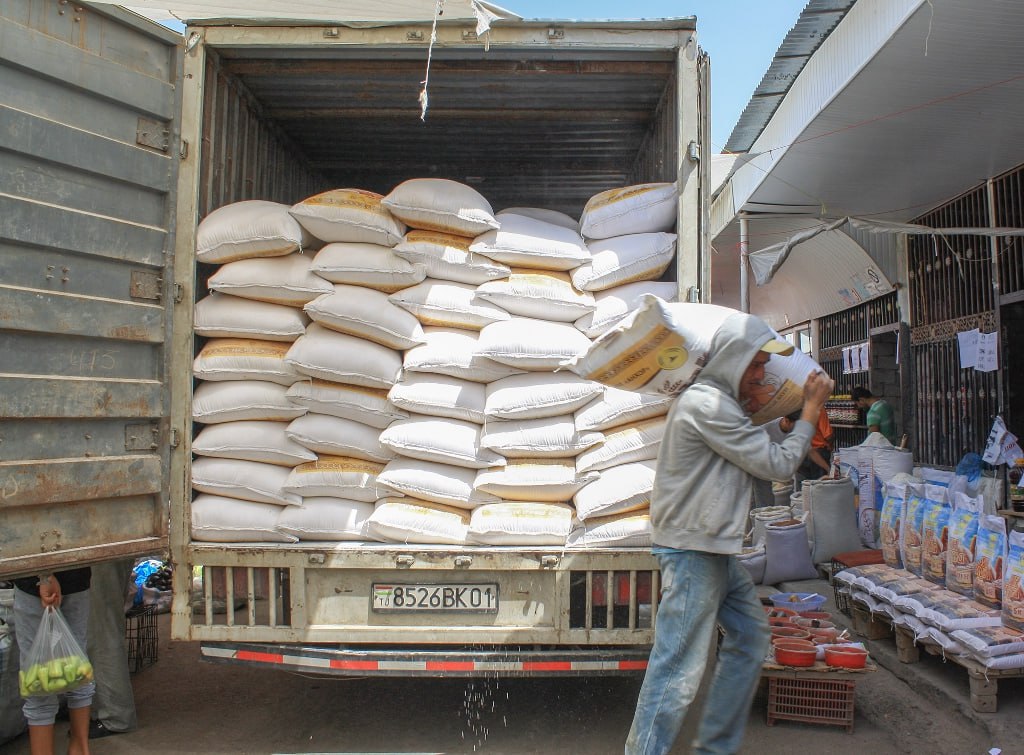
The enterprise that provides Dushanbe with food products has been granted incentives. It has been exempt from paying customs duties and the rate of the value added tax (VAT) paid by it has been halved. The main objective of these measures is in maintaining stable food prices at the capital’s markets.
This issue was discussed at a regular meeting of the fourth session of the Majlisi Namoyandagon (Tajikistan’s lower chamber of parliament) of the sixth convocation that took place in Dushanbe on June 21.
Presenting a bill on amendments to the country’s law on the national budget for 2023 for consideration of lawmakers, Deputy Finance Minister, Sarvar Qurboniyon, noted that the bill, in particular, provides for granting incentives to the State Unitary Enterprise (SUE) for the Production, Purchase, Storage and Sale of Essential Goods in Dushanbe.
According to him, the enterprise is exempt from paying customs duties and the rate of VAT paid by it is lowered by 50 percent.
Qurboniyon said the amendments had been offered by the Dushanbe Administration based on the opinion of a permanent group of experts on improvement of tariff and non-tariff levers of foreign trade at the Ministry of Economic Development and Trade.
The bill notes that the import of products, the list of which is approved by government’s decree (rice, sugar, vegetable oil, wheat and so forth) are exempt from payment of customs duties and the rate of VAT for them is lowered by 50 percent.
Previously, the benefits had applied only to the import of goods from countries, which had signed the CIS treaty on a free trade area.
Now, Part 4 of Article 15 of the RT Law “On the National Budget for 2023” is supplemented with a new paragraph, according to which essential goods imported from all countries will be exempt for these payments.
“With these amendments to the law, it will be possible to regulate the prices of goods and products at the city’s markets, provide the necessary stocks of basic foodstuffs and keep volumes of the import of flour, vegetable oil, sugar and other basic food products at the required level,” the deputy finance minister noted.