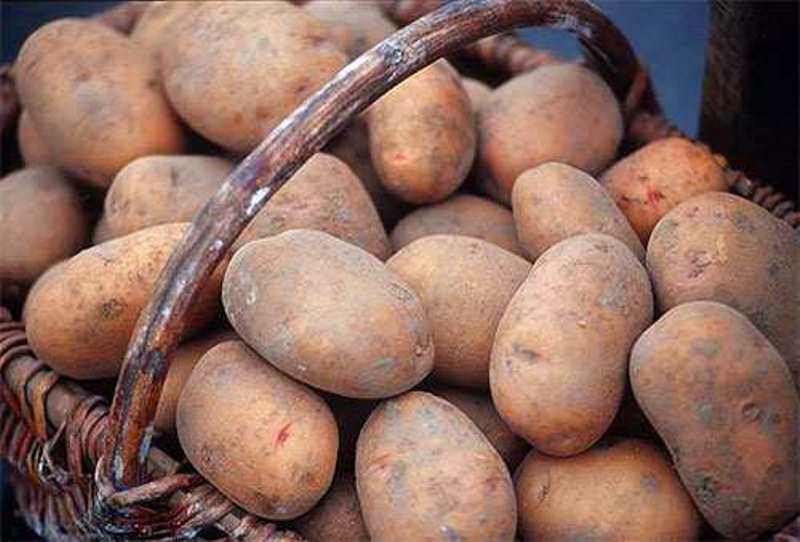
By July 1, Tajik farmers have harvested potatoes from an area of 5,735 hectares, which is 2,083 hectares fewer than in the same period last year.
Average potato yields in Tajikistan have decreased from 18.2 tons/ha to 16.8 tons/ha, according to the Ministry of Agriculture (MoA).
An official source at a MoA says Tajik farmers this year have planted potatoes on an area of 36,508 hectares, which is 1,169 hectares more than last year.
Local experts attribute the decrease in potato production to this year’s abnormally cold winter and dust storms that hit the country in late spring and early summer.
All this has led to increase in potato prices in the country. The price of one kilogram of potatoes at Dushanbe’s bazaars has risen to 4.00-5.00 somonis last year to 6.00-8.00 somonis this year, with similar price rises in other parts of the country.
Based on the above data, we can calculate that over the first six months of this year, Tajik farmers have produced only about 97,000 tons of potatoes, which is more than 45,000 tons fewer than in the same period last year (In January-June last year, Tajik farmers harvested more than 142,000 tons potatoes).
According to data from the Customs Service under the Government of Tajikistan, Tajikistan’s potatoes imports have almost doubled in January-June this year. Over the first six months of this year, Tajikistan has spent more than 15 million US dollars on potato imports, while over the reporting period last year, Tajikistan spent 8 million US dollars on potato imports.
According to data from the MoA, the current annul potato consumption per capita in Tajikistan is 130 kilograms. Thus, Tajikistan’s annual requirements in potatoes are up to 1.3 million tons.
The most productive years in terms of potato production were 2013, 2020 and 2021, when Tajikistan produced more than 1 million tons of potatoes.
If the same rate of potato harvest continues in the second half of this year, this year’s potato harvest will reach only approximately 70 percent of the last year’s volume. It means that potatoes will become one of the most expensive agricultural products in Tajikistan this year.