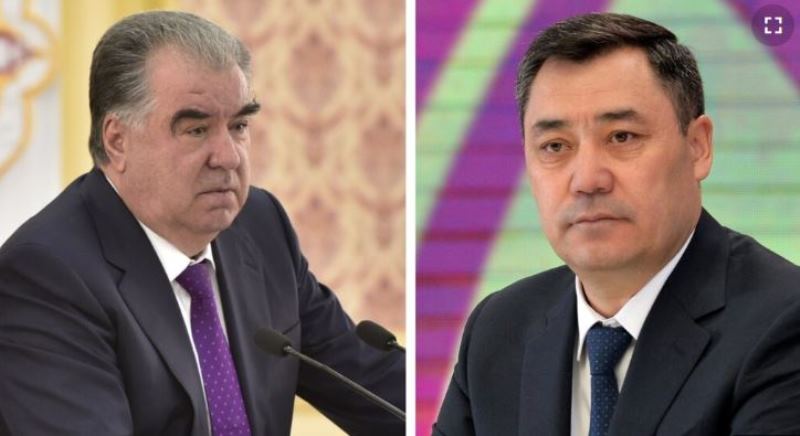
Media reports say Kyrgyzstan President Sadyr Japarov is expected to pay visit to Tajikistan from September 14-15 this year. резидент Кыргызстана в сентябре посетит Таджикистан
According to data from Tajikistan’s Foreign Ministry, the 5th consultative meeting of the heads of Central Asia’s nations will take place in Tajikistan’s capital, Dushanbe, these days.
Besides, the next meeting of the Council of Heads of Founding States of International Fund for Saving the Aral Sea (IFAS) will be held in Dushanbe on the same days.
Eurasia Today reports that leaders of Tajikistan and Kyrgyzstan will possibly carry out bilateral negotiations to discuss issues related to state and prospects of further expansion of cooperation, including border delineation problems.
Last year, the consultative meeting of the heads of Central Asia’s countries took place in Kyrgyzstan.
Diplomatic relations between the Republic of Tajikistan and the Kyrgyz Republic were established on January 14, 1993 by signing the Protocol. The Embassy of the Kyrgyz Republic has functioned in Dushanbe since March 1997 and the Embassy of the Republic of Tajikistan functions in Bishkek.
The basic documents, which regulate the main directions and fundamental principles of the bilateral relations between Tajikistan and Kyrgyz Republic, are “Dushanbe Agreement on the Main Interstate Relations between the Republic of Tajikistan and the Kyrgyz Republic” signed on July 12, 1996 and “The Agreement between the Republic of Tajikistan and the Kyrgyz Republic on Good-Neighborly Relations and Partnerships” signed on May 26, 2004.
Tajikistan and Kyrgyzstan have not yet resolved the border delineation problem. Many border areas in Central Asia have been disputed since the collapse of the Soviet Union in 1991. The situation is particularly complicated near the numerous exclaves in the Ferghana Valley, where the borders of Tajikistan, Uzbekistan, and Kyrgyzstan meet.
The border of Kyrgyzstan and Tajikistan has been the scene of unrest repeatedly since the collapse of the former Soviet Union. Border talks between Tajikistan and Kyrgyzstan began in 2002. The countries share 976 kilometers of border – of which only about 600 kilometers have reportedly been properly delineated, leading to tensions for the past 30 years. To-date, Tajikistan and Kyrgyzstan have reportedly held more than 170 meetings and negotiations on delimitation and demarcation of the common border.
Tajikistan and Kyrgyzstan renewed interest in border delimitation suggests that the governments want to dedicate more attention and resources to the communities living in the Ferghana Valley.