In the first half of the year, the National Bank of Tajikistan continued its exchange rate policy based on the regime of a "floating regulated exchange rate, without defining and announcing the limits of exchange rate changes," the regulator reports.
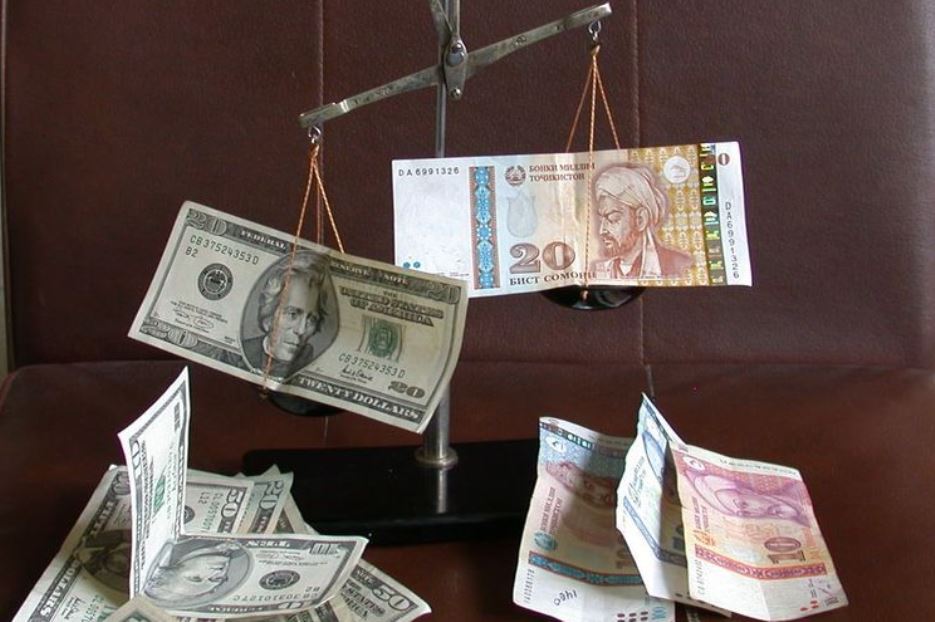
The report says that in January-June of this year, the official exchange rate of the US dollar against the somoni increased by 7.0% (from 10.2024 to 10.9140 somoni).
It is noted that during this period, the official exchange rate of the dollar has changed against the national currencies of most of the main partner countries of Tajikistan.
Meanwhile, in the first half of this year, the Tajik currency also depreciated against the euro (by 9.3%) and the yuan (by 1.1%), and against the ruble, on the contrary, it rose by 13.5%.
The official exchange rate of somoni to the dollar today is 10.9426 somoni, euro – 12.0555 somoni, yuan – 1.5178 somoni.
By the way, over the past week, the value of the Russian ruble against the somoni has fallen significantly.
As of today, on August 11, the National Bank of Tajikistan has set the exchange rate at 123 somoni per 1000 rubles. Ten days ago it was 120 somoni.
The last time the ruble/somoni exchange rate decreased to this level was on April 10, 2016. But in subsequent years, the ruble exchange rate reached 140-180 somoni per 1000 rubles.
After the outbreak of the war in Ukraine, rapid fluctuations in the ruble exchange rate began.
The fall of the ruble has complicated the already difficult life of millions of Tajik residents – migrant families.
The number of such families in the country reaches hundreds of thousands. According to the World Bank, at least one family member leaves for labor migration from 40% of households in Tajikistan.
According to official statistics, there are more than 1.3 million households in the republic.
The exact number of migrants is unknown. The Tajik authorities always claim that the number of Tajik migrants in Russia is less than 1 million people, but the Russian authorities always claim that more than 1 million Tajik migrants work in this country.