Despite the strictness of the law and heavy fines, people continue to arrange Hajj send-offs and lavish meetings of pilgrims. This is done according to traditions that are not in the laws of the state or in Islam.
The Quran says: "Strive to get ahead of each other in good deeds." But today, some of our khojas, in spite of this, have begun to compete in ambition, vanity and ostentatious piety, thereby casting a shadow on the authority of real khojas who make a pilgrimage in order to fulfill one of the obligatory pillars of Islam and enjoy great respect among the population.
There is a belief that a person who has seen the house of Allah will become a saint and approaching him is considered a great savab – a spiritual reward. It is said that the touch of khoja gives ordinary things magical properties that will save the petitioner from life problems, for example, from diseases and failures.
This is what the greeters use.
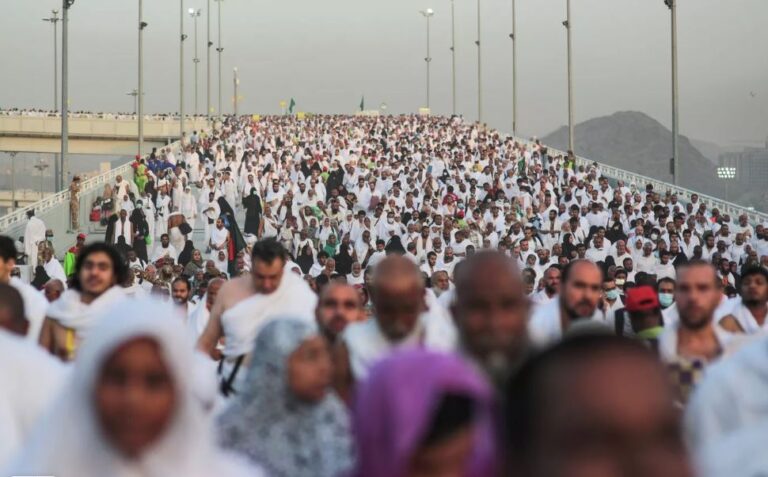
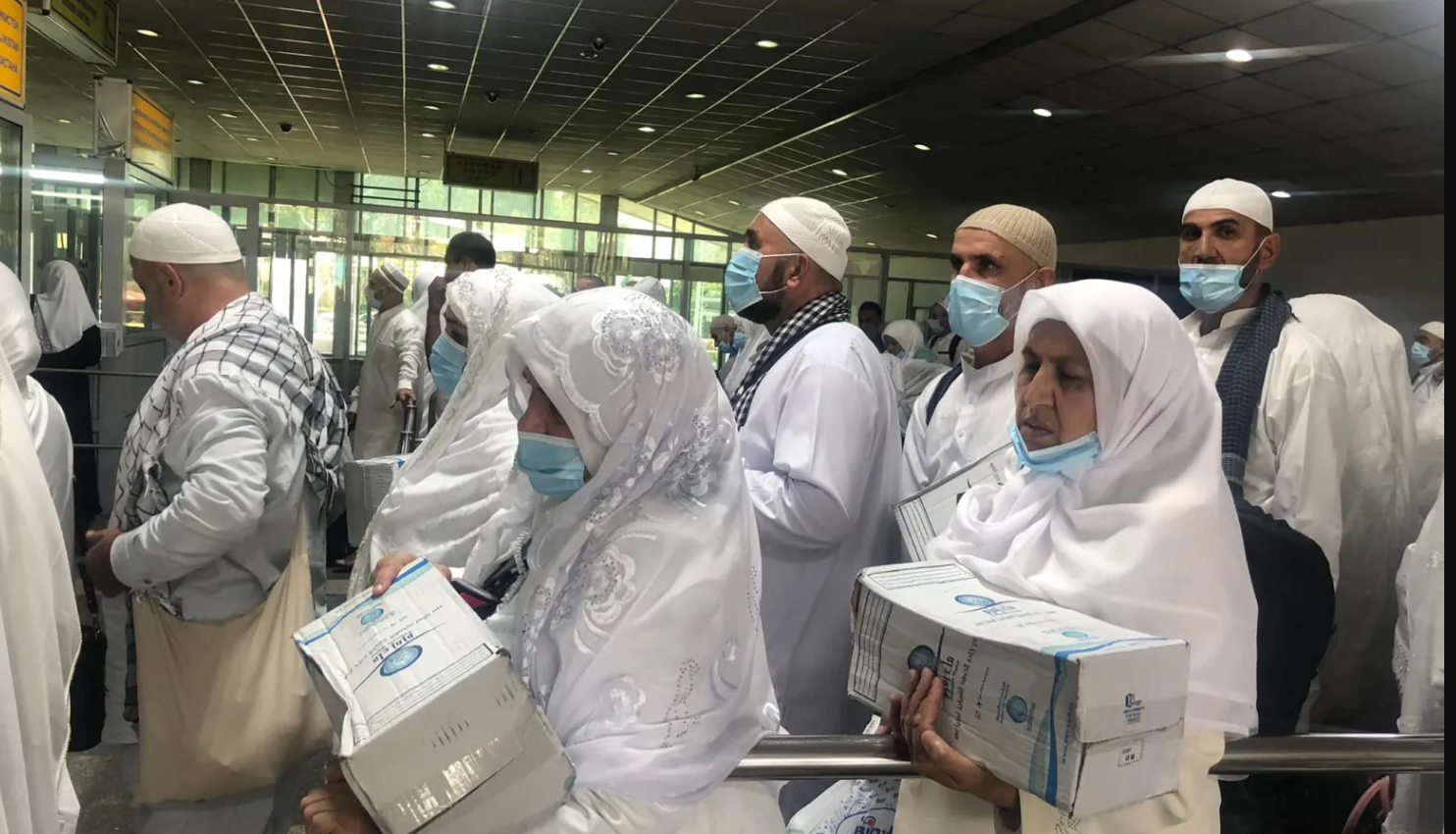
At the airport pilgrims are surrounded by a large crowd. People try to get the blessing of khoja by touching their clothes, hands and feet, believing that this is a holy cause. And some people went even further – fussed in the crowd with a bottle of water and a bowl under it. They asked the pilgrims to wash their hands, then they drank this water. In their opinion, there are many benefits in this water…
It has become fashionable to arrange a whole feast with all the consequences of meeting a newly-appeared pilgrim. They are greeted to the melodies of national musical, which announce the return of the pilgrim. Everyone is rushing to meet him. A motorcade of foreign cars accompanies khojas along the way. The number of cars depends on the well-being of the pilgrim and the number of his relatives.
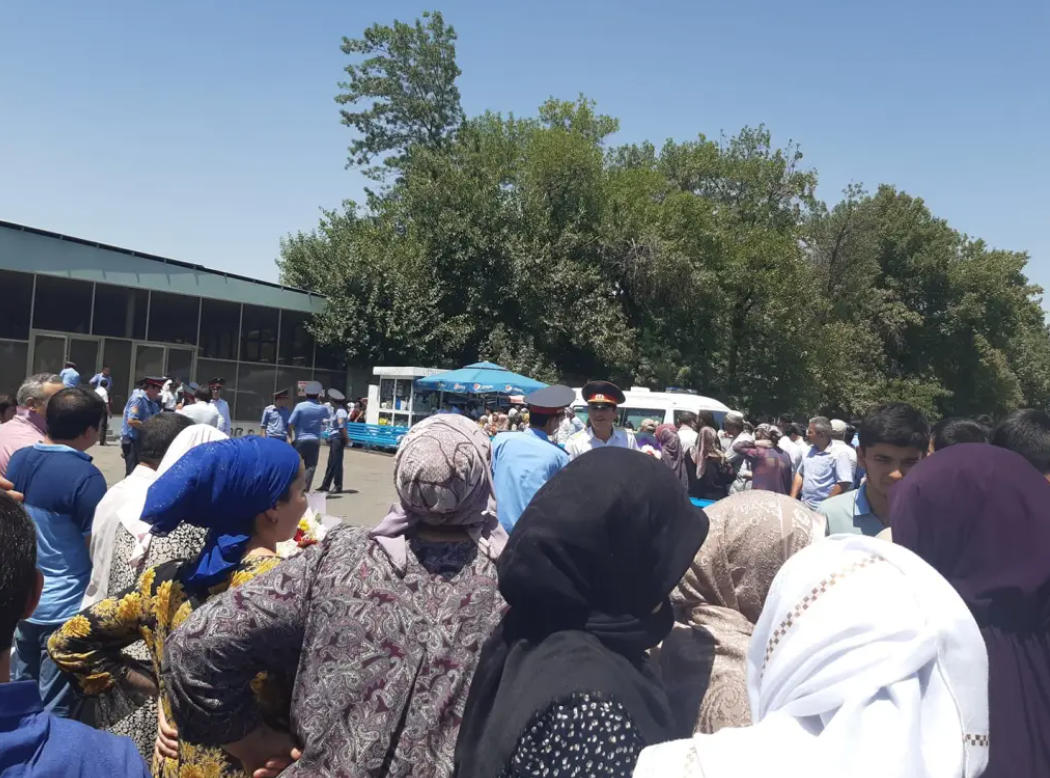
And the last meters to the house khoja passes along the red carpet, which should be new, and the length depends on the pocket of the pilgrim. At the same time, khoja’s feet practically do not touch the path, as relatives and neighbors scatter pieces of different fabrics, tablecloths, scarves, dresses and blankets on top of it. As soon as khoja's foot touches them, a struggle for possession of these things unfolds. Often they are simply torn to pieces.
People also throw candies and money over the pilgrim's head. And men are fighting for the right to be the first to say hello to khoja and receive his blessing.
By the arrival of khoja, the household is trying to give the houses and streets a luxurious festive look, make repairs, paint everything around, they update carpets and mattresses, curtains, dishes, etc. They force the neighbors to do the same, so as not to disgrace the mahala.
Poor neighbors who do not have money for repairs become almost outcasts of society and conflicts even arise on this basis…
According to the law, the organization of events "khojizierat", "khojitalbon" and "khojioshi" (treats on the occasion of the pilgrimage) is strictly prohibited. All events on the occasion of seeing off and meeting pilgrims should be held in the family circle.
Earlier this year, the court fined a 67-year-old resident of the Sangvor district, who conducted a pilgrimage campaign in his apartment, decorating the table and serving food.
The law does not prohibit visiting pilgrims, but this rite must be performed without cooking. It is recommended only to distribute holy water "Zam-zam" and dates, which each khodji brings home from Mecca.
The most disturbing thing is that many of those who have performed Hajj begin to put themselves above others. This also becomes the subject of disputes and quarrels on the ground.