Insulting religious sentiments, hatred and violence against any religion have tragic consequences, says Rahmon

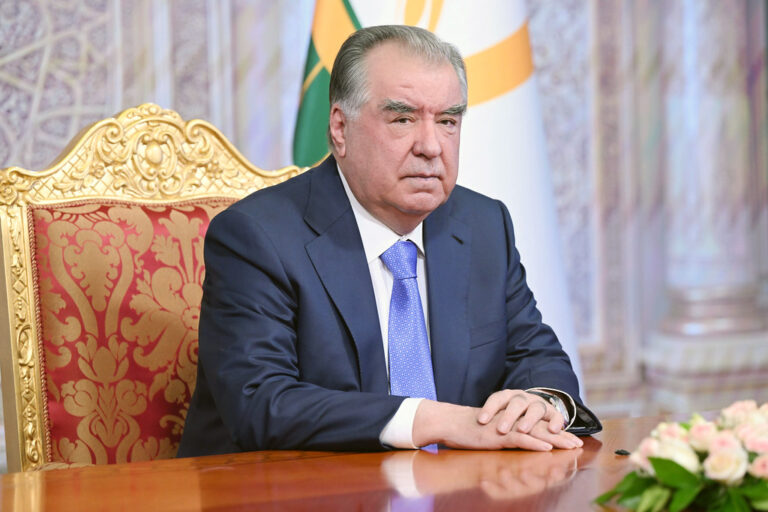
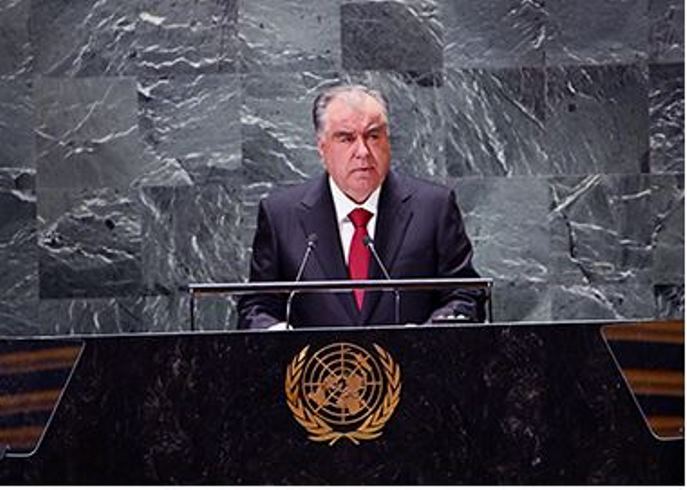
The efforts should be focused on preventing the use of the internet for radicalization, recruitment, and propaganda of extremism and violence, Tajik President Emomali Rahmon said on September 20 while delivering a statement at the General Debate of the 78th session of the UN General Assembly in New York. “Tajikistan welcomes the adoption in June […]

The efforts should be focused on preventing the use of the internet for radicalization, recruitment, and propaganda of extremism and violence, Tajik President Emomali Rahmon said on September 20 while delivering a statement at the General Debate of the 78th session of the UN General Assembly in New York.

“Tajikistan welcomes the adoption in June 2023 the eighth review of the United Nations Global Counter-Terrorism Strategy,” said Rahmon.  “We believe it provides a robust framework in further guiding our counterterrorism efforts.”

“The fabric of our societies is woven with the threads of different cultures, traditions and faiths.  This solidarity is a good basis for peaceful life in a space of mutual understanding between different cultures and religions.”

In this regard, manifestations of discrimination, racial and religious hostility, with an understanding of their negative consequences, are unacceptable, Tajik leader said, noting that these actions, as well as the politicization of religious issues undermine the very essence of our international community.

“Insulting religious sentiments, hatred and violence against any religion or belief have tragic consequences.  In most cases, such provocative actions trigger intolerance and mistrust, causing divisions and conflicts among civilizations,” said Rahmon “In this sense, Tajikistan strongly condemns any insult to the religious sanctity of the people, including the Holy Qur’an or other cultural and religious values of humanity.”

He noted that as a co-sponsor of the recently adopted United Nations General Assembly Resolution entitled “Promoting interreligious and intercultural dialogue and tolerance in countering hate speech,” Tajikistan reiterates the importance of promoting dialogue and mutual understanding among civilizations for peace and harmony in the world.

“We believe spreading the values of tolerance and peace is the best way to confront hate speech, fanaticism, extremism, violence, and incitement.”

Join us on social media!

Article translations:

Related Article

Tenisi
Оби зулол
Оби зулол

Most Read

Коммерсбонк Точикистон

Recent Articles

RZD announces the restoration of passenger services between Moscow and Dushanbe

Direct rail services between the capitals of Russia and Tajikistan were suspended in March 2020 due to the COVID-19 pandemic.

#AP30/Stories. “Selam! Heller nichek?” How Tatars live today in Sughd province

On the 30th anniversary of "Asia-Plus," we continue to publish reports that remain relevant even after years. This story was told in 2021, and since then, little has changed in the life of the Tatar community in Tajikistan.

15,000 cameras, drones, and robots: how technology monitors pilgrims in Mecca and Medina

During Hajj 2026, Mecca and Medina were under unprecedented digital control.

Another child in Dushanbe removed from family and sent to boarding school

The Ministry of Internal Affairs reports that the parents did not pay adequate attention to the child.

Emomali Rahmon instructs to address issues in seed production following criticism of the industry

Issues have been noted with certification, seed quality, and the material and technical base of the industry.

Water, climate, and a $130 billion deficit: seven key outcomes of the Water Conference in Dushanbe

At the forum, countries and international organizations discussed new mechanisms for cooperation, investments, and technologies that are essential for addressing the global water crisis.

Eskhata Bank introduces a new generation children’s wallet

"Eshkata Bank" has created a full-fledged digital platform that helps children aged 7 to 16 learn how to manage money.