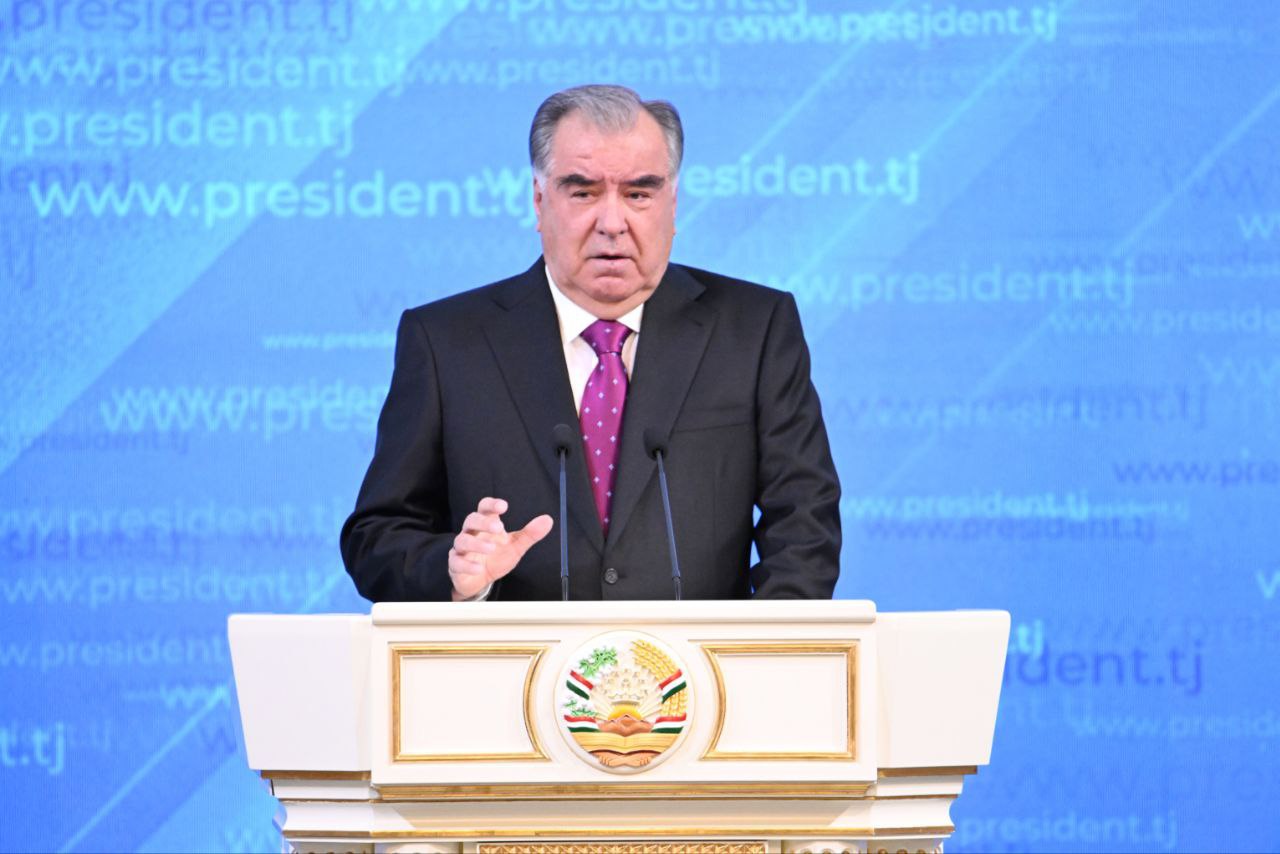
In a statement delivered at a joint meeting of both chambers of parliament, President Emomali Rahmon noted on December 28 that about 9 billion somonis have been channeled to rehabilitation of the country’s power grids in recent years.
“If we had not done this, we would be left without electricity today,” the president emphasized.
He also noted under what conditions the population will receive electricity around the clock.
“Our electricity losses are about 4 billion kWh,” said the president. “If we prevent this, then there will be enough electricity for everyone.”
According to data from the Agency for Statistics under the President of Tajikistan, Tajikistan has generated about 19.9 billion kWh of electricity over the first eleven months of this year, which is 3.4 percent more than in the same period last year.
Thus, 20.1 percent of electricity has been lost in Tajikistan during its generation, transmission and distribution over this eleven-month period.
In his address to a joint meeting of both chamber of parliament, Tajik President Emomali Rahmon noted on December 23 last year that 10.7 billion somonis have been spent for restoration and renovation of the country's electricity grids during the independence period.
“However, the electricity loss situation is still concerning as it was 20.4% in ten months of this year,” Rahmon noted on December 23, 2022.
Last year, more than 23 percent of electricity was lost during its generation, transmission and distribution.
As official statistical data show, losses in the generation and transmission of electricity are comparatively insignificant and are of a technical nature. The vast majority of energy is lost during its distribution to consumers, and here the losses are mainly of a commercial nature (theft).
It is to be noted that Tajikistan struggles with electricity rationing for more than 30 years after independence, despite long-held dreams of becoming an energy export powerhouse.
Measures rationing electricity supplies are usually introduced in all regions of the country except Dushanbe, regional administrative centers and major cities of the country and they seek to curb the country's rising electricity consumption. In addition to curbing rising consumption, the move also stems from a decline in the water level in the country's reservoirs powering the main hydroelectric power plants.
Power rationing affects rural areas of the country and it does affect Dushanbe, regional administrative centers and large cities. Residential customers in the Gorno Badakhshan Autonomous Region (GBAO), where Pamir Energy Company supplies electricity to consumers, also have an uninterrupted supply of electricity during the autumn-winter period.