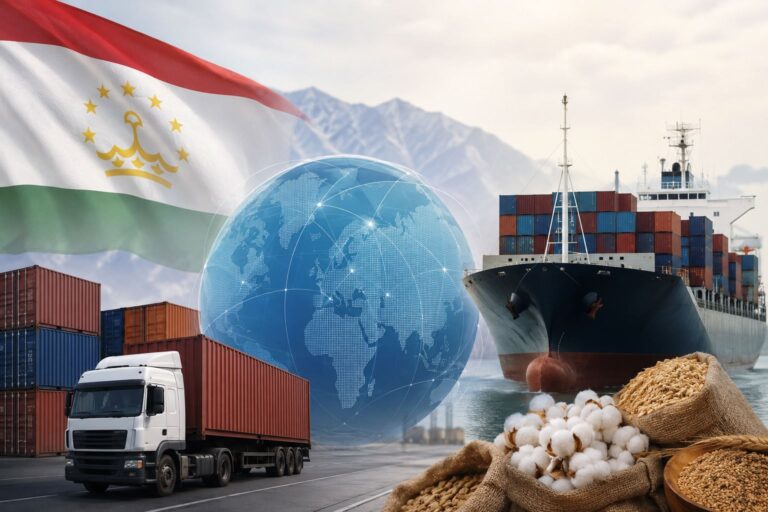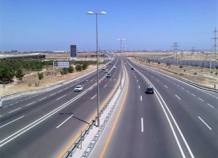
President Emomali Rahmon says the Government of Tajikistan from the very first years of independence has mobilized all resources and opportunities to bring the country out of transportation deadlock and to turn it into a transit country.
He stated this yesterday while addressing a joint meeting of both chambers of parliament.
According to him, 58 state investment projects totaling 26.6 billion somonis were implemented during the years of independence to construct and renovate highways and railways, develop infrastructure and strengthen technical capacity of the above sector.
“Now work in this direction is ongoing. In the near future, Tajikistan’s roads will be used as a transit and economic corridor of China-Tajikistan-Afghanistan and China-Tajikistan-Uzbekistan-Turkmenistan-Iran-Turkiye-Europe, as well as Tajikistan-China-Pakistan,” the president said, noting that the Government has decided to design and submit a number of priority projects for the construction and renovation of highways of international and republican importance for the creation of economic corridors in the near future and attraction of investment.
Among those projects are: Rushan road to Varshez village of Shugnan district (235 kilometers), from Varshez to Kulma – Karasu (300 kilometers), Bokhtar – Jaloliddin-Balkhi – Qubodiyon – Shahritous – Ayvaj – Uzbekistan’s border (170 kilometers), Khujand – Konibodom (57 kilometers), Khujand – Asht (122 kilometers) and Baljuvon – Sari Khosor (58 kilometers).
To date, 17 state investment projects worth over 13 billion somonis having been implemented in the country’s transport sector.
Currently, construction and renovation projects of Roghun – Obigarm – Nurabad highways (sections No.1 and 2) amounting 3.3 billion somonis and the construction of the country’s largest bridge with a length of 920 meters with a total value of 625 million somonis are being implemented in the Rasht Valley.
In addition, construction of Bekobod – Dehmay road, Dehmay – Bobojon-Ghafurov, Bobojon-Ghafurov — Khistevarz and Konibodom – Kuchkak (52 km) with a total amount of 635 million somonis in Sughd province, Bokhtar – Levakant – Lolazor – Danghara (69 km) amounted to 672 million somonis, Hulbuk – Temurmalik – Kangurt (59 km) amounted to 740 million somonis in Khatlon province are being implemented.
At the same time, in the Gorno-Badakhshan Autonomous Region (GBAO) the reconstruction and renovation of the highway of Qalai Khumb – Vanj – Rushan district’s border (93 kilometers) in the amount of 2.2 billion somonis is ongoing. As well as two bridges with a total length of 283 meters over Ghund and Shorfdara rivers, also 4.5 kilometers of roads and anti-avalanche corridors (550 meters) totaling 342 million somonis are being constructed.
The construction of Guliston – Kulob roads (35 kilometers) amounting to 745 million somonis, Danghara – Guliston (49 kilometers) 1.00314 billion somopnis, Guliston – Farkhor – Panj – Dousti (137 km – first stage) amounting to 449 million somonis and the remaining stages in the amount of 1.1 billion somonis are in the starting stage.
Over the past 7 years, 82 kilometers roads in a total amount of 2.235 billion somonis have been rehabilitated in Dushanbe.
40 kilometers of roads with 7 high line roads totaling 3 billion somonis will be constructed in Dushanbe within the next three years.
“We have decided to adapt all international and republican roads of the country to international standards within the next five to six years by implementing the goals defined by us,” said Rahmon. “This means that the construction of modern roads in the near future will allow us to achieve our strategic goal of turning Tajikistan into a transit country and ensure stable economic development and further improvement of our people’s living standards.”
The Ministry of Transport and the State Committee on Investment and State-owned Property Management are instructed to continue to take mandatory measures to attract capital and effectively implement state investment projects in the field of transport infrastructure, including the project of a unified digital network for controlling the weight of freight transport.
In addition, the Ministry of Transport and the Customs Service should take measures to expand border crossing points (BCPs), create “green corridors”, and build border terminals using digital technologies in accordance with modern international standards.