In a report released at a news conference in Dushanbe, Ilhomjon Oimuhammadzoda, the head of the Main Geology Directorate under the Government of Tajikistan, noted on January 30 that findings of geological explorations carried out in Tajikistan last year are hopeful.
He noted that two ore-bearing areas with a total length of up to 1500 meters were discovered at the antimony deposit Rivuti Bolo in Kuhistoni Mastchoh district, Sughd province.
“Besides, disseminated stibnites with detection of a zone of antimony mineralization have been discovered at the antimony deposit Oftobi,” Oimuhammadzoda said.
According to him, the possible antimony reserves of the Rivuti Bolo deposits were calculated and the results obtained confirm that it is one of the largest antimony deposits.
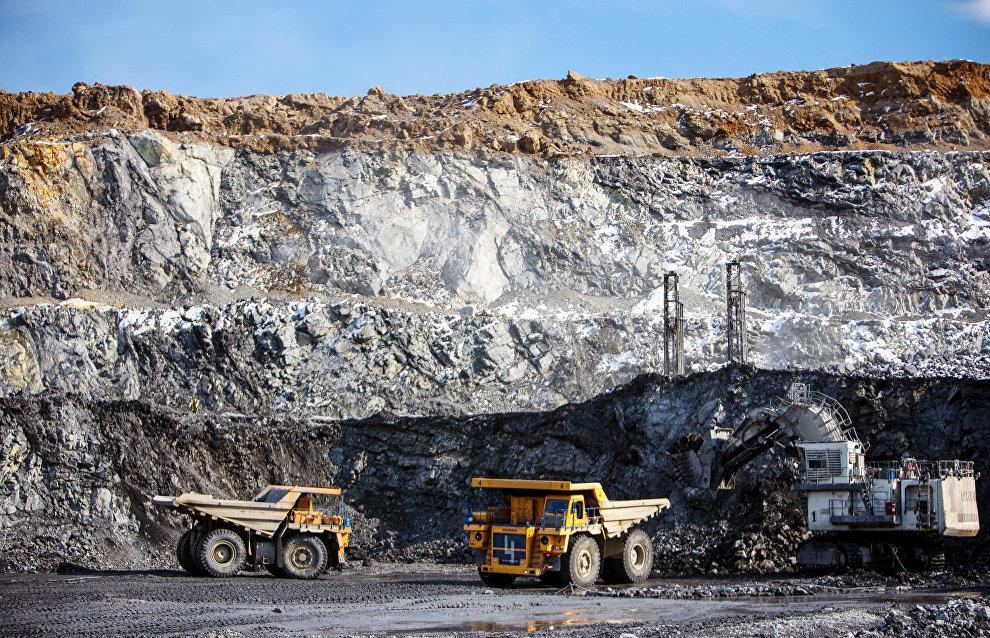
Anzob Limited Liability Company (LLC) is now engaged in extracting antimony at the Jizhikrut deposit in Ayni district of Sughd province.
Anzob LLC was established as the Tajikistan-U.S. joint venture in 2005. Tajikistan owned 51 percent of the shares and the United States’ Comsup Commodities Inc. assumed the 49% ownership interest in this enterprise. In September 2006, Comsup Commodities Inc. repurchased Tajikistan’s share in the company, becoming the only owner of Anzob LLC.
The company later built a plant on processing ores and producing a mercury-antimony concentrate there.
The biggest antimony reserves are reportedly concentrated at Jizhikrut and Konchok deposits in Ayni district. Ores of these deposits reportedly contain more than 15 percent of this semi-metal.
An official source at the Ministry of Industry and New Technologies of Tajikistan (MoINT) noted last year that the country’s proven antimony reserves are estimated at about 600,000 tons.
According to proven reserves of antimony Tajikistan ranks third globally (following China and Thailand) in Asia and the first among the CIS member nations.
Concentrates of mercury-antimony ores of Tajikistan are processed in other countries. They were processed in Kyrgyzstan one time, but after unilateral closure of border by Kyrgyzstan in late April 2021, Tajikistan’s concentrates of mercury-antimony ores have been processed in China.
It is to be noted that according to some sources, Tajikistan’s antimony deposits are stated to be the largest in the Commonwealth of Independent States (CIS) region.
Ilhom Oimuhammadzoda told reporters in Dushanbe on February 1 last year that there are eleven antimony deposits in Tajikistan and nine of them are located in Zarafshon and Hisor valleys.
An article by Bryant Harris, published in DefenseNews on June 8, 2022, in particular, notes China is the largest producer of mined and refined antimony and a major source of imports for the United States, the report says, noting that China is “losing market share with Russia, the world’s second-ranked producer,” with Tajikistan gaining ground in the global market as the world’s third-largest supplier of antimony.