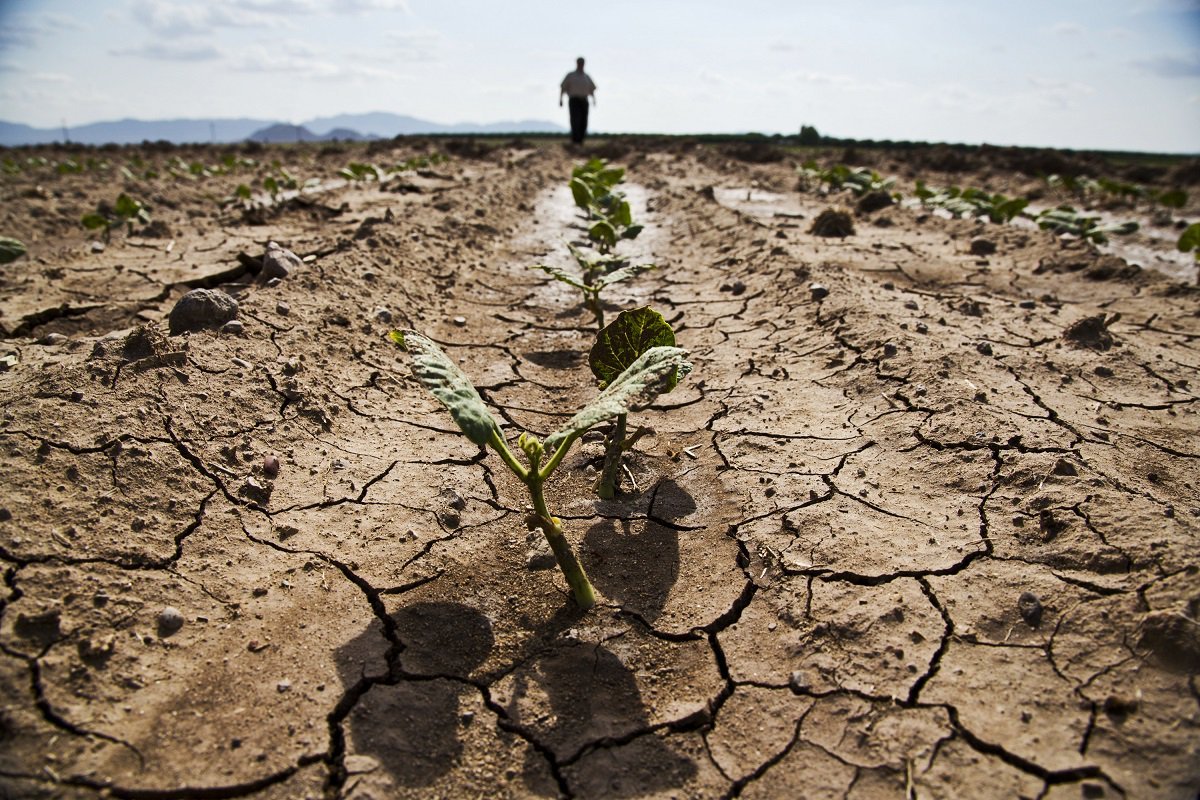
Among the countries of the Central Asian region, Tajikistan is considered the most vulnerable to desertification. The country is suffering not only from rising temperatures and droughts but also from the consequences of natural disasters.
However, according to the conclusions of experts, which are reflected in the annual reports of the Committee for Environmental Protection under the Government of Tajikistan, and in numerous international environmental organizations and local NGOs, it’s not only the fault of the climate but the irrational use of land and water resources.
The problem of soil degradation in Tajikistan has reportedly existed since the first years of independence. Almost all agricultural land of the country is subject to degradation, and gross blunders in land use aggravate the process of desertification.
The worst situation is in the southern Khatlon province, where hundreds hectares of land are swampy, salted or dried up due to lack of irrigation water or improper irrigation technologies.
In recent years, the problem of degradation of farmlands in the country’s agrarian districts has been getting worse. Experts believe that it will be difficult to restore these lands and all these processes have a negative impact on the environment, CABAR.asia writes.
In Khatlon province – the agrarian region of Tajikistan – dozens of hectares of farmland have deteriorated and have gone out of agricultural production.
According to data from the Khatlon Land Management Agency, a total area of farmlands went out of crop rotation is 885 hectares.
However, experts link the land degradation process also to the problems of climate change and temperature rise.
Meanwhile, the Khatlon authorities have stated that they intend to return farmlands that went out of agricultural use to their previous state.
Thus, authorities of Shahritous district stated that they had already restored about 50 hectares of farmlands.