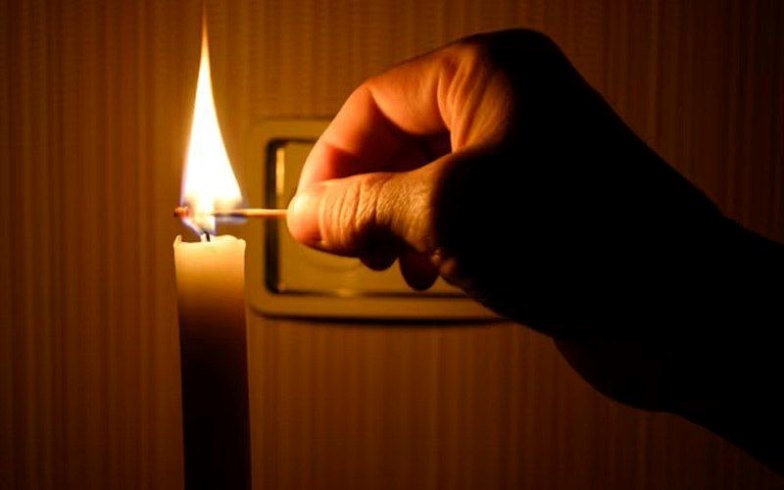
Most part of the country, with the exception of the Gorno Badakhshan Autonomous Region, or GBAO, were left without electricity on Friday, March 1 amid what appears to be a major technical malfunction.
Recall, the GBAO is provided with electricity by local hydroelectric generators, which are operated by the Pamir Energy Company.
Increasingly cold weather in recent days has led to a spike in demand for power as many turned to their electrical heaters.
Households in the capital, Dushanbe, reported power outages at around 11 a.m. local time. Many homes have also been left without heating and hot water, both of which are supplied by means of a centralized system.
After weeks of unseasonably warm weather, daytime temperatures in Dushanbe have in recent days slipped to near or below freezing. This has prompted many to fall back on electric heaters, which appears in turn to have triggered staggered outages. Cold weather conditions are forecast to persist over the weekend.
A source, who wanted to remain unnamed, told Asia-Plus that there was an unspecified incident at the Nurek hydropower plant, which is the most important asset of Tajikistan's energy system and generates about 50 percent of total annual electricity demanded in Tajikistan.
Asia-Plus’s reporters have been unable to get in touch with Open Joint-Stock Company (OJSC) Barqi Tojik (electricity generation company) or Dushanbe Administration for official comment.
According to some sources, some parts of the country have had electricity. Thus, electricity was being supplied to homes in the southern city of Bokhtar, the capital of Khatlon province.
Eurasianet says flight tracking websites showed that Bokhtar airport was still expecting a plane arriving from Moscow as of the mid-afternoon.
Another region of the country that was affected by the blackout is the Gorno-Badakhshan Autonomous Region, or GBAO, which is provided with electricity by local hydroelectric generators operated by the Pamir Energy Company.
In some parts of Dushanbe, electricity supply resumed at 1:45 pm.
Rural areas of the country accept lengthy power outages as a routine.
Measures rationing electricity supplies are usually introduced in all regions except Dushanbe, the GBAO and regional administrative centers and they seek to curb the country's rising electricity consumption. The rationing results in the supply of daily electrical power being reduced to 10 or 12 hours. In addition to curbing rising consumption, the move also stems from a decline in the water level in the country's reservoirs powering the main hydroelectric power plants.
This time, residential customers in rural areas of the country have endured blackouts from 8 am to 5 pm and then from 10 pm to 5 am since September 26, 2023.