A delegation of the World Bank Group Board of Executive Directors (EDs) concluded a landmark visit to Central Asia, following a series of engagements in Kazakhstan, Kyrgyzstan, and Tajikistan on March 9, says press release issued by the World Bank.
The visit reportedly provided an opportunity for the EDs to observe the region's development efforts firsthand, with a particular focus on climate change within the prism of the water-energy nexus, human capital with an emphasis on innovations and gender equality, and green private sector-led growth.
Throughout the visit, the 10 EDs met with high-ranking officials and local stakeholders to discuss the ongoing and future support provided by the International Development Association (IDA) to Kyrgyzstan and Tajikistan. While in Kazakhstan, the delegation's agenda reportedly focused on the World Bank Central Asia regional program, connecting with key partners across the region on shared development issues. The program in the three countries also involved visiting investment project sites of the World Bank, the International Finance Corporation (IFC), and the Multilateral Investment Guarantee Agency (MIGA).
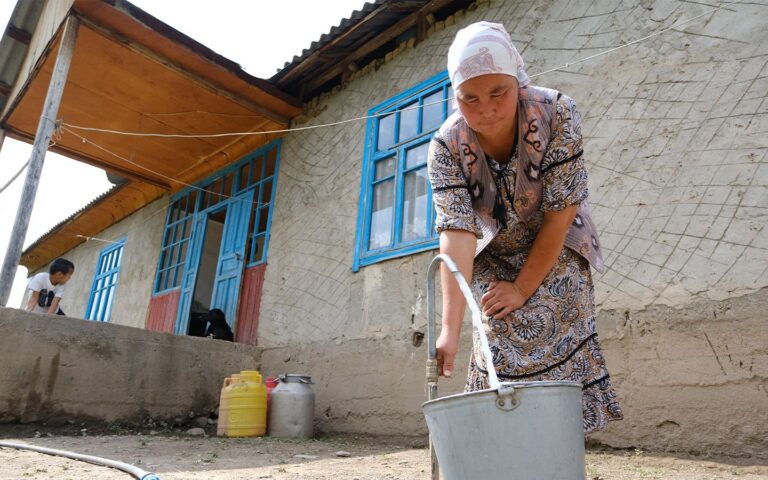
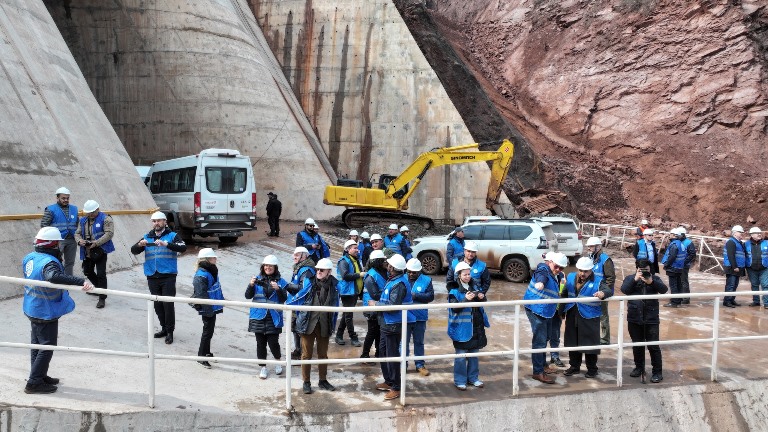
In Tajikistan, the delegation met with President Emomali Rahmon and his Cabinet. They also toured the Roghun hydropower plant site, visited a World Bank-financed early childhood development project, the health services improvement project, and met with IFC investment beneficiaries in Dushanbe. Discussions with female leaders were held on the eve of International Women's Day, highlighting the importance of promoting gender equality in the region's development.
Recall, the first two generating units of the Roghun hydropower plant were introduced into operation in November 2018 and September 2019 to much clamor, but there has been limited progress since then. The third unit is expected to be introduced into operation in 2025.
Once completed, Roghun will be fitted with six 600 megawatt turbines, amounting to a total installed capacity of 3,600 megawatts. Eurasianet notes that as Milan-based WeBuild (formerly Salini Impregilo), which has been contracted to implement the project, has claimed on its website that is “the equivalent of three nuclear power plants.”
The World Bank Group's efforts in Central Asia are geared towards fostering robust recovery from recent crises, enhancing climate resilience, creating jobs, and protecting the most vulnerable populations. Central Asia's vulnerability to climate change is particularly acute in water management, necessitating advanced knowledge and cooperation for adaptation.
This visit reportedly underscores the Board's hands-on approach to understanding and addressing the multifaceted challenges facing the Central Asian countries.
The Board of Executive Directors is responsible for the conduct of the general operations of the Bank, making decisions on loans, credits, grants, policies, and financial matters. The Board consists of 25 members who represent the 189 member countries, providing guidance for the institution's development activities.