Tajikistan bets it all on hydropower

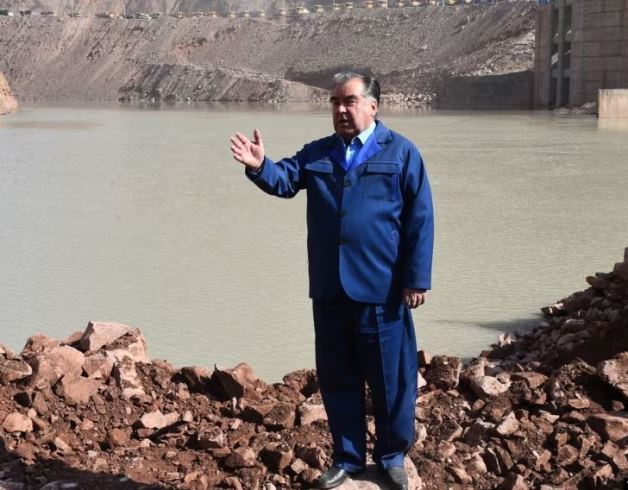
Posted on Radio Liberty’s website, an article by Chris Rickleton notes that having spent much of the last decade and several billion dollars building the Roghun "megadam," the project is clearly too big to fail from the point of view of Tajikistan's leadership. But amid spiraling costs and long-standing questions about the environmental and human impacts, […]

Posted on Radio Liberty’s website, an article by Chris Rickleton notes that having spent much of the last decade and several billion dollars building the Roghun "megadam," the project is clearly too big to fail from the point of view of Tajikistan's leadership.

But amid spiraling costs and long-standing questions about the environmental and human impacts, its critics contend that Roghun is also too big to be sustainable, according to the article.

Tajikistan is reportedly not alone in eying Roghun's potential 3,600 megawatts of installed capacity.

The author notes that while millions of Tajiks continue to live without power or have it for just a few hours per day, especially in the colder months, Roghun is an important piece of the energy-security puzzle in Tajikistan's electricity-strapped neighborhood, with Uzbekistan, Afghanistan, and Pakistan all potential customers.

So there is a lot at stake.

And that is without considering whether large-scale hydropower is a wise direction for a region where climate change is set to continue the erosion of river-feeding glaciers.

But while some of Tajikistan's Central Asian neighbors are already diverting resources to smaller solar and wind projects to plug their deficits, megadams new and old are still the order of the day for Dushanbe.

The Taliban confirmed last week that the all-important Afghan leg of CASA-1000 — a four-country regional power project in which Tajikistan is expected to play the role of top provider — is back on track.

The article notes that when CASA-1000 eventually becomes reality, Tajikistan should transmit 70 percent of an approximately 1.3 gigawatts of electricity to the power-starved Afghan and Pakistani grids, with Kyrgyzstan due to receive the remainder.

But the power-transportation infrastructure is of little use if Tajikistan doesn't have the spare energy.

Join us on social media!

Article translations:

Related Article

Оби зулол
Оби зулол
Tenisi

Most Read

Коммерсбонк Точикистон

Recent Articles

RZD announces the restoration of passenger services between Moscow and Dushanbe

Direct rail services between the capitals of Russia and Tajikistan were suspended in March 2020 due to the COVID-19 pandemic.

#AP30/Stories. “Selam! Heller nichek?” How Tatars live today in Sughd province

On the 30th anniversary of "Asia-Plus," we continue to publish reports that remain relevant even after years. This story was told in 2021, and since then, little has changed in the life of the Tatar community in Tajikistan.

15,000 cameras, drones, and robots: how technology monitors pilgrims in Mecca and Medina

During Hajj 2026, Mecca and Medina were under unprecedented digital control.

Another child in Dushanbe removed from family and sent to boarding school

The Ministry of Internal Affairs reports that the parents did not pay adequate attention to the child.

Emomali Rahmon instructs to address issues in seed production following criticism of the industry

Issues have been noted with certification, seed quality, and the material and technical base of the industry.

Water, climate, and a $130 billion deficit: seven key outcomes of the Water Conference in Dushanbe

At the forum, countries and international organizations discussed new mechanisms for cooperation, investments, and technologies that are essential for addressing the global water crisis.

Eskhata Bank introduces a new generation children’s wallet

"Eshkata Bank" has created a full-fledged digital platform that helps children aged 7 to 16 learn how to manage money.