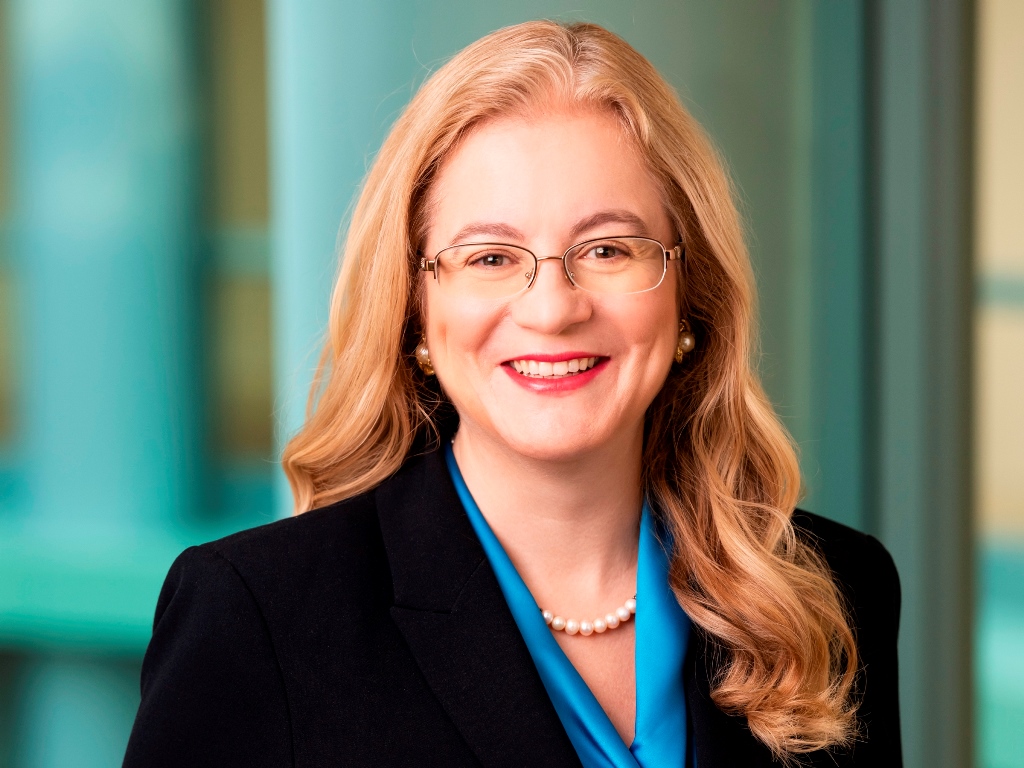
I get to meet many courageous women in my work for IFC in Southwest and Central Asia[1]. I’ve witnessed the seemingly unsurmountable challenges they encounter every day.
I’ve seen the unyielding resolve of rural women in Tattha, Pakistan in the face of climate change-induced severe floods, and the stunting of their children due to a lack of potable water.
I’ve heard the heartening stories of female leaders shattering the glass ceiling in Kuwait.
I’ve had passionate discussions with women entrepreneurs who are struggling to secure financing in a region where very few formal enterprises are majority owned by women. In Kazakhstan, that proportion is just 23.8 percent. In Jordan, it’s 8.1, in Lebanon, 4.7.
Closing the economic gender gap is even more urgent due to the region’s poor performance in the World Bank's Women, Business and Law 2023 score: Nearly half its countries ranked lowest on the index.
Their struggles remain largely invisible to the world. But, with entrenched economic challenges and escalating fragility and conflict, we can no longer afford to avert our eyes from the issues faced by half of the global population.
The numbers reveal a disturbing gender disparity. In 2022, female labor force participation in the Middle East, Central Asia, Afghanistan, Pakistan, and Türkiye (MCT) stood at 26 percent of women at working age, compared to 75 percent for men. This isn’t just a matter of equity—failing to bridge economic gender gaps in these countries casts a dark shadow on the region's annual GDP.
The valiant voices I've encountered have shone a light on the key challenges preventing women from thriving in, or even entering the work force: the lack of flexible working arrangements, robust measures to combat harassment, safe transportation, affordable childcare, and better access to a quality education. Showcasing female role models would also help inspire girls and young women to pursue a career.
In the entrepreneurial landscape, the uneven playing field makes survival and growth an uphill battle for women-led businesses. The dearth of funding directed towards women entrepreneurs is another key obstacle—a mere 7 percent of private equity and venture capital in emerging markets is invested in women-founded startups.
Many factors contribute to women’s limited access to startup capital. One reason is this staggering statistic: only about 15% of all VC 'cheque-writers' are women. This glaring absence of a female perspective in the venture capital space invites unconscious biases. A lack of collateral, due to limitations on women’s access to asset ownership, further exacerbates women entrepreneurs' lack of access to funding.
But the challenges go far beyond finance. Social and cultural norms act as significant barriers to women's entrepreneurship. For example, cultural expectations see childcare responsibilities placed mainly on women—preventing them from excelling in the entrepreneurship space.
Yet hidden behind these challenges are outsized opportunities. The potential benefits of financing women-led businesses are substantial for both banks and investors. Research consistently shows that a gender-balanced portfolio outperforms its peers.[2]
Diverse leadership—especially in terms of gender balance—yields higher returns. Private equity and venture capital funds with gender-balanced senior investment teams have demonstrated 10 to 20 percent higher returns.
We can bridge the finance gap for women-led businesses by strengthening the enabling environment, building the capacity of ecosystem players, encouraging mentorship, and networking opportunities, promoting education, and training, and fostering collaboration between the public and private sectors.
Investing in women is more than just a smart investment decision. It's an investment in our future—a future where half the region’s population are recruited and empowered to play a pivotal role in driving positive societal change.
[1][1] Middle East, Central Asia, Türkiye, Afghanistan, and Pakistan
[2] by more than 5.5 percentage points in valuation increase per year
Source: https://www.ifc.org/content/dam/ifc/doc/mgrt/moving-toward-gender-balance-final-3-22.pdf , p 33