Ms. Sarah Rinaldi, Head of Unit for the Middle East & Central Asia in the European Commission Directorate General for International Partnerships, visited Tajikistan last week to co-chair the 4th European Union – Tajikistan Sub-Committee on Development Cooperation.
In this annual meeting, representatives of the European Union (EU) and the Government of Tajikistan discussed cooperation in the context of the EU’s 2021-2027 bilateral program for Tajikistan. Cooperation on connectivity under the EU’s Global Gateway strategy was at the heart of the discussions, with a particular focus on digitalization and the regional dimension of transport.
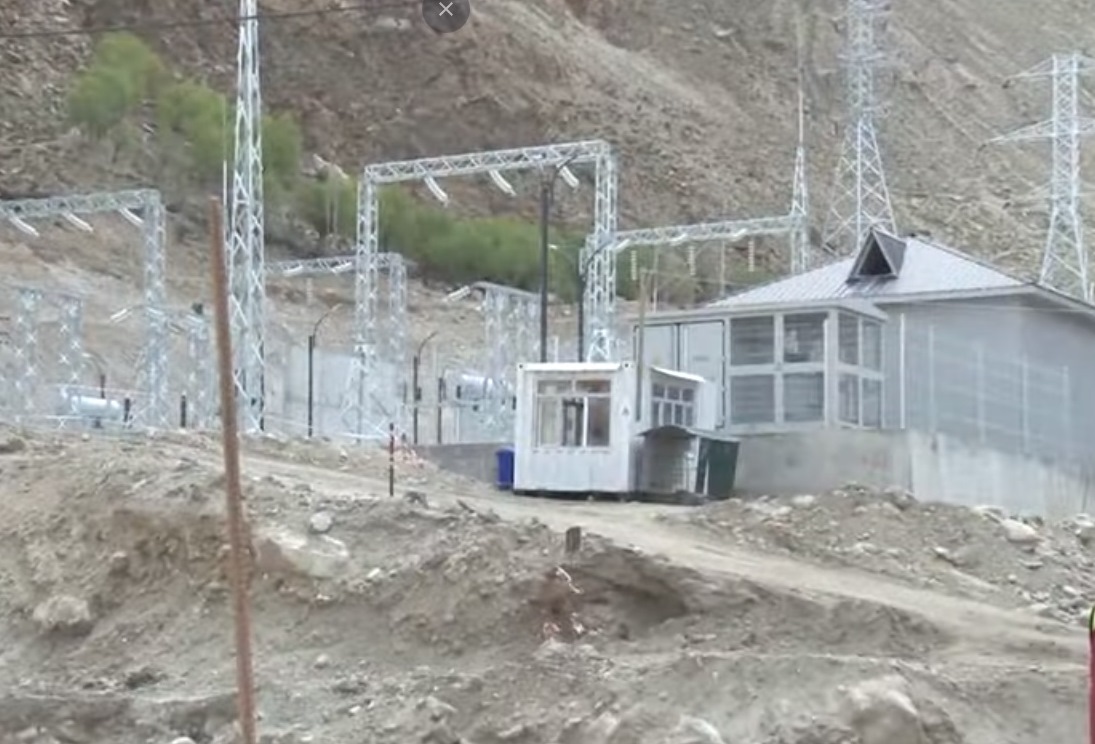
In addition to the Sub-Committee, Ms. Rinaldi travelled to the Gorno-Badakhshan Autonomous region (GBAO), where she visited the construction site of the EU-funded Sebzor Hydropower Project (HPP).
The EU Delegation to Tajikistan says that in the context of the visit, Ms. Rinaldi announced an additional EU contribution of 16 million euros for the finalization of Sebzor and associated grid infrastructure. This funding will not only contribute to energy security for the people in the GBAO region, but also help providing access to clean energy to support basic needs and livelihoods in four districts of Afghanistan’s Badakhshan Province.
Households and non-residential customers such as schools, businesses and hospital will be targeted both in Afghanistan and Tajikistan, according to press release issued by the EU Delegation to Tajikistan.
The Sebzor hydropower project is being implemented by Pamir Energy Company jointly with the Government of Tajikistan with financial support from the European Union and the Government of Germany through German Bank KfW.
The construction of the new Sebzor hydropower plant (HPP) on the Shokhdara River of the GBAO, with a planned capacity of 11 megawatts, is expected to help close the supply gap and provide an affordable electricity supply for the region. The purpose of the Project is to improve the access of the rural population in GBAO to sustainable, reliable and affordable electricity and to increase the reliability of the energy supply in GBAO by reducing the risk of electricity interruptions through natural disasters.
The EU Delegation says Ms. Rinaldi also visited other EU projects, including the Roudaki Central District Hospital and Adolescents’ Innovation Lab in School 63 in Roudaki, as well as the Cotton Cleaning Plant of Zhuntai-Dangara Sin Silut Textil in Danghara.
Furthermore, Ms. Rinaldi reportedly held several meetings with government representatives, development partners and civil society.
The visit reaffirmed the strong EU-Tajikistan relations and allowed for fruitful exchanges on how to further enhance efficiency and strengthen cooperation under current and future programs.